ResourceLife Sciences
Imaging dyes with large Stokes shifts on the Sapphire FL
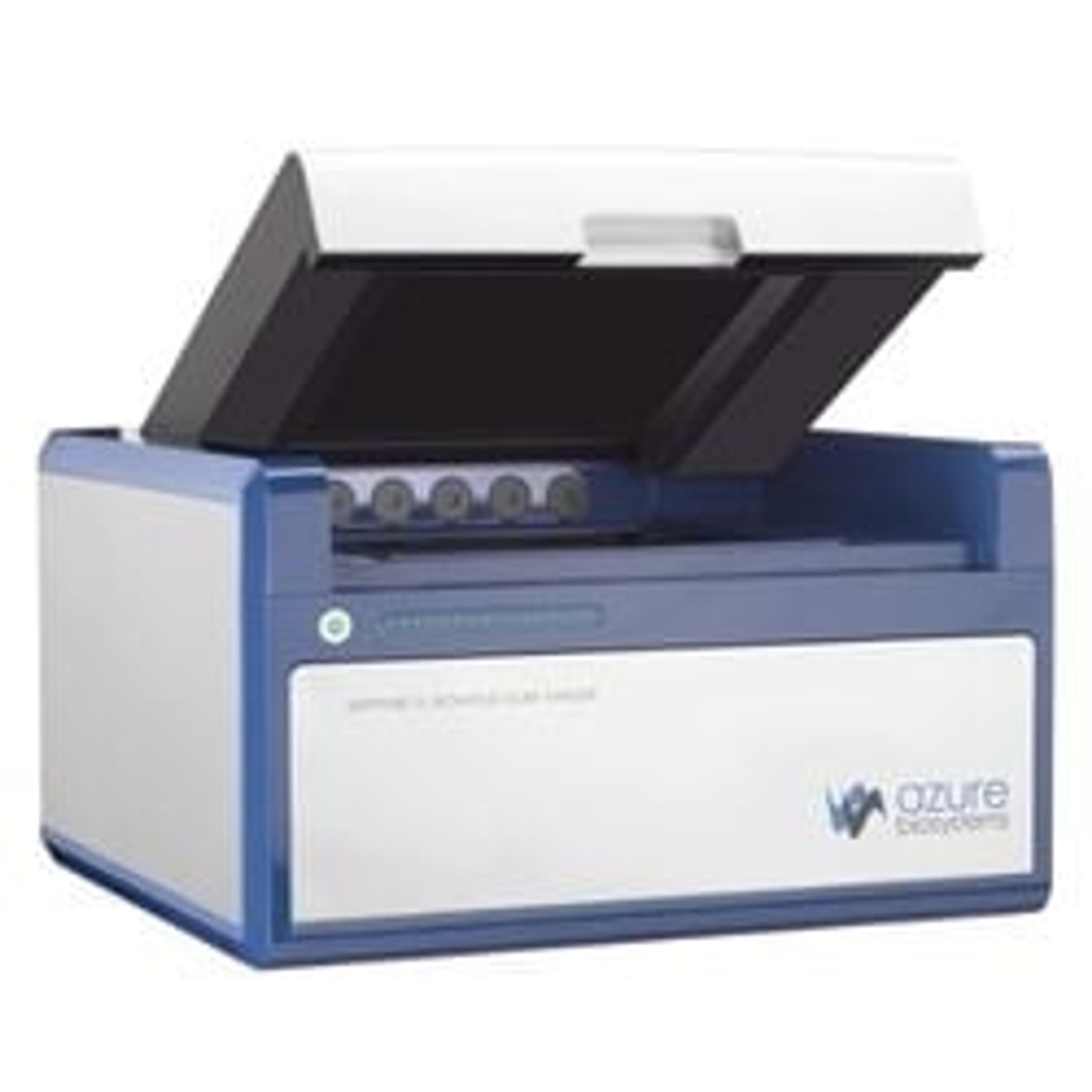
4 Jul 2024Significant work has gone into developing fluorescent dyes with larger Stokes shifts for biological applications. Stokes shifts greater than 80 nm can minimize crosstalk between the excitation light and detection of emitted fluorescence during imaging, leading to better signal-to-noise ratios and better imaging. Explore how the Sapphire FL Biomolecular Imager provides the flexibility needed to image dyes with large Stokes shifts. Its modular excitation lasers and emission filters can be easily mixed and matched to achieve non-standard pairings compatible with specialty dyes. Azure Biosystems demonstrates the use of this mechanism on the Sapphire FL to image Western blots detected with antibodies labeled with MegaStokes dyes.
Links
Tags
Western BlottingWestern blotting equipment is used to transfer and identify specific proteins within a sample, reveal protein modifications, as well as give a semi-quantitative estimation of their concentration. Western blotting equipment includes all apparatus necessary to transfer proteins from gel to membrane and subsequent processing steps. Protein transfer can be performed by electroblotting with wet, semi-dry and dry transfer systems onto nitrocellulose and PVDF membranes. Blocking, washing and labeling of membranes follows, involving buffers, blocking reagents, blotting / incubation trays, labeling reagents, immunoblotting assays, antibodies and conjugates. Automated equipment for these steps is available to accelerate your lab workflow. Finally, detection and imaging of proteins can be conducted using gel documentation and imaging systems. Find the best western blotting equipment in our peer-reviewed product directory: compare products, check customer reviews and receive pricing direct from manufacturers.AntibodiesAntibodies are used in techniques such as confocal and fluorescence microscopy, flow cytometry, ELISA, ELISPOT, immunohistochemistry, western blotting and immunopreciptation. Select specific antigen reactivity, high specific affinity, low non-specific binding, monoclonal or polyclonal, primary or secondary antibodies and associated conjugates such as an enzyme or dye for visualization.Fluorescent DyesProbesReduction in Autofluorescence