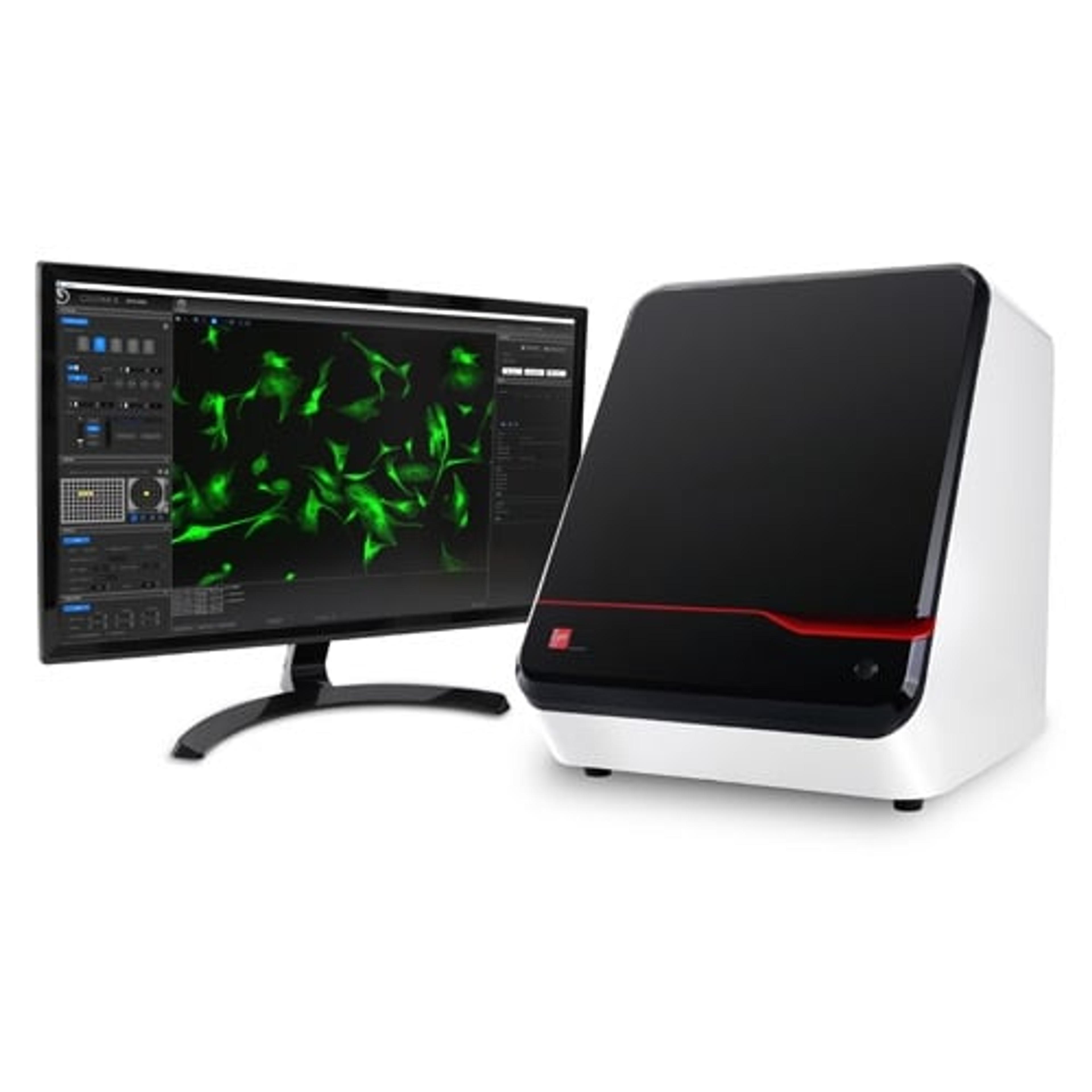
Imaging and analysis of 3D cell models using the CELENA X High Content Imaging System

24 Jul 2025

Two-dimensional (2D) cell cultures have long been used in research due to their simplicity and low cost. However, three-dimensional (3D) cell models offer a more physiologically relevant environment, better mimicking in vivo conditions. Organoids, derived from human stem cells, replicate the structure and function of human organs, while 3D spheroids reflect nutrient and oxygen gradients similar to those in tissues. These models are particularly valuable in cancer research. This article outlines how organoid viability and spheroid growth can be imaged and analyzed using the CELENA® X High Content Imaging System and Cell Analyzer software.

Links

Tags

High-Content ScreeningHigh-content screening (HCS), also known as high-content analysis (HCA), is a high-throughput technique used in drug discovery to identify substances that alter the phenotype of cells. HCS uses fluorescent microscopic imaging and automated image analysis to investigate cellular events such as apoptosis, cell viability, GPCR activation, oxide production, neurite outgrowth, and cell signaling. Find the best fluorescent labeling reagents, cellular assays, and high-content imaging systems in our peer-reviewed product directory: compare products, check customer reviews and receive pricing direct from manufacturers.High Content ImagingHigh content imaging is a method combining two or more fluorescent microscopy experiments to identify substances that alter a cell’s phenotype in a desired manner. The process is adapted to multi-well plates and both the image acquisition and analysis are automated.3D Cell CultureCulturing cells in three dimensions allows more physiologically relevant observations to be made regarding cellular interactions and gene expression. 3D models provide a more accurate representation of cells in vivo and are more stable than 2D cultures, making them very useful for long-term studies.OrganoidsSpheroidsSpheroids are clusters of cells that have been grown in 3D culture to be used as <i>in vitro</i> model systems. These 3D microtissues can be used for toxicology testing, DMPK studies and many other applications involving cell analysis.Cancer ResearchCancer research aims to understand the mechanisms of cancer development and progression to improve prevention, diagnosis, and treatment. From molecular biology to clinical trials, research spans a wide range of disciplines, including immunotherapy, targeted therapies, and drug discovery. Explore the best cancer research products in our peer-reviewed product directory; compare products, check reviews, and get pricing directly from manufacturers.
Imaging and analysis of 3D cell models using the CELENA X High Content Imaging System