Identifying Heterogeneity within Rare Cell Populations by Pairing Single-Cell RNA-Seq with Cell Sorting

13 Aug 2018

Studying biology at a single-cell level can provide crucial insights into how individual cells contribute to human biology and disease. In this application note, it is demonstrated that the resolution of single-cell RNA sequencing (RNA-Seq) can be greatly enhanced by adding a cell sorting step prior to RNA-Seq analysis. By pairing the S3e Cell Sorter with the illumina® Bio-Rad Single-Cell Sequencing Solution, the isolation of an extremely rare peripheral blood mononuclear cell population was achieved and unexpected heterogeneity within this population was characterized.

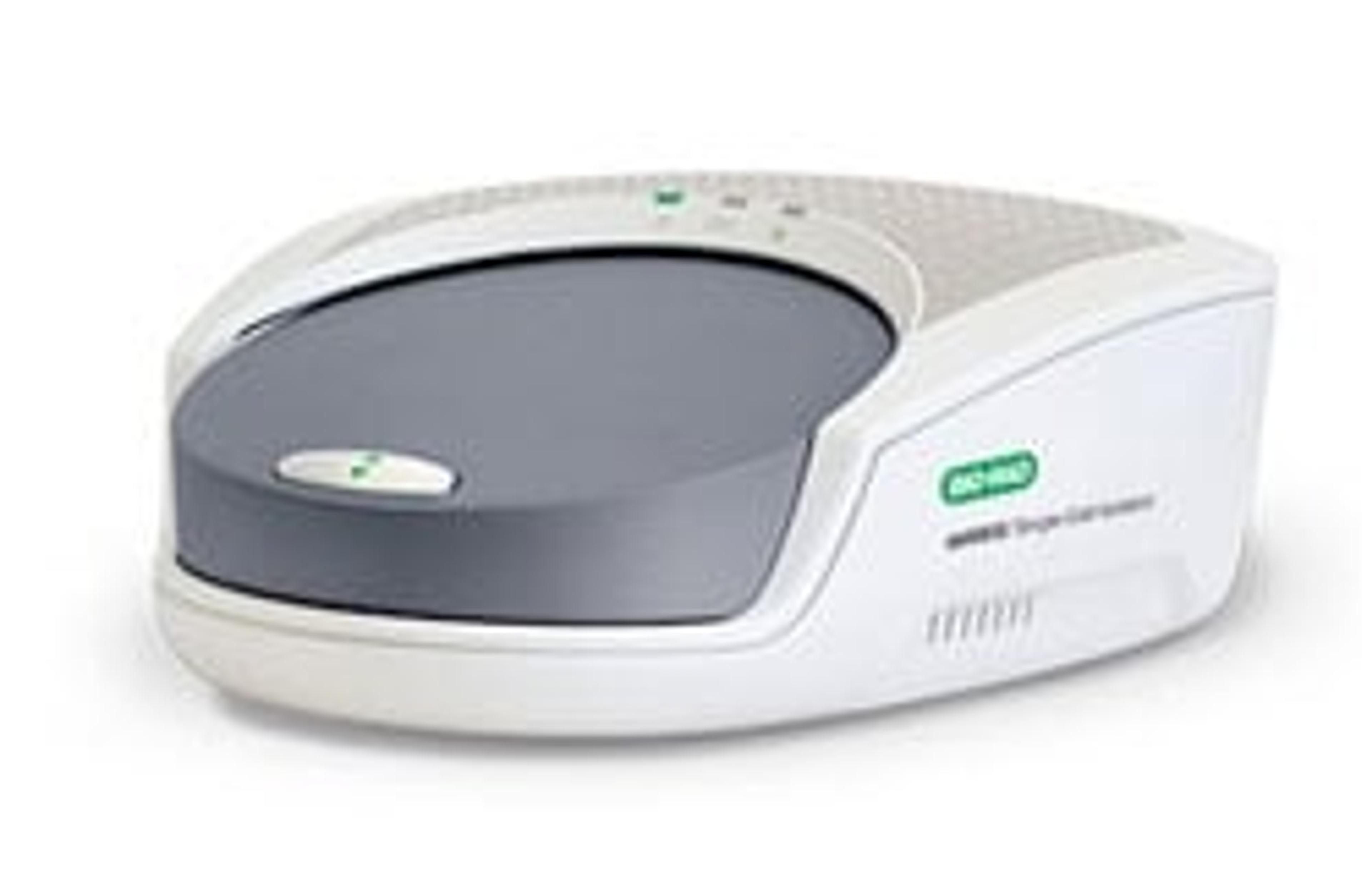
ddSEQ™ Single-Cell Isolator

Bio-Rad

The ddSEQ Single-Cell Isolator is part of the Illumina® Bio-Rad® Single-Cell Sequencing Solution, a platform that brings Bio-Rad's Droplet Digital™ technology and Illumina's market-leading sequencing expertise to single-cell gene expression studies. The ddSEQ Single-Cell Isolator works with the Illumina® Bio-Rad® SureCell™ WTA 3' Library Prep Kit for the ddSEQ™ System. This technology utilizes disposable microfluidic cartridges to coencapsulate single cells and barcodes into subnanoliter droplets, where cell lysis and barcoding occur. RNA-Seq libraries are subsequently prepared and sequenced. Analysis is conducted via BaseSpace. Features and Benefits Process hundreds to tens of thousands of cells per day Sensitive and unbiased characterization of transcriptional signatures Scalable solution to accommodate a wide range of experimental designs Agnostic to mammalian cell size, enabling unbiased profiling of diverse cell populations End-to-end single-cell sequencing solution with simple, powerful data analysis Applications and Uses Assess cell-to-cell heterogeneity and identify new sub-populations Map cell trajectories Dissect transcriptional mechanics Infer gene regulatory networks Neurology research — normal brain function, neurological disease and psychological disorders Immunology research — B Cell and T Cell subunit functional analyses Cancer research — studies of cellular expansion of clonal cells in tumors and mutations that lead to differences in gene expression and drug response Stem cell research — studies to better understand development and differentiation, including reverse engineering tissues Included Components ddSEQ Test Cartridges ddSEQ Cartridge Holder ddSEQ Single-Cell Isolator Power supply and power cord User manual and product documentation

(5)

Links

Tags

DNA / RNA Extraction and PurificationPurified DNA and RNA are required for numerous downstream molecular biology applications. Consequently, the importance of high-quality DNA/RNA extraction and purification equipment cannot be underestimated. Many purification kits are available and are typically optimized for nucleic acid type and source, including plasmid DNA, genomic DNA, mRNA, RNA and viral nucleic acid purification kits. Automated extraction and purification of nucleic acids can be implemented with magnetic bead separator instruments or high-throughput purification workstations. Find the best DNA/RNA extraction and purification equipment in our peer-reviewed product directory: compare products, check customer reviews and receive pricing direct from manufacturers.DNA SequencingDNA sequencing, such as sanger sequencing, is a biological technique that determines the precise order of nucleotide bases in a fragment or template of DNA. DNA sequencers and genetic analyzers are based on capillary electrophoresis, where labeled DNA fragments are electrophoretically separated by size as they migrate through a polymer. Find the best DNA sequencing products, including DNA sequencing kits, genomic libraries and genetic identity kits in our peer-reviewed product directory: compare products, check customer reviews and receive pricing direct from manufacturers.BiomarkersBiomarkers are biological markers which can be measured and evaluated to indicate a biological state. The use of biomarkers in research and diagnosis can indicate a normal or disease state or drug response of cells / tissues. Biomarkers include genetic markers, cell surface markers such as antigens, antibodies or receptors and secreted molecules such as cytokines. An assay system is required for identification of biomarkers. :Cell SortingCell sorting isolates specific cell populations based on physical or molecular characteristics, essential in immunology, cancer research, and regenerative medicine. Techniques like flow cytometry improve accuracy and speed. Compare cell sorting instruments and solutions in our product directory.RNA-SeqRNA sequencing (RNA-seq) is a next-generation sequencing technique used to analyze the transcriptome, providing insights into gene expression and regulation. This method is essential for genomics, disease research, and personalized medicine. Explore RNA-seq tools in our peer-reviewed product directory; compare products, check reviews, and get pricing directly from manufacturers.Biomarker DiscoveryClinical biomarkers refer to substances related to known medical conditions that can be accurately measured <i>in vitro</i>. Biomarkers can be used to diagnose presence of a disease and indicate disease severity. The discovery of new biomarkers is incredibly valuable in the field of diagnostics.