ResourceSpectroscopy

Identification of Yeasts and Bacteria in Food Microbiology

1 Jul 2012

This application note describes a method to reliably identify yeast and bacteria down to strain level using Fourier-Transform-Infrared (FT-IR)-Spectroscopy. One sample can be measured and identified within about one minute with results summarized in a table format this enables production processes to be optimized and sources of contamination identified.

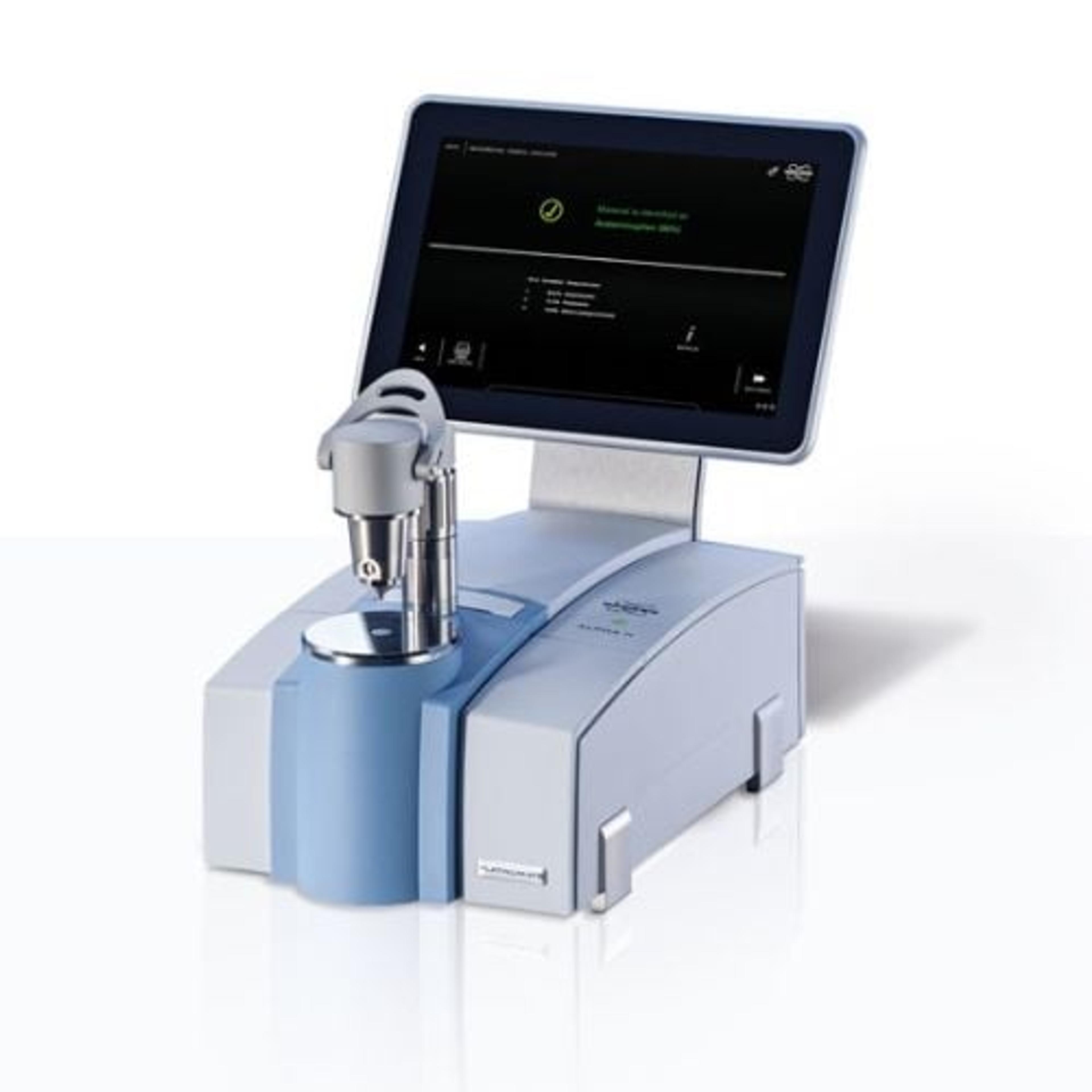
ALPHA II FTIR Spectrometer

Bruker Optics

The FTIR spectrometer ALPHA II combines quality and ease-of-use in a compact shell. The integrated touch PC provides an intuitive user experience and guides you through measurement, evaluation and reporting in a matter of seconds. The ALPHA II offers advanced stabilization of source and detector, high sensitivity and spectral resolution, as well es a wider spectral range. With its versatile QuickSnap™ measurement modules, the ALPHA II is extremely flexible and can be quickly adapted to a variety of quality control tasks at the push of a button. Your advantages: Robust performance - RockSolid™ Suitable for every sample type - QuickSnap™ Longevity and maintenance-free operation - PermaSure™ High warranty - Interferometer, source and ATR module No additional laptop or PC required (optional) Intuitive touch operation and easy handling Easy quality control of solids and liquids

(27)

Links

Tags

Infrared / IR SpectroscopyInfrared (IR) spectroscopy measures the interaction of infrared light with a sample, including transmission, reflectance & absorbance, facilitating the identification of analytes. Equipment used for quantitative analysis includes Fourier-transform infrared (FTIR) spectrometers, infrared cameras, FTIR gas analyzers, as well as attenuated total reflectance (ATR) accessories and pellet or film presses. Find the best IR spectroscopy products in our peer-reviewed product directory: compare products, check customer reviews and receive pricing direct from manufacturers.MicroplatesMicroplates are multi-well plates used to increase the throughput of biological investigations. The number of wells microplates contain can range from 6 to 3243 wells, with the 96-well format being the most commonly used. Microplates can come tailored for a range of applications including cell culture, PCR, filtration, storage, non-binding surface, protein crystallization, as well as pre-coated, deep well and normal Standard microplates. Additionally, options for microplate colors include clear , black, white or black with clear bottom and white with clear bottom for absorbance microplate reader applications. Find the best microplates for your lab in our peer-reviewed product directory: compare products, check customer reviews and receive pricing direct from manufacturers.MicrobiologyMicrobiology is the study of microorganisms including protists, prokaryotes, fungi, and, often, viruses. Microorganisms are a useful research tool as genetic vectors and, in immunology, for antibiotic susceptibility testing, cellular biology and genetics. Microorganisms commonly grow readily in incubators with microbial culture media; this can contain chromogenic supplements to differentiate between cell lines. Estimate your culture’s density of microorganisms with colony counters, or screen and select colonies for desirable clones with automated colony pickers. Additionally, equipment is available to monitor environments for the presence of microbes and identify with microbial identification instruments. Find the best microbiology products in our peer-reviewed product directory: compare products, check customer reviews and receive pricing direct from manufacturers.YeastBacteriaBacteria are microorganisms that play critical roles in the environment, human health, and biotechnology. Understanding bacterial genetics, growth, and metabolism is essential for developing antibiotics, vaccines, and improving industrial processes. Browse our peer-reviewed product directory to find the best bacterial research tools, compare products, check reviews, and get pricing directly from manufacturers.
Identification of Yeasts and Bacteria in Food Microbiology