ResourceSeparations

HPLC Characterization of 99.5% Pure Compounds using the 3500 MiD

1 Mar 2012

This note reports on how an LCMS system can be used as an HPLC detector to identify the presence of impurities that would otherwise be lost using other detection methods. Several two component test samples were prepared, with the major component at 1 mg/ml and the minor one at 5 μg/ml (0.5% w/w).

The Microsaic 3500 MiD (Molecular Ion Detector)

Microsaic Systems

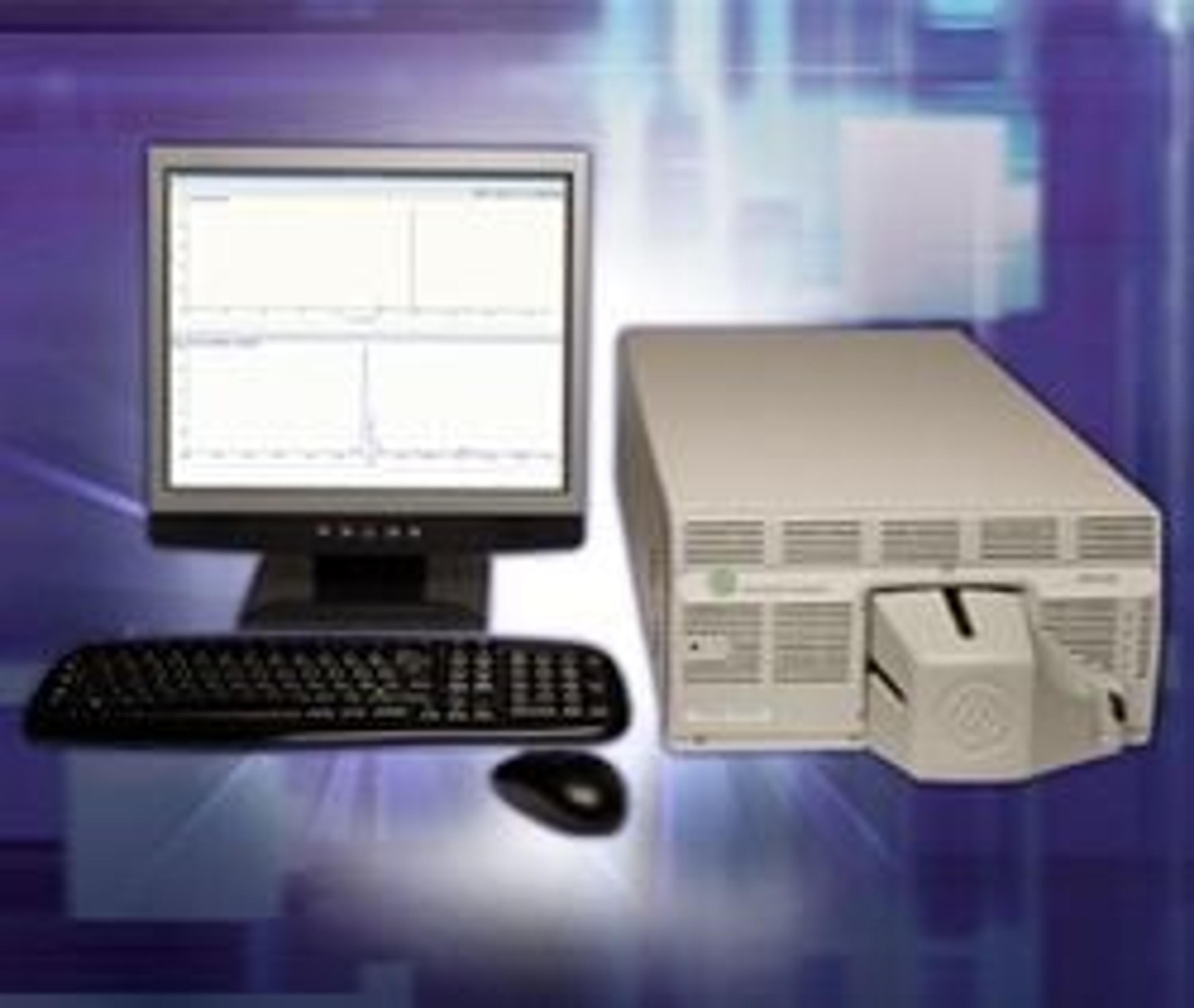
The Microsaic 3500 MiD (Molecular ion detector) is the world's smallest mass spectrometer, giving the chemist a compact, integrated system with no comprimise on performance. The 3500 MiD is the size of a single HPLC module with no floor pump or external PC. For the first time, chemists can have access to valuable MS data in the lab. The 3500 MiD is designed to integrate with existing HPLC equipment with no extra footprint and no infrastructure requirements (e.g. sound-proofing, AC). Extend the capability of your HPLC system with significant cost savings compared to a conventional MS system. Historically, MS has only been used for off-line analysis but the 3500 MiD is so compact can be used for on-line reaction monitoring in a fume-hood. Monitoring batch reactions in real time provides the chemist with vital reaction data which can be acted upon to maximise yield and/or minimize impurities. The 3500 MiD is also ideal for flow chemistry systems where MS data can be used for reaction optimisation. The system is portable with modular plug and play components for maximum application flexibility. Features of the 3500 MiD:•  Small footprint - fully integrated computer and vacuum system •  Stackable - size of standard LC module •  Quiet - no floor pump •  Unrivalled low power consumption •  Network ready - LAN interface and IP address •  Wireless keyboard and mouse, or remote access via LAN •  Intuitive, user-friendly Molecular iD software application •  Full data analysis suite based around total ion chromatogram (TIC) •  Full scan and selected ion monitoring (SIM) modes Applications of the 3500 MiD:•  In-line reaction monitoring (flow or batch) •  Mass selective detector for preparative and flash LC •  Process monitoring •  Analytical LC including Micro LC, Nano LC and HPLC

(2)

Links

Tags

UHPLC and HPLCHigh performance liquid chromatography (HPLC) and ultra high performance liquid chromatography (UHPLC), also known as UPLC, are analytical techniques used to separate, identify and quantitate components of complex mixtures including biological samples such as proteins and lipids as well as chemical mixtures of pesticides, drugs and oils. Both techniques are liquid chromatographic methods but differ by operating pressures (HPLC < 6000 psi < UHPLC ). Components of HPLC and UHPLC systems include columns, detectors, pumps, autosamplers and column heaters. Explore a range of UHPLC and HPLC columns for your specific sample needs including reverse phase, normal phase, ion exchange, HILIC, ion exclusion and size exclusion columns. For more specialized HPLC, explore FPLC, countercurrent LC and simulated moving bed systems. Find the best UHPLC and HPLC equipment in our peer reviewed product directory: compare products, check customer reviews and receive pricing direct from manufacturers.LC-MSLC-MS (liquid chromatography-mass spectrometry) systems and equipment are used for separation and quantitative analysis of complex mixtures, combining liquid chromatography and mass spectrometry. Quantify proteins, contaminants, pesticides or screen for drug metabolites with a high level of sensitivity. LC-MS systems and equipment include reverse phase, normal phase and specialized columns integrated with various MS detectors such as time-of-flight (TOF), quadrupole, orbitrap or ion trap mass analyzers. LC-MS/MS instruments equipped with a qTOF or triple quadrupole analyzer give greater sensitivity and resolving power to your analysis. Find the best LC-MS equipment in our peer-reviewed product directory: compare products, check customer reviews and receive pricing direct from manufacturers.Mass SpectrometryMass spectrometry (MS) is a powerful analytical technique used to identify and quantify molecules based on the mass-to-charge ratio of gas-phase ions. It provides detailed information about the structure, composition, and properties of compounds and is widely used across fields such as environmental monitoring, materials science, drug discovery and development, food and beverage testing, and wider chemical research. Key MS techniques include tandem mass spectrometry (MS/MS), liquid chromatography–mass spectrometry (LS-MS) and inductively coupled plasma (ICP-MS). Choosing from these wide range of techniques and technologies can be a daunting task, so keep up to date with scientific applications, performance expectations, and customer reviews here all in one place. Visit our product directory to receive quotes direct from the manufacturer. Detection Limits
HPLC Characterization of 99.5% Pure Compounds using the 3500 MiD