
How to Avoid Formation of Oils and Gums When Drying HPLC Fractions
2 Oct 2017Traditional concentration of reverse phase HPLC fractions to dryness in a Genevac HT evaporator is a fast and safe process. However, for certain compounds a fully dried result can be hard to achieve due to compound interactions with water boosting up the boiling point making drying difficult. Some compounds also tend to naturally form a gum or oil. In such cases, subsequent characterization by NMR normally indicates the presence of residual solvent, whilst samples which are not completely dry are of little use in biological assays since accurate weights cannot be obtained.This application note presents the Lyospeed™ method for avoiding these problems.
Related products
Request Quote for All Products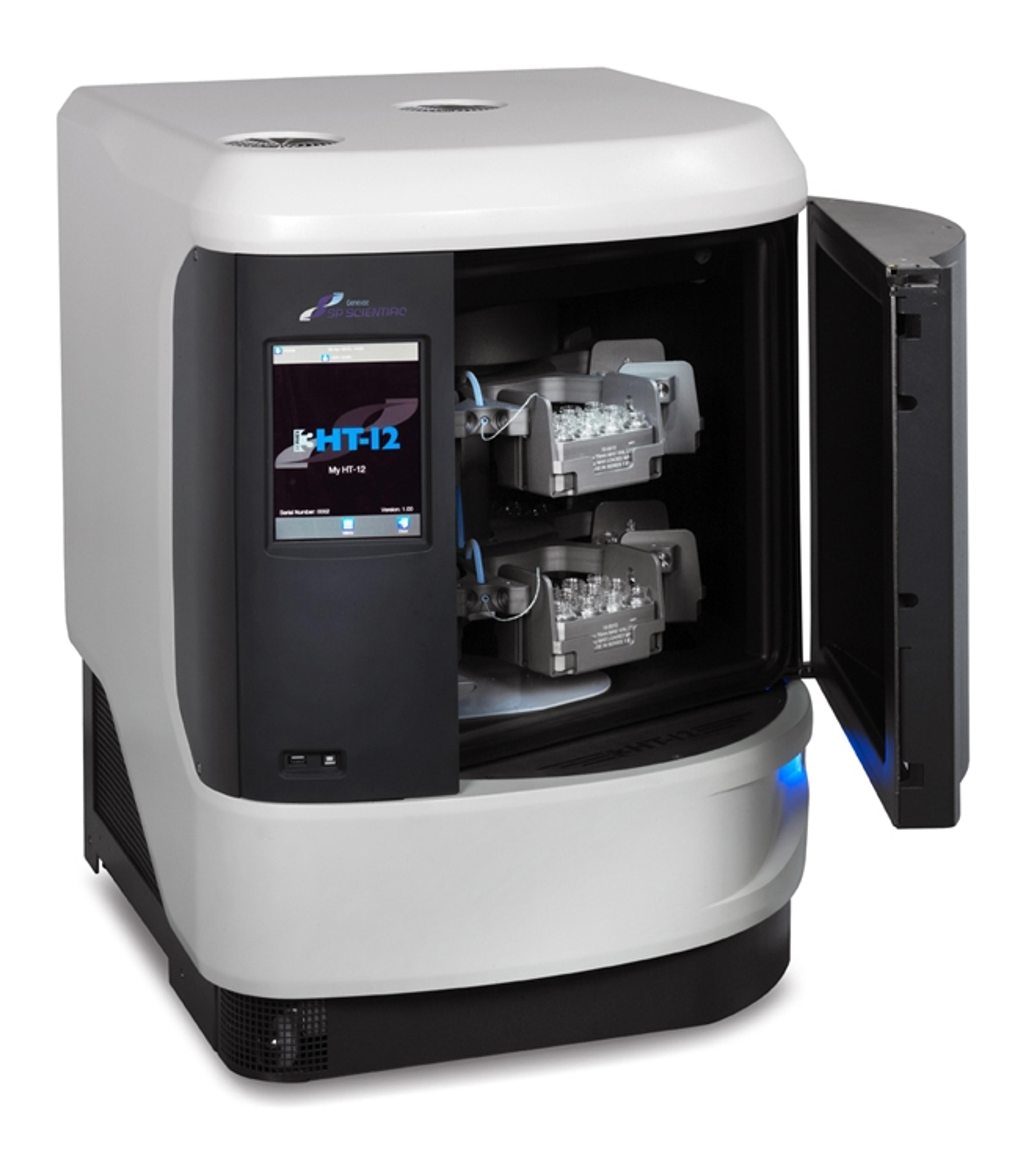
Series 3 HT Evaporator
GenevacThe all new Series 3 HT evaporator range from Genevac represents the ultimate in solvent removal technology. The latest touchscreen technology, new high performance vacuum pump, and a sleek ergonomic design makes optimising your evaporation processes effortless. High speed, High throughput evaporation Front opening for easy access. New intuitive touchscreen control system for ultimate ease of use Integral condenser meaning a smaller system footprint Rugged design with clean lines and a modern look All the features and functionality you expect from a Genevac HT evaporator including Dri-Pure anti-bumping, automatic end of run, HCl resistance, Inert Gas Purge, Lyospeed and EXALT controlled crystallisation Available in HT-6 and HT-12 format, Series 3 HT evaporators feature a new 6 place rotor which accepts all existing Genevac HT series holders. Sample formats include microtitre plates, tubes, vials, flasks and SampleGenie - unique flask and sample holder technology which enables large volume samples to be dried or concentrated directly into the small vial of your choice. Intuitive touchscreen controls enhances monitoring and review of the whole evaporation process. For popular solvent removal protocols pre-set 'Press & Go' methods makes operation easy and productive even for occasional users. Simplified manual and automatic programming means even the most complex multi-stage evaporation methods can be set-up and run quickly and easily. Genevac HT Evaporators are designed to provide the ideal solution for evaporation bottlenecks in the drug discovery laboratory. High performance and high sample capacities make them the ideal workhorses for the busy medicinal chemistry laboratory. Applications: High Throughput Chemistry and Parallel Synthesis LC/MS or HPLC Purification Fast Lyophilisation of purification fractions Natural Products Research Oligosynthesis Flash Chromatography Process Development.
LyoSpeed™
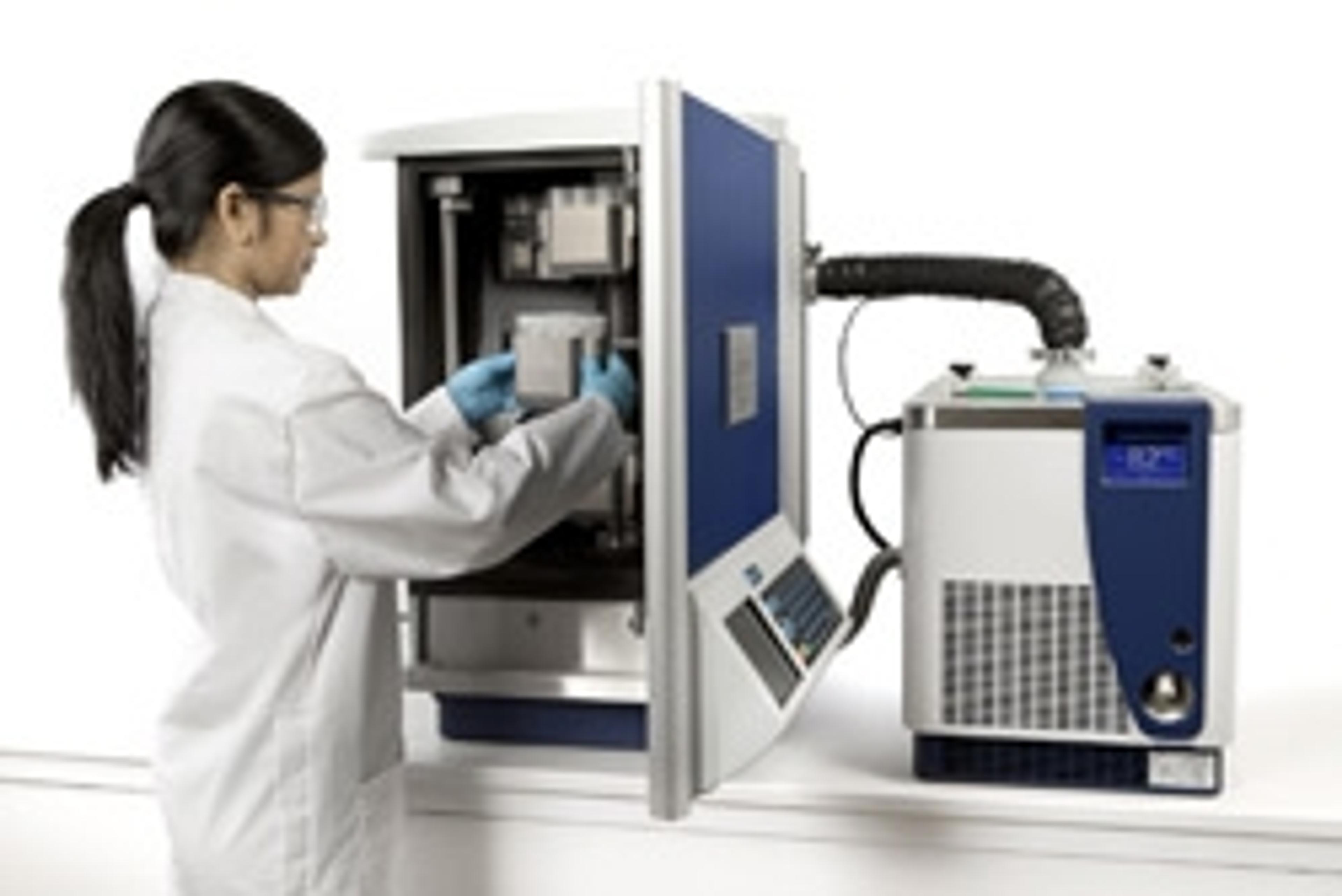
GenevacLyoSpeed™ delivers exceptional results with even the most difficult samples. When working with certain solvents, e.g. HPLC solvents, a fully dried result can be hard to achieve due to interactions with the dissolved sample - resulting in the formation of a gum or oil.In response to customer demand Genevac have developed a Fast Lyophilisation, or LyoSpeed™ process to resolve these problems for customers working with HPLC solvents. Most recently, this has been taken further through the collaborative development of the SuperCool high power -75°C cold trap.