How precision liquid handling is powering multiplex testing in animal health

12 Nov 2025

In this case study, learn how Irish veterinary diagnostics company Enfer Scientific relies on BioDot precision liquid handling systems to manufacture multiplex ELISAs that detect multiple diseases in a single test – from tuberculosis in cattle to infections in wildlife. After more than 15 years of using BioDot platforms, the team continues to count on their accuracy and reliability to deliver fast, flexible, and species-spanning diagnostics.

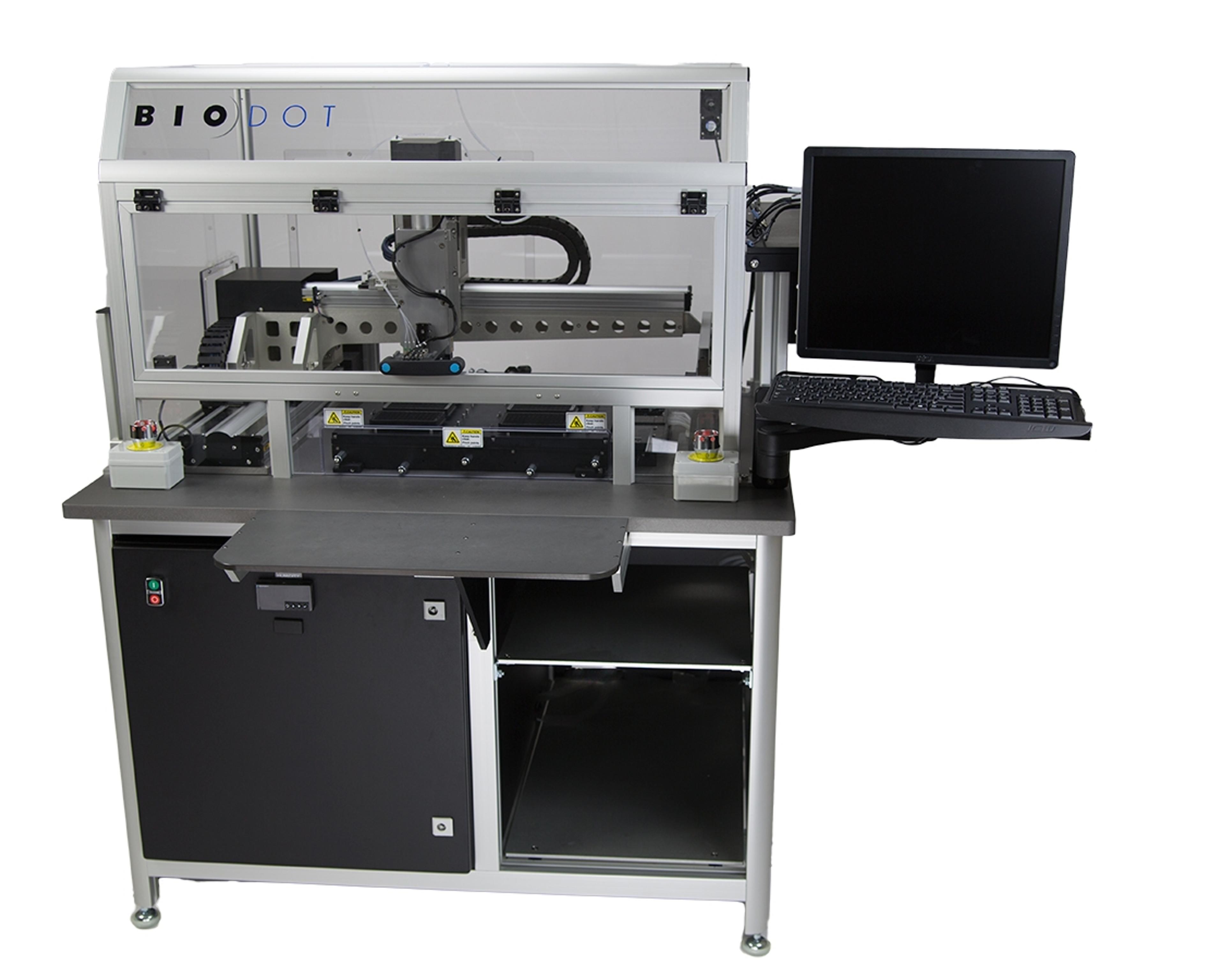
XYZ3210 Dispense Platform

BioDot Inc.

Features:Precision Dispensing - Quantitative dispense volumesFlexibleOptional configurations to have AirJet HR, BioJet HR, FrontLine HR, or PolyDrop dispensersMenu driven operating softwareMagnetic NestFootprint - Small design that can accommodate R&D and manufacturing needsMulti-Mode DispensingLine dispensingDot dispensingSuitable for Lateral Flow, Immunoblot, and Flow Through applications

(0)

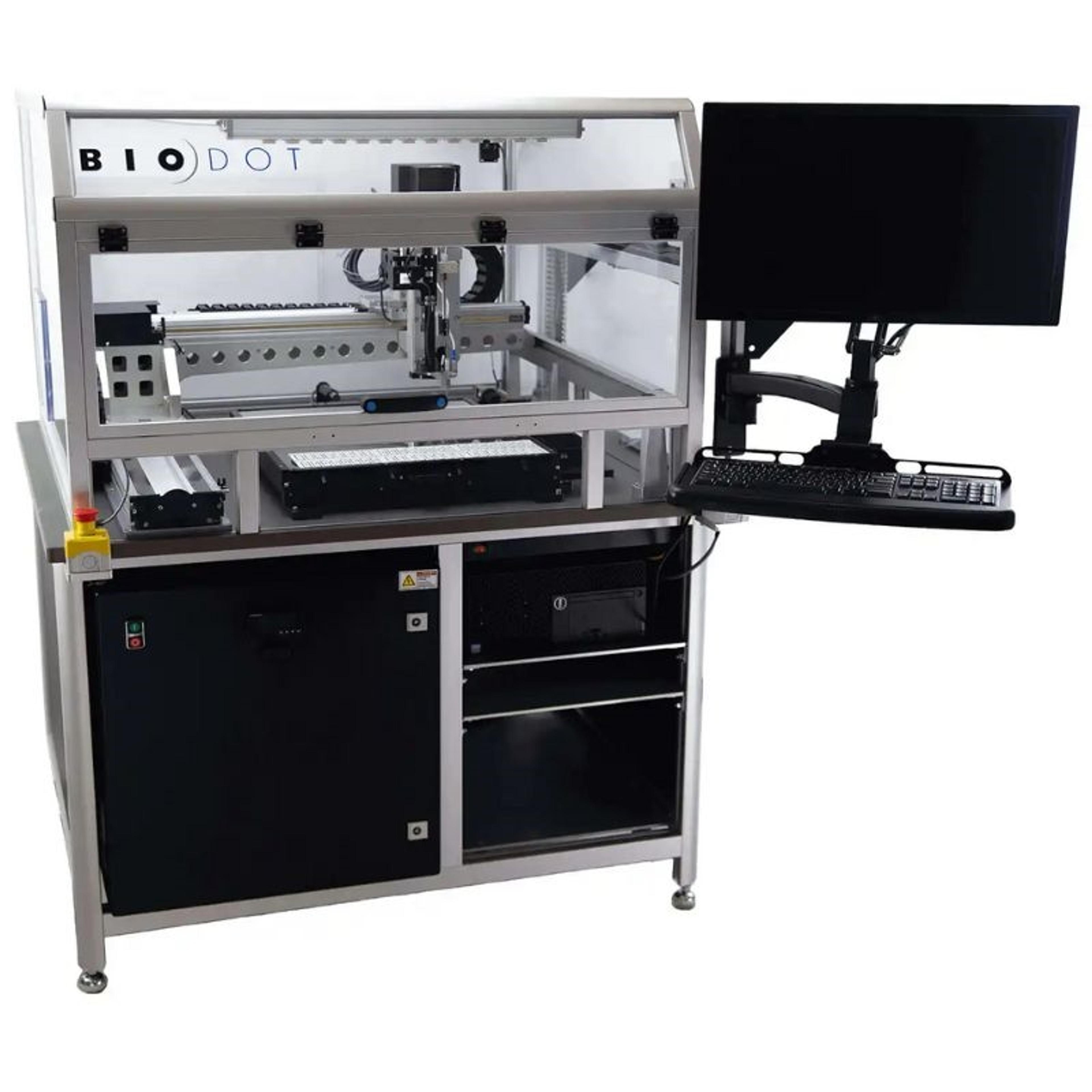
AD3420 Aspirate / Dispense Platform

BioDot Inc.

Features:Overhead Gantry XYZ System (600 x 300 mm motion envelope)Fixed Nest BaseEnclosure with Humidity ControlChassisPC Control Workstation with AxSys SoftwareAspirate and Dispense CapabilityChoice of 3 Nests
(0)

AD6020 Aspirate / Dispense Platform

BioDot Inc.

The AD6020 combines BioDot’s precision low volume dispensing technologies and a large customizable nest to create a high throughput, multi-channel automated liquid handling workstation. Nests for MTPs and slides are available or the system can be customized for unique spotting surfaces and/or labware. Manufacturing throughput can be optimized through single/dual shuttle nest designs.

(0)

Links

Tags

Automated Liquid HandlingAutomated liquid handling equipment is used to mix, dilute and dispense allotted volumes of liquid into microplates and other vessels automatically. The robotic, liquid handling arms can dispense from single channel to 3456 multichannel as well as operate nanoliter dispensing, enabling high throughput of samples. Find the best automated liquid handlers in our peer-reviewed product directory: compare products, check customer reviews and receive pricing direct from manufacturers.Robotic InstrumentsRobotic instruments can be used for high-throughput automation of many lab processes. Such processes use instruments for assays like cell based assays and ELISA, for sample preparation like shakers, centrifuges and incubators, and for analysis such as sequencing and western blot analyzers. Useful features of robotic instruments include speed, reproducibility, barcode readers, software and automation.Robotic WorkstationsRobotic workstations are automated platforms enabling the user to perform high-throughput, multi-application processes, from sample preparation tasks such as PCR set-up, DNA purification and NGS library preparation, to integrated sample prep and analysis workstations. Automation makes processes consistent, fast, precise and fully walk-away. Find the best robotic workstations in our peer-reviewed product directory: compare products, check customer reviews and receive pricing direct from manufacturers.ELISAEnzyme-linked immunosorbent assays (ELISA), also known as enzyme immunoassays (EIA), are used for the detection and quantification of proteins, peptides and antibodies in a sample. ELISA often comes in kit format, with pre-selected antibody pairs to detect specific proteins or biomarkers of diseases such as diabetes and obesity, or cardiovascular and neurological disorders. Detection is made possible with chemiluminescent, fluorescent or colorimetric substrates and detection instruments such as microplate / ELISA readers. Other kits available include: Enzyme-linked immunospot (ELISPOT) assays for the quantification of protein-producing cells and chemiluminescent immunoassays (CLIA) kits. Find the best ELISA kits and products in our peer-reviewed product directory: compare products, check customer reviews and receive pricing direct from manufacturers.VeterinaryInfectious DiseaseInfectious disease diagnostics refers to the isolation and identification of causative agents, such as viruses, bacteria or fungi. Diagnostic tests include bacterial culture, microscopy, chemistry assays, molecular diagnostics and MALDI-TOF. Tests can be carried out in the laboratory or at the point-of-care.
How precision liquid handling is powering multiplex testing in animal health