
High-temperature creep testing of a superalloy bond coat
16 Jul 2023Superalloys are materials developed specifically to retain high strength and resistance to creep during operation at very high temperatures. Modern superalloys are complex materials, often composed of a dozen or more constituent elements. The performance of a superalloy may be further enhanced by the application of a thermal barrier coating (TBC).
The TBC is bonded to the superalloy by a bond coat formed when the alloy is held at high temperature for an extended period of time in the presence of oxygen. During formation, oxygen diffuses inward from the surface while various constituent elements diffuse outward toward the surface at varying rates. The resulting microstructure is a complex multilayer system that provides a strong, tough bond between the metal interior of the part and the oxide TBC. Mechanical properties of all materials change with temperature, making measurement of the behavior of various bond coat layers over a wide temperature range an essential component in modeling and designing superalloys with improved properties.
This application note details a study carried out by Bruker to investigate the time and temperature-dependent mechanical properties of bond coat layers to understand the complex mechanical interactions that occur when superalloy components are used under service conditions.
Related products
Request Quote for All Products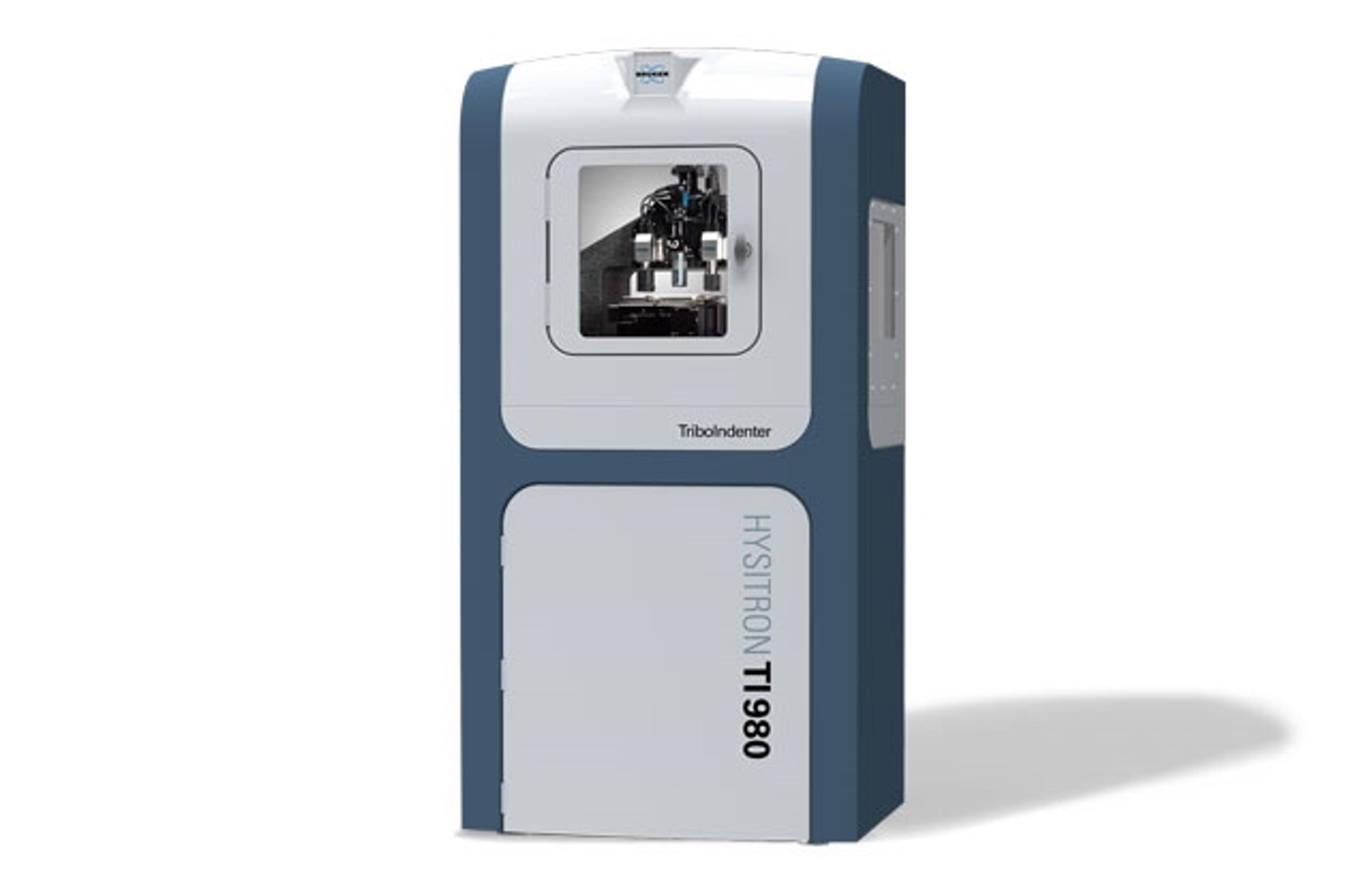
Hysitron TI 980
Bruker Nano Surfaces and MetrologyThe Hysitron TI 980 nanoindenter achieves remarkable advances in control and throughput capabilities, testing flexibility, applicability, measurement reliability, and system modularity. This industry-leading system builds upon decades of Hysitron technological innovation to deliver new levels of extraordinary performance, enhanced capabilities, and ultimate versatility in nanomechanical characterization.