
High Cell Density <i>E. coli</i> Fermentation using DASGIP® Parallel Bioreactor Systems
24 Feb 2014In contract manufacturing one of the most challenging needs is the adaption of proprietary production processes, their optimization as well as process improvements after a transfer from one Contract Manufacturing Organization (CMO) to another. Each single process modification has to be verified with comparable data. This application note gives an example for such an adapting procedure achieved by the use of the DASGIP Parallel Bioreactor System.
Related products
Request Quote for All Products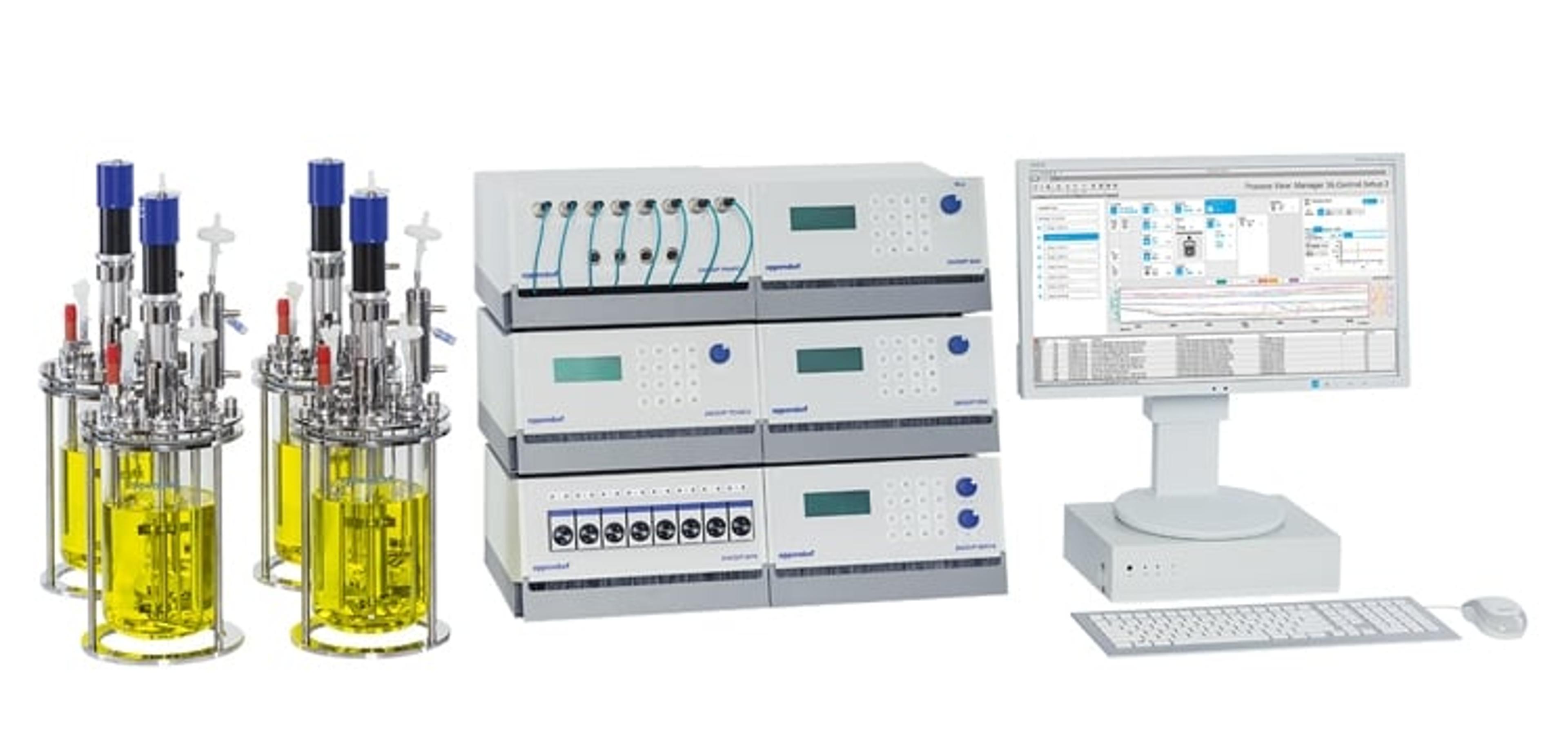
Eppendorf DASGIP® Parallel Bioreactor System
EppendorfDASGIP Parallel Bioreactor Systems for R&D and process development in both cell culture and microbiology allow for advanced bioprocess control and automation. Parallel processing, precise control of all relevant parameters, user-defined profiles and innumerable automation features result in accelerated and highly efficient process development. Our DASware software solutions support DoE, process historians and comprehensive data management. Configurable solutions address the unique requirements of microbial, phototrophic, mammalian and human cells, stem cell applications, as well as biofuel and biopolymer processes. Eppendorf DASGIP® Parallel Bioreactor System Features: Advanced process control and parallel operation of up to 16 glass or single-use bioreactors; DASGIP Bioblock for advanced and user-friendly temperature control; Modular design of control units allows for flexible system configurations that meet the demands of specific applications; Control of agitation, pH, level and DO (including customizable cascade modes) in each bioreactor; Variable speed pumps for accurate liquid addition and operation in batch, fed-batch, continuous and cyclic perfusion mode; Optical absorbance measurement for online calculation of e.g. OD600 or cell dry weight; TMFC individual gas mixing of air, N2, O2 and CO2; Online calculation of OTR, CTR and RQ; DASware control Software for advanced process control; Compatible with DASware Software Suite for interconnectivity and bioprocess information management. Applications: Research and development in cell culture and microbiology as well as phototrophic applications; Lab scale fermentation of aerobe and anaerobe bacteria, yeasts and fungi; Cultivation of mammalian, insect and human cell lines; Special applications such as stem cell culture or biofuel/biopolymer development.