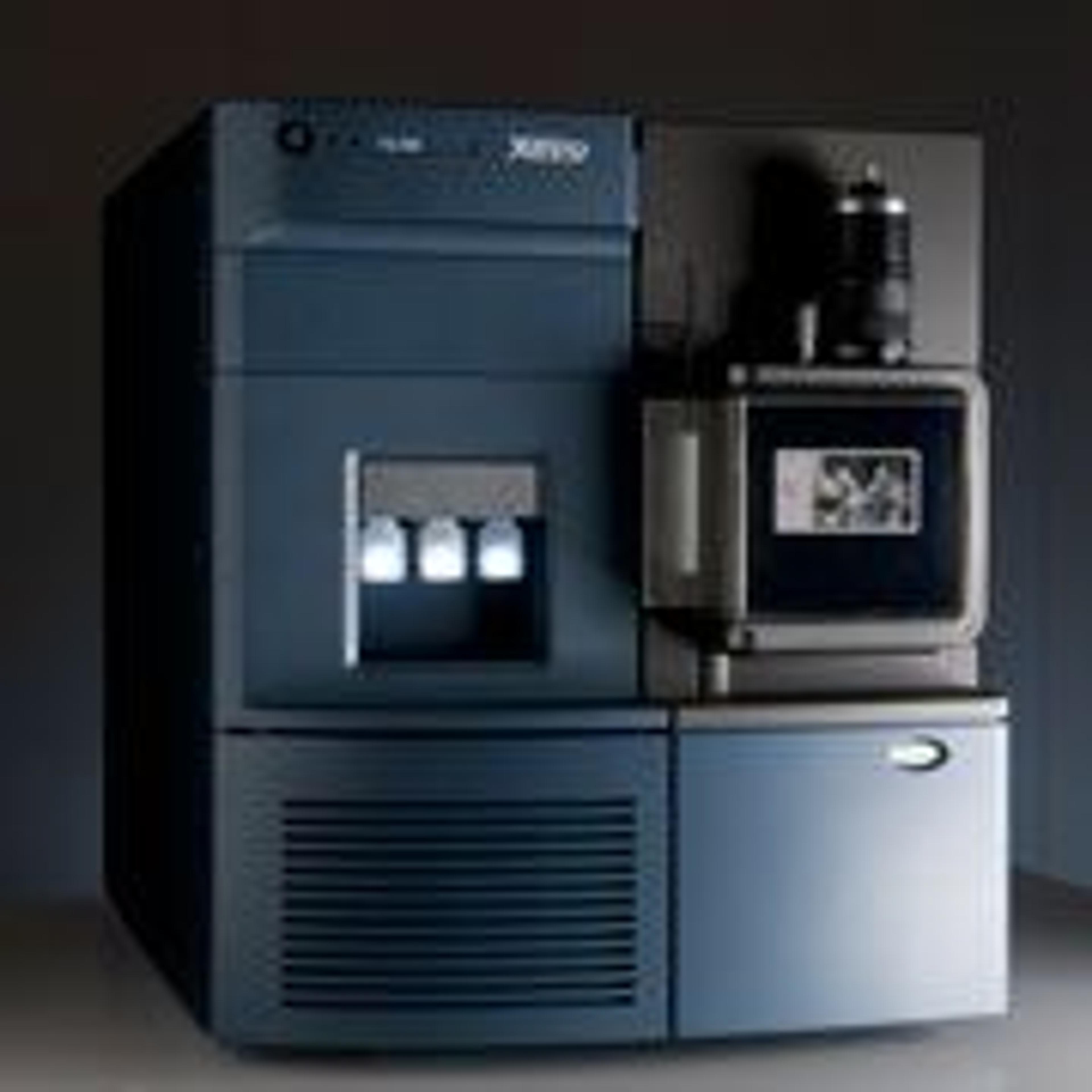
Harmonize your biopharmaceutical (LC/MS) workflows

19 Jun 2022

In this infographic, Waters introduces its Xevo™ G3 QTof System, an analytical workhorse for the detailed characterization of biomolecules and processes.

Xevo TQ MS

Waters

Waters Xevo™ TQ MS provides the ultimate in quantitative capabilities for your most demanding applications and your most complex sample matrices. It is a highly advanced tandem quadrupole mass spectrometer designed to enable uncomplicated access to superior HPLC and UPLC®/MS/MS performance, delivering the highest levels of sensitivity, selectivity, robustness, speed, and accuracy. Waters Xevo TQ MS is equipped with unique collision cell technology (ScanWave™) to provide new enhanced spectral LC/MS/MS data acquisition capabilities. Unlike conventional tandem quadrupole mass spectrometers, the Xevo TQ MS is designed not only to provide the very best quantitative data, but also to provide you with superior spectral MS/MS information. Xevo TQ MS offers you much more versatility in a single instrument platform that is adaptable to a variety of different UPLC/MS/MS applications both quantitative and qualitative: bioanalysis, ADME screening, food safety, environmental monitoring, forensic, and more. Features: Automated system set up and system checks for simple access Automated instrument optimization and quantitative method development tools for ease-of-use The latest innovations in high efficiency, robust, easy-to-use ZSpray™ atmospheric pressure ion source technology Versatile range of ionization options, including multi-mode ionization capability in a single run Unique, innovative T-Wave™ and ScanWave enabled collision cell technology Footprint that sits easily on your laboratory benchtop Dedicated application managers for your specialized analytical requirements

(14)

Links

Tags

AntibodiesAntibodies are used in techniques such as confocal and fluorescence microscopy, flow cytometry, ELISA, ELISPOT, immunohistochemistry, western blotting and immunopreciptation. Select specific antigen reactivity, high specific affinity, low non-specific binding, monoclonal or polyclonal, primary or secondary antibodies and associated conjugates such as an enzyme or dye for visualization.Combinatorial ChemistryCombinatorial chemistry, also known as combichem, is a technique used in drug discovery to create libraries of structurally related compounds. A library is generated by synthesis with a chemical reactor system or by computer-based modeling of compound combinations. When undertaking combinatorial chemistry consider reagents, buffers, resins and standards.Biopharmaceutical AdvancesBiopharmaceutical advances follow the development of pharmaceuticals derived from biotechnology, also known as biotechnology medicines. Biopharmaceuticals may be produced from cell lines, plants, or microbial cells. Important considerations of biopharmaceutical use include application, cost, production process and purification.Discovery SoftwareComputational techniques used in both the chemistry and biology aspects of drug discovery, for data acquisition, processing and storage. Software is used for analysis of pathways, target identification, genomics, proteomics, modelling, lead identification, compound analysis and drug modelling among many others. Monoclonal AntibodiesMonoclonal antibodies (mAbs) are lab-made molecules that can bind to specific antigens on cells, making them highly effective in treating cancers, autoimmune diseases, and infections. These targeted therapies are transforming the treatment landscape for many conditions. Browse our peer-reviewed product directory to find monoclonal antibodies for research and clinical applications; compare products, check reviews, and get pricing directly from manufacturers.BiosimilarsBiosimilars are very similar versions of approved and authorized medicines. Clinically inactive components will have minor differences, but there are no significant differences between the biosimilar and the original product in terms of potency, purity and safety.Therapeutic AntibodiesTherapeutic antibodies are antibodies engineered for use in treating diseases. They can be designed to target specific antigens, blocking harmful interactions or modulating immune responses. Therapeutic antibodies are critical in treating conditions like cancer, autoimmune disorders, and infectious diseases. Explore the best therapeutic antibody products in our peer-reviewed product directory; compare options, check reviews, and get pricing directly from manufacturers.Drug DevelopmentDrug development refers to the process of bringing a new drug to market.