ResourceSpectroscopy

Fully Automated Tissue Classification by Imaging Mass Spectrometry

8 May 2018

Desorption electrospray ionisation mass spectrometry is a surface analysis technique that can rapidly analyse the lipid and metabolite composition of a tissue section. By moving the tissue under the analysis probe, a chemical map of the sample can be generated in a matter of minutes. Each tissue type or disease state has its own characteristic molecular fingerprint, therefore, using histologically annotated databases of these molecular profiles, these maps can be classified using machine learning approaches. This poster investigates how this technique could potentially be used to assist in histopathology workflows.

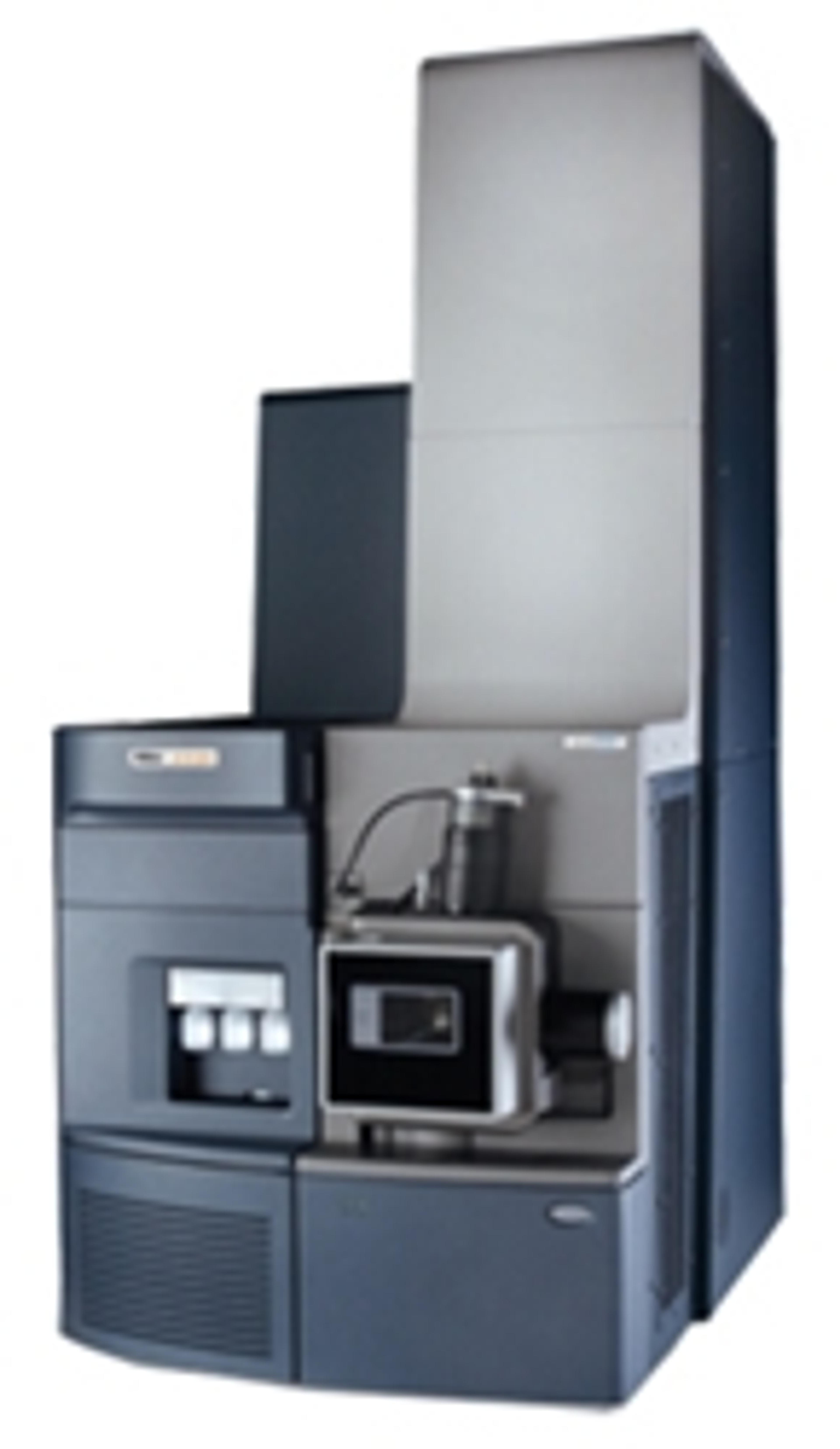
Xevo G2-XS QTof

Waters

Xevo G2-XS QTof - eXtreme Sensitivity, eXtraordinary Selectivity, eXceptional Solutions. For the scientist who needs to identify, quantify and confirm the broadest range of compounds in the most complex and challenging samples the Xevo G2-XS QTof provides maximum robustness with no compromise in performance, class-leading real-world quantitative sensitivity, the highest quality, most comprehensive qualitative information, flexibility to adapt to changing needs and is accessible to experts and non-experts alike.

(17)

Links

Tags

Mass SpectrometryMass spectrometry (MS) is a powerful analytical technique used to identify and quantify molecules based on the mass-to-charge ratio of gas-phase ions. It provides detailed information about the structure, composition, and properties of compounds and is widely used across fields such as environmental monitoring, materials science, drug discovery and development, food and beverage testing, and wider chemical research. Key MS techniques include tandem mass spectrometry (MS/MS), liquid chromatography–mass spectrometry (LS-MS) and inductively coupled plasma (ICP-MS). Choosing from these wide range of techniques and technologies can be a daunting task, so keep up to date with scientific applications, performance expectations, and customer reviews here all in one place. Visit our product directory to receive quotes direct from the manufacturer. Cell / Tissue CultureCell culture or tissue culture is used to study the biology of cells or tissues and to isolate cellular products in an environment which can be manipulated and well defined. Accurately control your culture environment with bioreactors or culture incubators, bind your cells to a surface or together with an extracellular matrix. Distinguish cell types with differential media or proliferate cells with certain characteristics using selective media. Enrich your media with supplements such as growth factors, sera and vitamins. Find the best cell and tissue culture products, kits and equipment in our peer-reviewed product directory: compare products, check customer reviews and receive pricing direct from manufacturers.MetabolitesMetabolites are the intermediate and end products of metabolism. Analyzing metabolites offers insight into cellular processes and disease mechanisms and is critical in fields like pharmacology, toxicology, and diagnostics. Explore our peer-reviewed product directory to find the best tools for metabolite analysis, compare products, check reviews, and get pricing directly from manufacturers.Tissue ProcessingTissue processing involves preparing biological tissue samples for microscopic analysis, including fixation, embedding, and sectioning. This process is essential for histopathology and diagnostic applications. Explore tissue processing products in our peer-reviewed product directory; compare products, check reviews, and get pricing directly from manufacturers.ImagingImaging techniques are essential for obtaining visual representations of samples to understand structures, processes, and function in biological, chemical, and physical research. These tools range from traditional light microscopy to advanced imaging modalities like MRI and electron microscopy, providing researchers with valuable data for diagnostics, drug discovery, and material analysis. Explore imaging solutions in our peer-reviewed product directory to compare products, check reviews, and get pricing directly from manufacturers.SpectroscopySpectroscopy is a technique that analyzes the interaction of light with matter to study molecular properties, concentrations, and structural information. Widely used in chemical, pharmaceutical, and environmental analysis, spectroscopy offers insights into molecular composition and helps identify unknown compounds. It plays a key role in quality control, research, and diagnostics. Browse our peer-reviewed product directory to compare spectroscopy tools, read reviews, and get prices directly from manufacturers.Electrospray IonizationImaging Mass Spectrometry
Fully Automated Tissue Classification by Imaging Mass Spectrometry