
ResourceGeneral Lab
From “Boulder” to Nano-Particles
26 Oct 2015Medium-hard to hard materials with edge lengths up to 95 mm can be pre-crushed with the FRITSCH Jaw Crusher PULVERISETTE 1 so an additional fine comminution with many FRITSCH mills is possible. Particle size and surface area are very important for a number of applications - this application note explains the grinding process and how to optimize your particle size to your application.
Related products
Request Quote for All Products
Laser Particle Sizer ANALYSETTE 22
Fritsch GmbH - Milling and SizingLaser particle sizing at the push of a button: 10 nm – 2100 µm
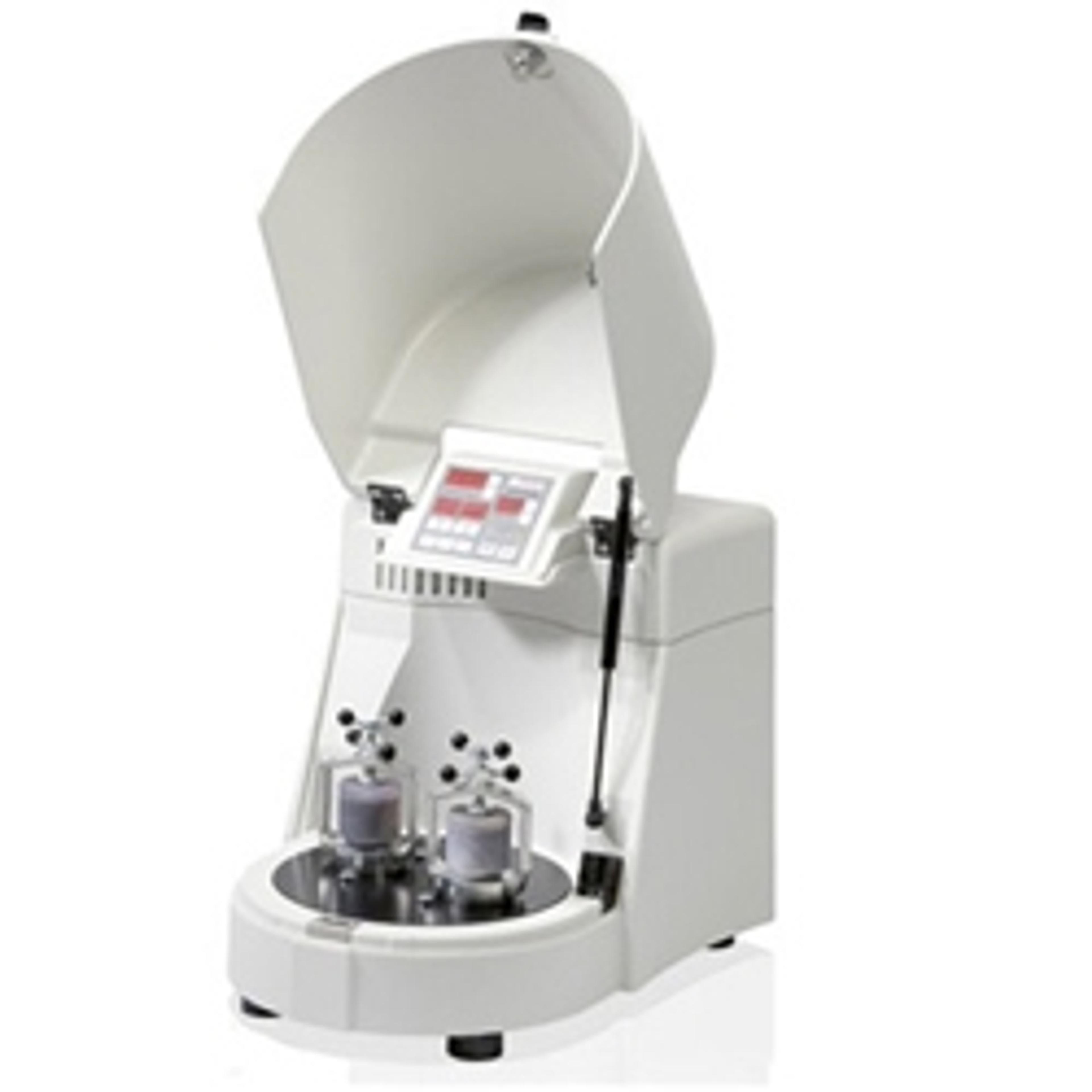
Planetary Micro Mill PULVERISETTE 7 classic line
Fritsch GmbH - Milling and SizingIdeal for smallest quantities

Planetary Mono Mill PULVERISETTE 6 Classic Line
Fritsch GmbH - Milling and SizingHigh performance in minimum space
Links
Tags
X-Ray Diffraction and SpectroscopyX-Ray diffraction & spectroscopy are used in material characterization to discern the structure and elemental composition of a sample. X-Ray diffractometers (XRD) are superior instruments in elucidating the dimensional atomic structure of crystalline materials, including powders, thin films and single crystals. For large unit cells or ordered macromolecules, consider small-angle X-ray scattering (SAXS). X-ray spectroscopic techniques include X-ray fluorescence (XRF) and X-ray photoelectron spectroscopy (XPS), both providing simple and accurate methods for determining the elemental composition of a material. Energy dispersive (EDXRF) and wavelength dispersive (WDXRF) XRF spectrometers are available, as well as handheld/portable devices. High-resolution, 3D microstructure characterization of materials can be achieved with X-ray microscopes combining sub-micron resolution imaging with 3D computed tomography. Find the best XRD and XRF spectrometers in our peer-reviewed product directory: compare products, check customer reviews and receive pricing direct from manufacturers.Particle CharacterizationParticle characterization instruments are used to determine particle size distribution, shape, surface area, zeta potential, density and porosity of particles and materials. Multiple tecchniques are available for determining particle size, shape and count including dynamic light scattering (DLS), laser diffraction, electrozone (Coulter technique), imaging particle analysis and single particle optical sensing. Determine the density of your material with a gas pycnometer or examine its surface area and porosity with gas adsorption analyzers and mercury porosimeters. Find the best particle characterization instruments in our peer-reviewed product directory: compare products, check customer reviews and receive pricing direct from manufacturers.Mechanical TestingMechanical testing explores the elastic and inelastic nature of a material when force is applied. A mechanical test shows whether a material is suitable for its intended application by measuring hardness, tensile strength, elongation, elasticity, and fatigue limit.Surface Area TestingPhysisorption studies fundamental parameters essential for the characterization of materials such as the specific surface area and pore size distribution. Properties such as porosity, strength, hardness, permeability, separation selectivity, corrosion, and thermal stress resistance can all be directly correlated to the porous structure of a material.Mills, Sieves and PressesMills, sieves and presses are used to break and sort solid materials into smaller particle sizes for further processing such as pellet pressing or analysis. Milling equipment includes grinders, ball mills, cutting mills, jaw crushers, knife mills, beater and planetary mills. Sorting of smaller particulates can be achieved with test sieves and sieve shakers. Final powders can be pressed with hydraulic presses. Milling and pressing solid samples is an important preparation step in X-ray fluorescence spectroscopy (XRF) and diffraction (XRD). Find the best mills, sieves and presses in our peer-reviewed product directory: compare products, check customer reviews and receive pricing direct from manufacturers.GrindingMillingMilling is the process of grinding, crushing, or cutting materials into smaller parts. In scientific research, it plays a crucial role in sample preparation for analysis in areas such as food, pharmaceuticals, and materials science. Explore milling equipment in our peer-reviewed product directory; compare products, check reviews, and get pricing directly from manufacturers.NanoparticlesNanoparticles are between 1-100nm in size. Nanoparticles can be used for a wide variety of applications including biomedical, catalysis and electronics.