ResourceSeparations

Food Safety Applications Notebook: Agricultural Chemical Contaminants

29 Apr 2014

The Dionex Food Safety Notebook is a compilation of all the food safety applications, to date. It is divided into sections based on contaminant type: agricultural chemical, environmental, food additive, and food processing. Applications include pesticides through Acrylamide in foodstuff.

This notebook combines applications notes on extraction and analysis by HPLC or IC. For your convenience the Food Safety Application Notebook also contains a Column Selection Guide at the end.

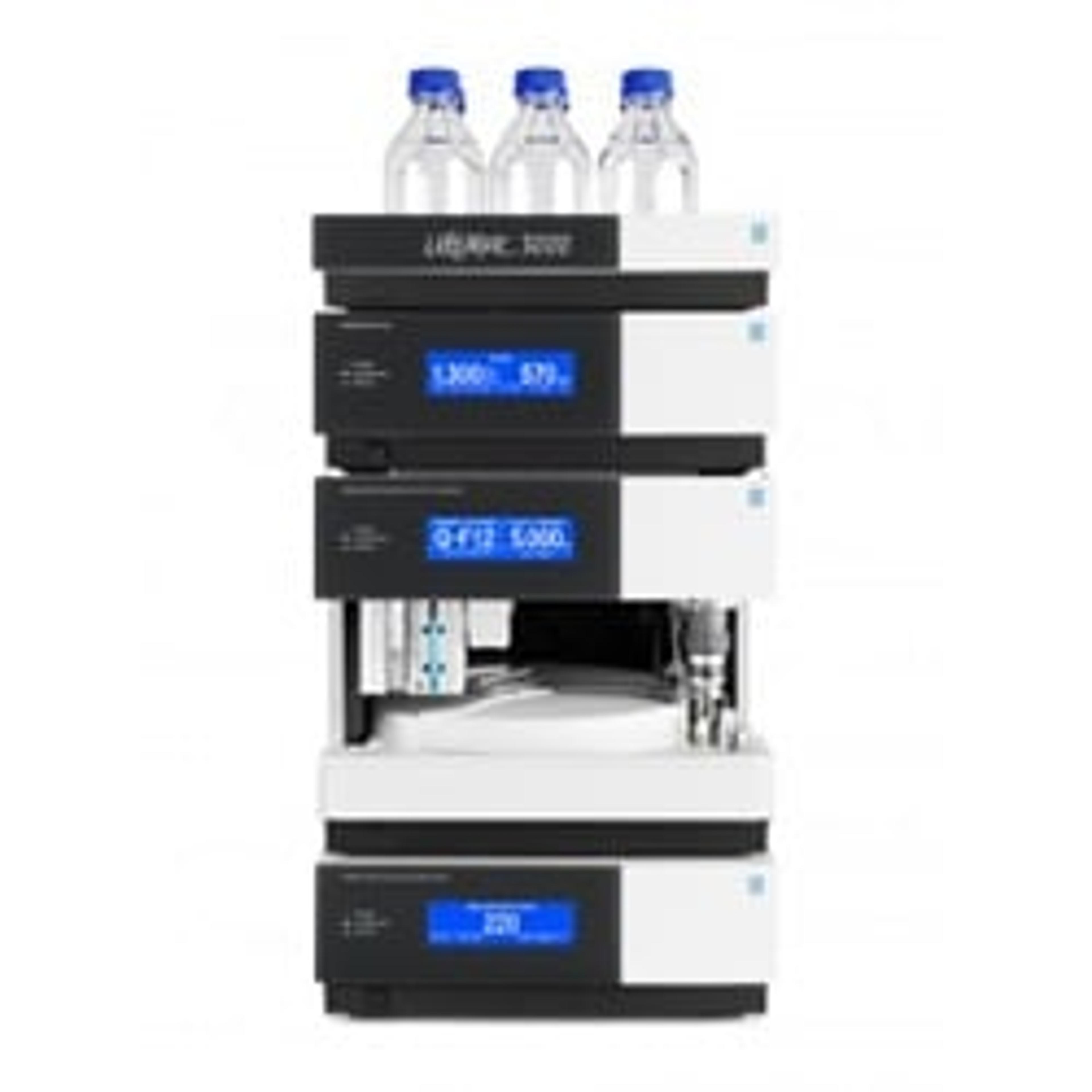
Thermo Scientific™ UltiMate™ 3000 UHPLC system

Thermo Fisher Scientific

  The Thermo Scientific™ UltiMate™ 3000 HPLC system offers UHPLC compatibility across all modules, ensuring maximum performance. Covering flows from 20 nL/min to 10 mL/min and offering a wide range of pumping, sampling, and detection modules, the UltiMate 3000 series provides solutions for all your chromatography needs. UltiMate 3000 HPLC system Features & Benefits:   UHPLC design for all nano, standard analytical, and RSLC systems. 620 bar maximum pressure for basic and standard analytical systems—setting a new benchmark in HPLC. x2 Dual Systems form a unique platform for routine analysis, increased productivity solutions, and advanced chromatographic techniques. Systems are controlled using Thermo Scientific™ Chromeleon™ Chromatography Data System software—providing Intelligent Functionality and Operational Simplicity™. Systems are offered with Thermo Scientific™ Viper™ and Thermo Scientific™ nanoViper™ fitting systems—fingertight, zero-dead-volume connections even at UHPLC pressures.
(40)

Links

Tags

UHPLC and HPLCHigh performance liquid chromatography (HPLC) and ultra high performance liquid chromatography (UHPLC), also known as UPLC, are analytical techniques used to separate, identify and quantitate components of complex mixtures including biological samples such as proteins and lipids as well as chemical mixtures of pesticides, drugs and oils. Both techniques are liquid chromatographic methods but differ by operating pressures (HPLC < 6000 psi < UHPLC ). Components of HPLC and UHPLC systems include columns, detectors, pumps, autosamplers and column heaters. Explore a range of UHPLC and HPLC columns for your specific sample needs including reverse phase, normal phase, ion exchange, HILIC, ion exclusion and size exclusion columns. For more specialized HPLC, explore FPLC, countercurrent LC and simulated moving bed systems. Find the best UHPLC and HPLC equipment in our peer reviewed product directory: compare products, check customer reviews and receive pricing direct from manufacturers.Food FraudFood adulteration refers to food when it has been has been altered unlawfully with the addition of another lower commodity food product to increase quantity. The 2013 European horsemeat scandal saw the adulteration of beef products with the addition of horse meat.Food SafetyFood safety describes the prevention of food-borne illnesses. Contamination with a variety of pathogens can be prevented with adequate temperature control, hygiene and labeling. Food samples can be tested using GC/MS, HPLC, SPE, and qPCR to ensure their adherence to regulations.Food ContaminationFood contamination refers to the presence of harmful substances or pathogens in food, posing risks to human health. Contaminants can be biological, chemical, or physical, and their detection is crucial for ensuring food safety. Advanced testing methods like PCR, chromatography, and spectroscopy are used to identify contaminants in food products. Browse our peer-reviewed product directory to find the best solutions for food contamination detection, compare products, check reviews, and get pricing directly from manufacturers.Veterinary DrugsAntibioticsAntibiotics are substances that kill or inhibit the growth of microorganisms, such as bacteria and fungi. They are essential in the treatment of infections and in preventing disease spread. Explore antibiotics research and diagnostic tools in our peer-reviewed product directory; compare products, check reviews, and get pricing directly from manufacturers.PesticidesPesticides are used to protect crops from diseases, pests and unwanted plants. They are classed as persistent organic pollutants (POPs) and can be harmful to humans. The Environmental Protection Agency (EPA) currently regulates the use of pesticides in the USA.
Food Safety Applications Notebook: Agricultural Chemical Contaminants