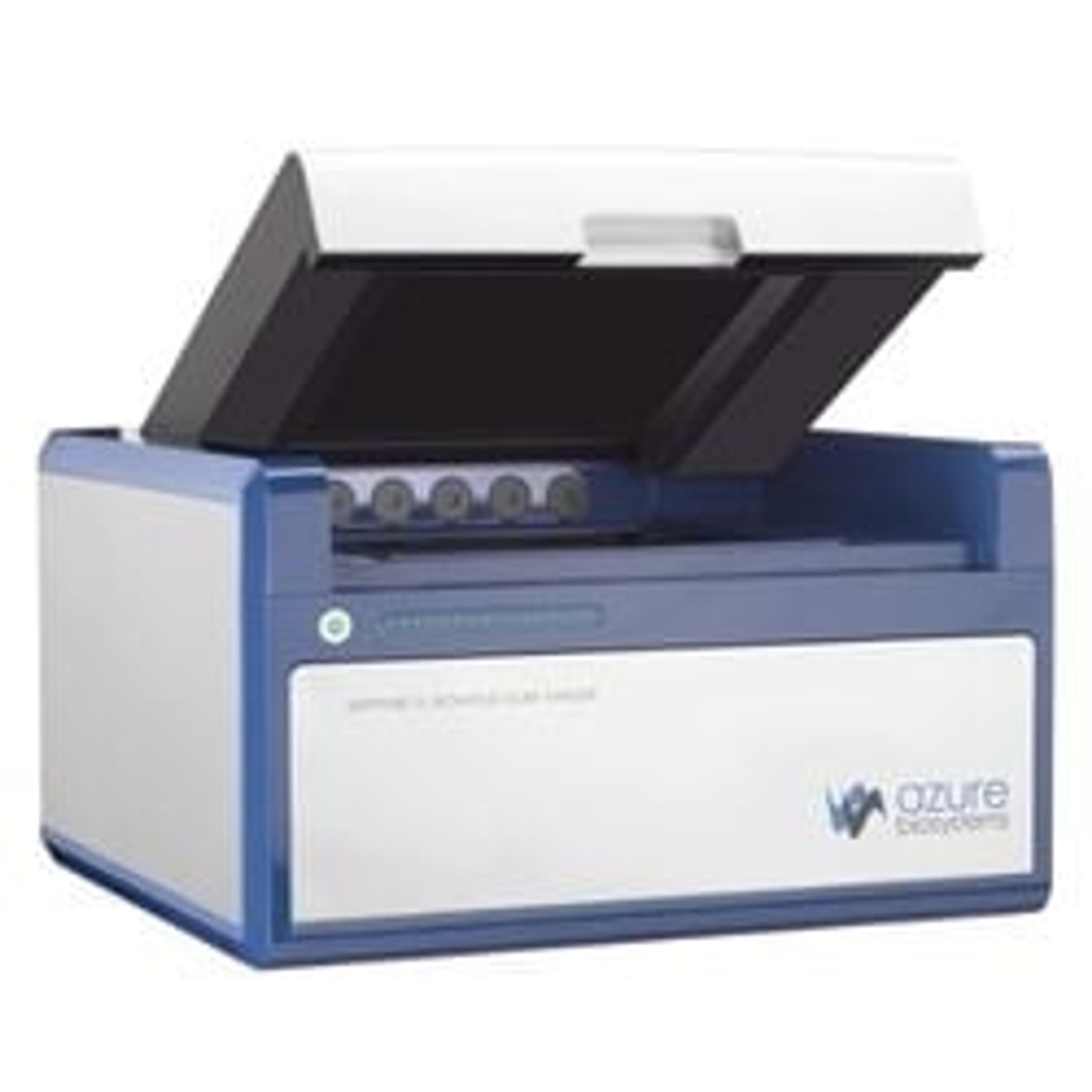
Fluorescent IHC imaging of tumor tissue arrays on the Sapphire FL

3 Jul 2024

Tissue microarrays offer a high-throughput approach to histology, immunohistochemistry (IHC), fluorescence in situ hybridization (FISH), and other experiments carried out on tissue sections. They are particularly valuable for studying tumors and cancer biology, as they facilitate comparisons among different sample types. Tissue microarrays are typically imaged under a microscope, one sample at a time. Azure Biosystems describes how tissue microarrays were stained with fluorescent stains or probed with antibodies in a two-color IHC experiment, and the Sapphire™ FL Biomolecular Imager was used to capture images of the entire array. These whole-slide images can be used to catalog slides and provide an initial survey of staining success before proceeding with higher-resolution imaging.

Links

Tags

Microarray AnalysisMicroarrays, also known as biochips, are used for the detection and analysis of multiple genes, proteins, antibodies, or biomarkers on a single microchip. This can reveal information on protein or gene expression, single nucleotide polymorphism (SNP), copy number variation (CNV), epigenetics and patient health in clinical diagnostic tests. Discover a range of microarray scanners and prefabricated antibody, protein, RNA and DNA microarrays for your analysis or consider creating your own custom microarrays with a microarray printer. Find the best microarray products in our peer-reviewed product directory: compare products, check customer reviews and receive pricing direct from manufacturers.ImmunohistochemistryImmunohistochemistry (IHC) is a technique used to detect specific proteins in tissue samples by using antibodies that bind to target antigens. IHC is widely applied in pathology, immunology, hematology and cancer diagnostics. Explore IHC tools in our peer-reviewed product directory; compare products, check reviews, and get pricing directly from manufacturers.Fluorescence ImagingFISHTumorsTumor research focuses on understanding abnormal cell growth that leads to cancer. Identifying biomarkers, studying tumor microenvironments, and developing targeted therapies are critical for advancing cancer treatment. Early detection and personalized treatment options are key to improving outcomes for patients. Browse our peer-reviewed product directory to explore tools for tumor research, diagnostics, and cancer therapies; compare products, read customer reviews, and get pricing directly from manufacturers.