ResourceSeparations

Evaluation of the SFC-FID for the Olefin Analysis ASTM D6550 Method

Evaluation of the SFC-FID for the Olefin Analysis ASTM D6550 Method

10 Dec 2015

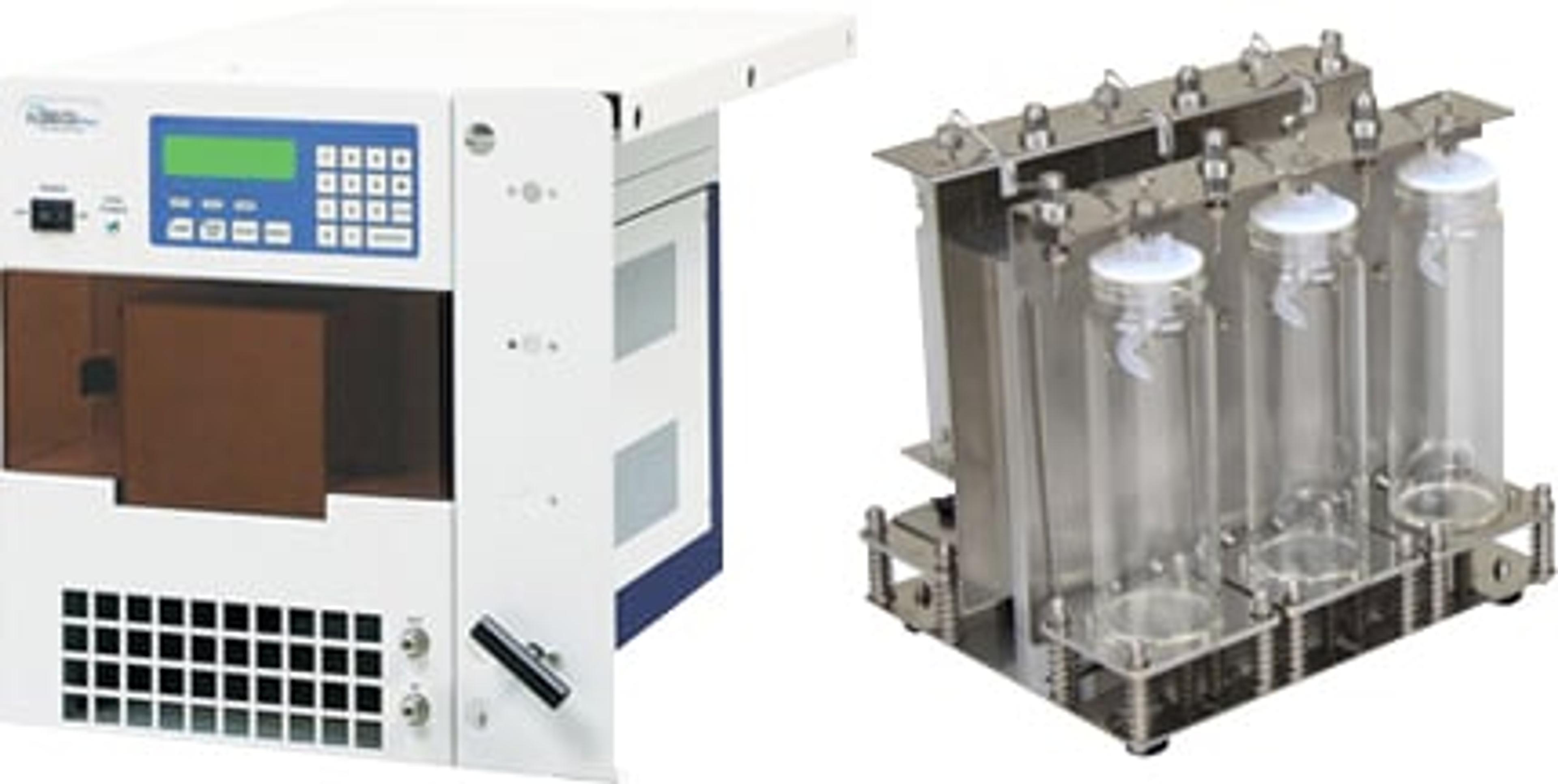
SFC has been well established for gasoline and diesel fuel analysis, using the ASTM D5186 and D6550 methods. Both ASTM methods require a silica column for the separation, while D6550 requires the use of an additional silver column for retention of the olefins. In this application note, the ability of SFC-FID to meet the specifications of the ASTM D6550 method was evaluated.

Supercritical fluid chromatography and extraction systems (SFC/SFE)

JASCO (USA)

Over the years, JASCO has responded to the growing emphasis on reducing chemical waste by offering an alternative to traditional HPLC with a full line of “green” SFC/SFE products.The reduction in the use of organic solvents has cost, health and safety benefits as well as faster, cleaner sample recovery during experimental procedures. The benefits of using supercritical fluids are their liquid-like densities offering higher solubility and increased column loading. They have low viscosity and are highly diffuse enabling faster separation and extraction.

(4)

Links

Tags

Supercritical Fluid ChromatographySupercritical Fluid Chromatography (SFC) is used for the rapid separation and analysis of complex mixtures. SFC systems require injectors, pumps, columns, ovens and detectors. The SFC retention method uses a supercritical fluid, usually CO2. There are a number of different SFC detector types including UV / VIs, ECD, mass spectrometry and fluorescence.Particle CharacterizationParticle characterization instruments are used to determine particle size distribution, shape, surface area, zeta potential, density and porosity of particles and materials. Multiple tecchniques are available for determining particle size, shape and count including dynamic light scattering (DLS), laser diffraction, electrozone (Coulter technique), imaging particle analysis and single particle optical sensing. Determine the density of your material with a gas pycnometer or examine its surface area and porosity with gas adsorption analyzers and mercury porosimeters. Find the best particle characterization instruments in our peer-reviewed product directory: compare products, check customer reviews and receive pricing direct from manufacturers.Thermal Analysis EquipmentThermal analysis equipment is used for measuring heat flow, weight loss, dimension changes or thermomechanical properties and is important for analyzing a material’s performance and stability. Thermal analysis equipment includes differential scanning calorimeters (DSC), thermogravimetric analyzers (TGA), thermomechanical analyzers (TMA), dilatometers, thermometers, vapor sorption analyzers, boiling and melting point apparatus. Thermal analyzers can reveal properties such as melting, crystallization and glass transitions or other processes such as oxidation, decomposition, volatilization, as well as coefficients of thermal expansion and modulus. Find the best thermal analysis equipment in our peer-reviewed product directory: compare products, check customer reviews and receive pricing direct from manufacturers.Non-Destructive TechniquesNon-destructive techniques (NDT) describes a variety of analytical techniques used to evaluate the properties of a material. Common methods include ultrasonic, magnetic-particle, liquid penetrant, radiographic, remote visual inspection (RVI), and eddy-current testing. NDT is regularly used in forensic engineering, civil engineering, mechanical engineering, electrical engineering, systems engineering, aeronautical engineering, and medicine.PetroleumBiodieselPetrochemicalsPetrochemicals are chemical products derived from petroleum or natural gas, essential in creating plastics, fuels, and synthetic materials. Analytical techniques help ensure product quality and environmental compliance. Browse equipment for petrochemical analysis in our product directory.Organic CompoundsOrganic compounds are carbon-based molecules that form the building blocks of life. These include hydrocarbons, lipids, proteins, and nucleic acids. Understanding organic compounds is crucial in chemistry, biochemistry, and pharmacology. Explore organic compound analysis tools in our peer-reviewed product directory; compare products, check reviews, and get pricing directly from manufacturers.