Evaluation of the ambr® 250 Fully Automated Single-use Bioreactor System For High Throughput Fed-Batch Culture

1 Sept 2015

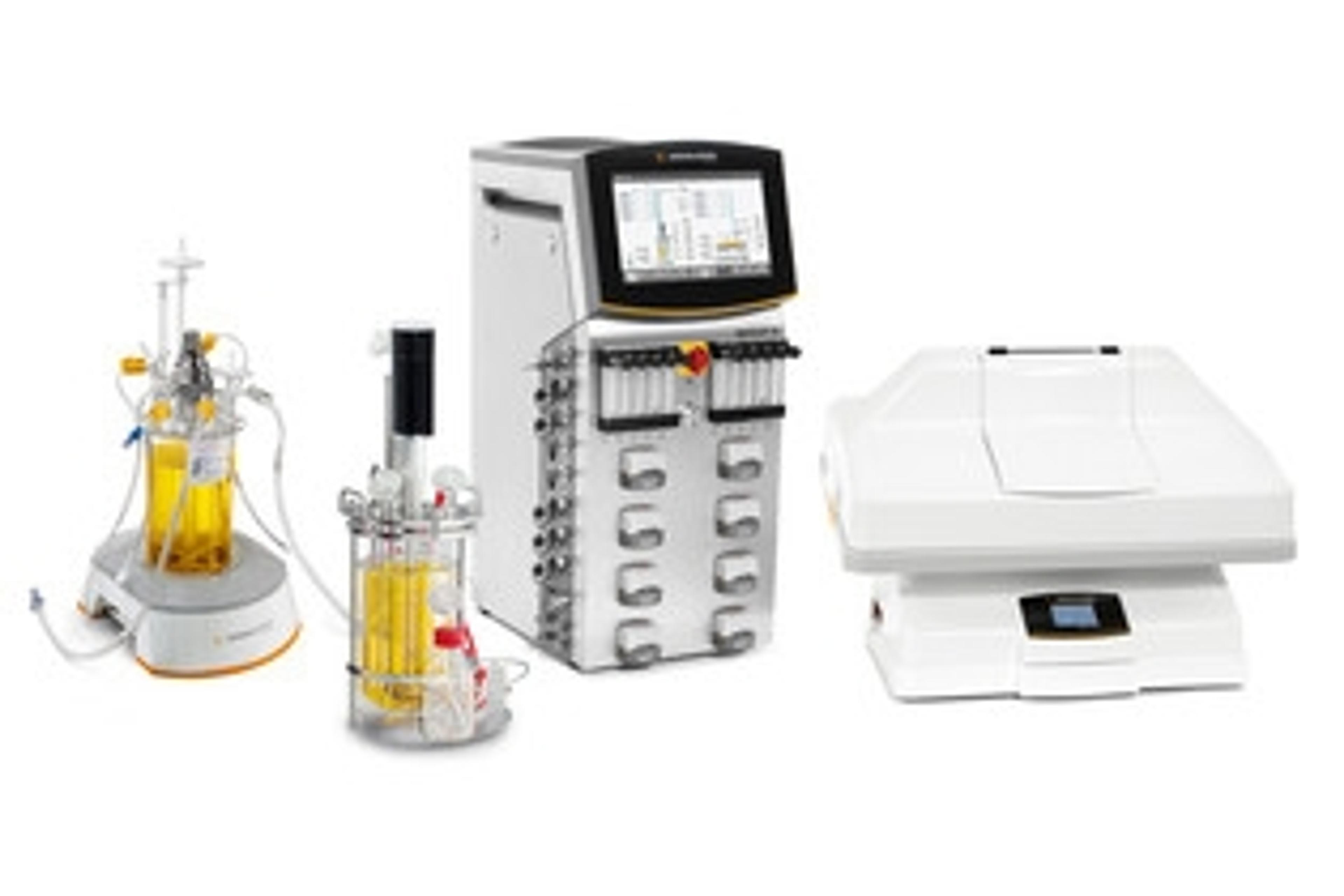
Fed-batch culture is the commonly adopted biologicals manufacturing method used in many biopharmaceutical companies as it can generate gram/litre amounts of protein-based therapeutics. However, to obtain the maximum production of therapeutic proteins requires the optimum formulation of culture media and feeds, as well as the correct bioprocess parameters. This application note demonstrates the use of the ambr 250 mini bioreactor system to rapidly evaluate these bioprocess conditions to support efficient fed-batch culture.

BIOSTAT® B – The Gold Standard of Benchtop Bioreactors

Sartorius Group

The BIOSTAT® B fermenter | bioreactor has been specially designed to cover the wide variety of requirements in biotechnological and biopharmaceutical research and development. With several thousands of units installed worldwide, BIOSTAT® B is the most successful autoclavable system of its class and is now available in the third generation.   A wide range of configurations is available to choose from for animal, plant and insect cell cultivation as well as for microbial fermentation. The process controller can be combined either with reusable stirred glass vessels or with single-use bioreactors made of pre-sterilized polycarbonate. Volumes range from 1L to 2L and from 5L to 10L. The system is capable of controlling either one or two vessels completely independently from each other.   Designed to meet your specific needs, BIOSTAT® B covers a wide range of applications, extending from use as a flexible basic unit for preclinical research to a fully qualified system that complies with the requirements of a validated GMP environment.   Typical areas of application include the following: Process development for the manufacture of vaccines, recombinant proteins and monoclonal antibodies Process strategy development using a batch, fed-batch, continuous or perfusion mode Scale-up and scale-down tests for commercial-scale manufacture Small-scale (pre-)production High cell-density fermentation Adherent cell cultures on microcarriers Low-shear-stress cell cultivation of sensitive organisms Cultivation of filamentous organisms Biofuel manufacturing Dual usage both for cell cultures and microbial applications, such as in academic research

(0)

Links

Tags

Cell / Tissue CultureCell culture or tissue culture is used to study the biology of cells or tissues and to isolate cellular products in an environment which can be manipulated and well defined. Accurately control your culture environment with bioreactors or culture incubators, bind your cells to a surface or together with an extracellular matrix. Distinguish cell types with differential media or proliferate cells with certain characteristics using selective media. Enrich your media with supplements such as growth factors, sera and vitamins. Find the best cell and tissue culture products, kits and equipment in our peer-reviewed product directory: compare products, check customer reviews and receive pricing direct from manufacturers.Labware and Lab SuppliesLabware and lab supplies include various forms of glassware, plasticware, reagents and personal protective equipment (PPE) and are used across all scientific laboratories, enabling daily tasks to be performed. Explore a range of flasks and beakers, petri dishes, carboys and storage bottles. Labware such as condensers, desiccators and burettes are also available for more specific tasks. Find the best labware and lab supplies in our peer-reviewed product directory: compare products, check customer reviews and receive pricing direct from manufacturers.Protein PurificationProtein purification is a vital step in drug discovery, therapeutics, biotech and life science research. The purification process typically involves subcellular or membrane protein extraction with cell lysis kits, separation of proteins from cell debris by filtration or spin columns, and the isolation of proteins of interest from other proteins and impurities with affinity purification (including fusion protein tags and antibody binding proteins A, G and L), immunoprecipitation or chromatographic methods, such as ion exchange, size exclusion and immobilized metal affinity chromatography. All purification methods come in multiple formats for your laboratory needs, including agarose or magnetic beads, resins, columns and filter plates. Find the best protein purification equipment in our peer-reviewed product directory: compare products, check customer reviews and receive pricing direct from manufacturers.BioprocessingBioprocessing is the use of biological systems for the conversion of raw materials to desired products. This includes the research, development and manufacturing stages of production and can refer to food processing, small-molecule pharmaceutical manufacture, production of recombinant protein therapeutics, or the generation of renewable energy.High ThroughputHigh throughput experiments allow the simultaneous processing of several samples. This parallelization reduces the cost per experiment and increases reproducibility and output volume of data.Protein SynthesisBiologicsBiologics are medical products derived from living organisms, including vaccines, gene therapies, and monoclonal antibodies. These treatments are key to modern healthcare, especially in oncology and autoimmune diseases. Explore biologics research tools in our peer-reviewed product directory; compare products, check reviews, and get pricing directly from manufacturers.TherapeuticsTherapeutics are treatments designed to alleviate or cure diseases. These include pharmaceuticals, biologics, and gene therapies, which work by targeting specific disease mechanisms. Advances in personalized medicine and biologics offer new hope for patients with conditions that were previously difficult to treat. Browse our peer-reviewed product directory to find therapeutic solutions for various diseases; compare products, check user reviews, and get pricing directly from manufacturers.ManufacturingManufacturing is the production of merchandise for use or sale using labor and machines, tools, chemical and biological processing, or formulation.
Evaluation of the ambr® 250 Fully Automated Single-use Bioreactor System For High Throughput Fed-Batch Culture