Evaluation of Neurotoxicity Using Automated Image Analysis

22 Nov 2011

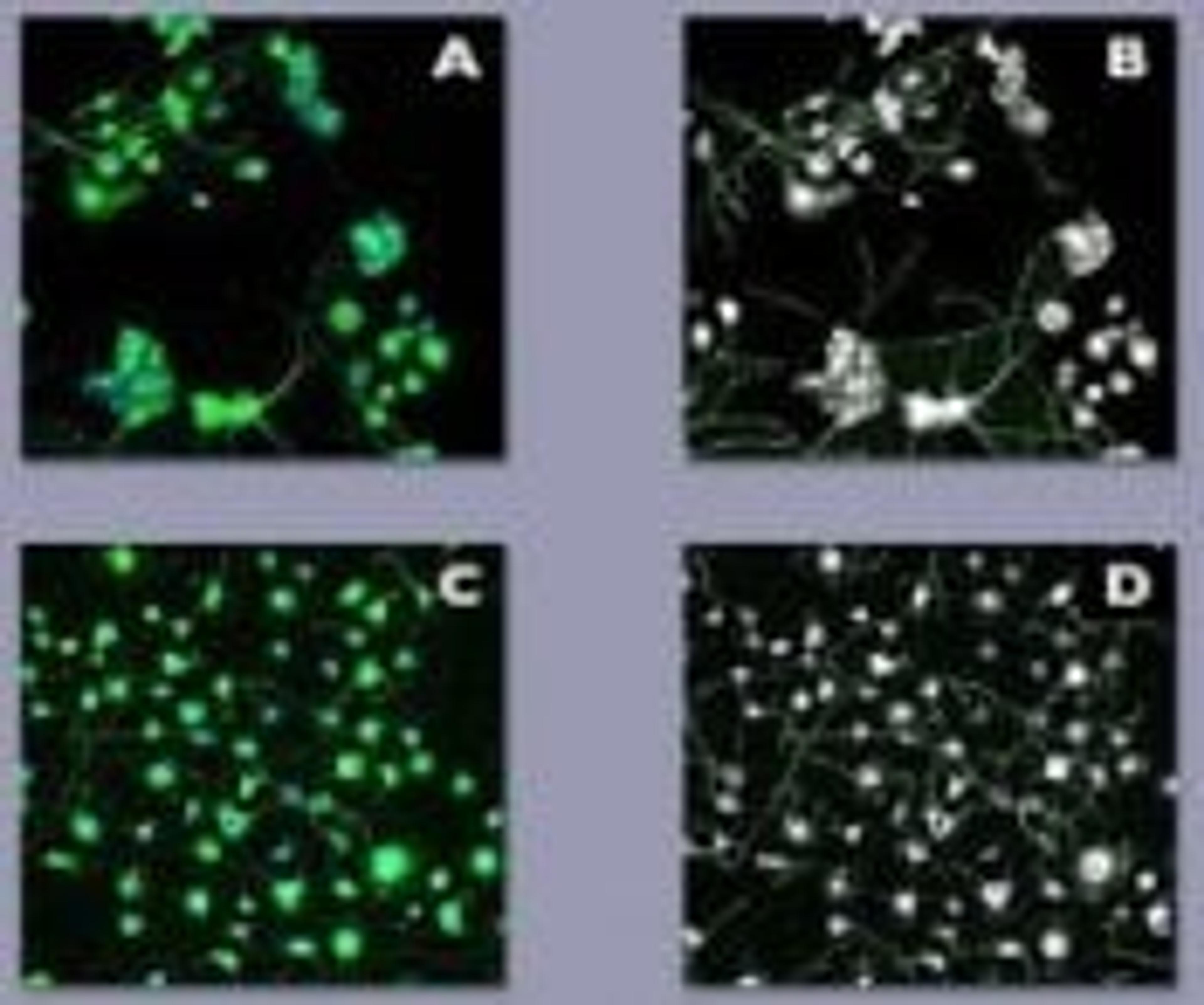
Learn about an evaluation study on the neurotoxic effects of environmental and industrial chemicals to gain an insight at the cellular level for use in therapeutic studies. Thermo Fisher Scientific present the use of automated image analysis for the differentiation of neuronal cultures with respect to their overall viability and morphological characteristics using the NeuroScreen -1 (NS-1) cells.

Neuroscreen™-1 Cells, Academic Package

Neuroscreen-1 is a neuronal-like cell line optimized for screening.  It is a subclone of PC12, a widely used cell line derived from rat pheochromocytoma cells that serves as a standard model system for neurons.  Neuroscreen-1 cells display several substantial advantages over PC12 cells, including 50-80% faster growth, no tendency toward cell aggregation, high and accelerated responsiveness to NGF (measurable neurites within 2 days), and excellent performance in screening assays.
(0)

Neuroscreen™;-1 Cells, Commercial Package

Neuroscreen-1 is a neuronal-like cell line optimized for screening.  It is a subclone of PC12, a widely used cell line derived from rat pheochromocytoma cells that serves as a standard model system for neurons.  Neuroscreen-1 cells display several substantial advantages over PC12 cells, including 50-80% faster growth, no tendency toward cell aggregation, high and accelerated responsiveness to NGF (measurable neurites within 2 days), and excellent performance in screening assays.

(2)

Tags

Genome AnalysisGenomics, the study of genomes, includes functional genomics, evolutionary genomics and comparative genomics. There are many genomic technologies such as DNA sequencing of whole genomes, computational biology and bioinformatics. DNA and nucleic acids must be isolated and concentrated from cells for analysis with kits, automated analyzers and software. Other useful technologies for studying genomics include PCR, microarrays and electrophoresis.Cell Lines Stem Cells and Primary CellsPrimary cell cultures, established cell lines and stem cells are vital for <i>in vitro</i> and <i>ex vivo</i> experimentation. High-quality cells, optimized for your applications, alongside optimized cell substrates, growth medium and supplements, are critical for experimental success. Explore a range of cells suitable for your applications, including isogenic cell lines, competent cells, induced pluripotent stem cell (iPSC)-derived cell lines, fungal/bacterial/mammalian cell lines, stem cells and cancer cell lines. Find the best cells for your research in our peer-reviewed product directory: compare products, check customer reviews and receive pricing direct from manufacturers.Protein PurificationProtein purification is a vital step in drug discovery, therapeutics, biotech and life science research. The purification process typically involves subcellular or membrane protein extraction with cell lysis kits, separation of proteins from cell debris by filtration or spin columns, and the isolation of proteins of interest from other proteins and impurities with affinity purification (including fusion protein tags and antibody binding proteins A, G and L), immunoprecipitation or chromatographic methods, such as ion exchange, size exclusion and immobilized metal affinity chromatography. All purification methods come in multiple formats for your laboratory needs, including agarose or magnetic beads, resins, columns and filter plates. Find the best protein purification equipment in our peer-reviewed product directory: compare products, check customer reviews and receive pricing direct from manufacturers.Biopharmaceutical AdvancesBiopharmaceutical advances follow the development of pharmaceuticals derived from biotechnology, also known as biotechnology medicines. Biopharmaceuticals may be produced from cell lines, plants, or microbial cells. Important considerations of biopharmaceutical use include application, cost, production process and purification.Clinical TrialsClinical Trials, an essential part of drug discovery process, assess the safety and effectiveness of a new medication or device in the pharmaceutical industry. Clinical Trials are a phased process (Phase 0, Phase I, Phase II, Phase III and Phase IV) which begins after initial preclinical testing.NeurobiologyNeurobiology studies the biology of the nervous system, including the structure and function of neurons, glial cells, and their interactions. It is a key field in understanding neurological disorders such as Alzheimer�s, Parkinson�s, and schizophrenia. Research in neurobiology is essential for developing therapies for these conditions. Browse our peer-reviewed product directory to find the best neurobiology research tools, compare products, check reviews, and get pricing directly from manufacturers.
Evaluation of Neurotoxicity Using Automated Image Analysis