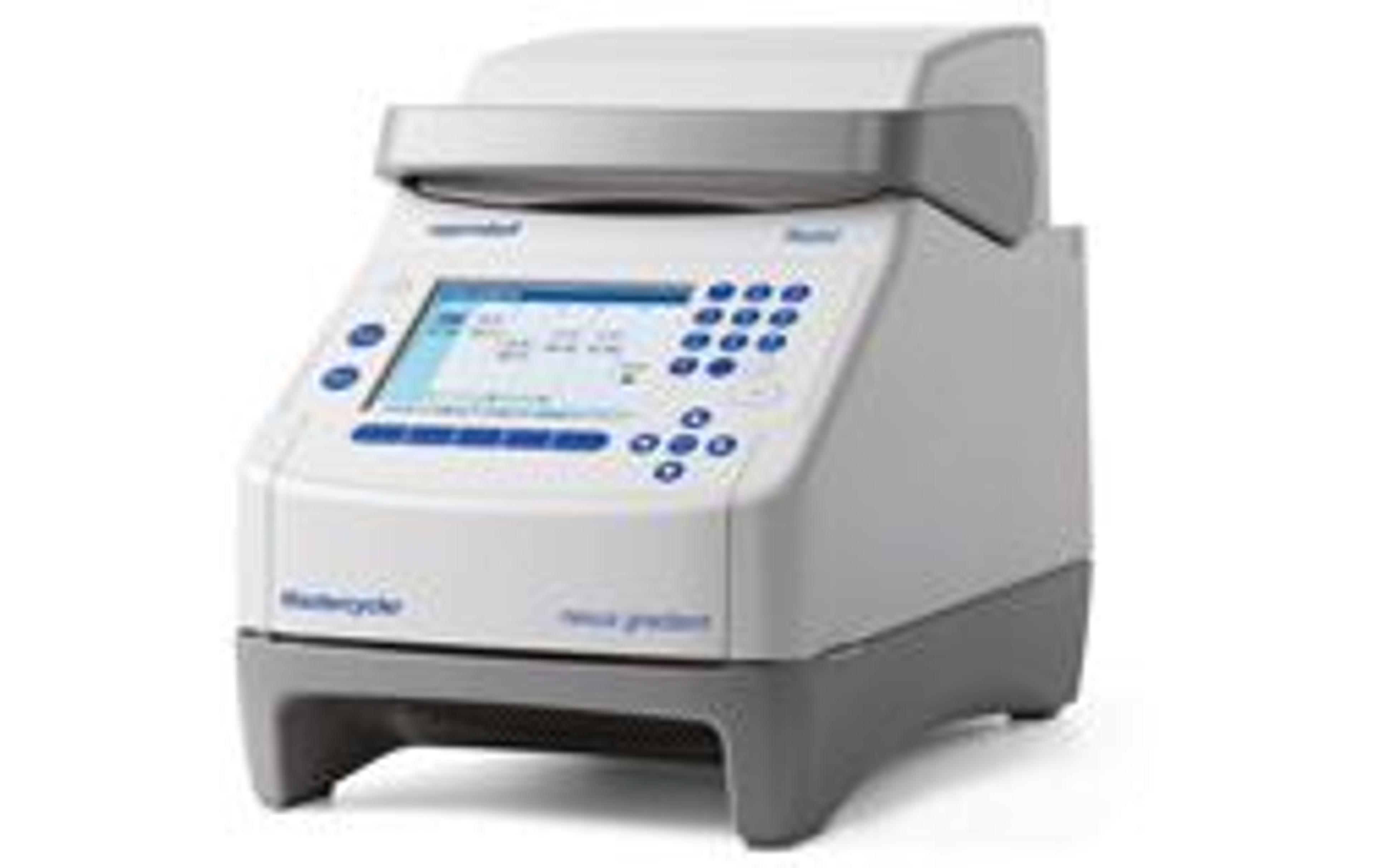
Eppendorf Mastercycler<sup>®</sup>: Meeting All Your PCR Needs with Reliability and Flexibility

6 Jul 2016

In this article learn about the major factors that affect PCR, and how an Mastercycler corresponds. The high number of influencing factors means it is critical that a thermal cycler offers you a maximum of flexibility to adapt to the requirements of all of your experiments.

Eppendorf Mastercycler Nexus PCR Cycler

Eppendorf

With its low noise level, the Mastercycler nexus can be used all day in the lab without disturbing any parallel work going on. Additionally, the low power consumption helps to save money and to be eco-friendly. Eppendorf Mastercycler nexus Family In the age of networking, the new Mastercycler nexus is your reliable companion when it comes to the daily routine of PCR. It is easy to use, does not need much space or energy and sends you an e-mail when it is done – what else do you need from a PCR cycler? Combine, Connect, Control ◾Combine up to 3 units for ultimate throughput! ◾Connect your Mastercycler nexus to your computer network and get a status e-mail to your desk! ◾Control all the relevant parameters of your PCR through the intuitive software Do you just need an affordable, flexible and reliable PCR instrument? The Mastercycler nexus is exactly that. It brings the reliability and ease of use of an Eppendorf cycler at an affordable price. Low energy consumption, easy expansion to 3 units and a small footprint make it not only fit to your budget, but also to your precious lab space. Due to the flexlid concept, the cycler can deal with all types of PCR consumables, from low volume all the way up to 0.5 mL PCR tubes. Of course, all common PCR plates fit – and if your throughput becomes even higher, you can just connect one or two Mastercycler nexus eco to your Mastercycler nexus. Gradient with SteadySlope Technology The gradient option of the Mastercycler nexus features the SteadySlope technology to ensure that the heating and cooling ramp rates are identical in both gradient and normal operation. Thus, you can expect identical temperature control characteristics in both optimization and routine experiments. Programming the gradient is easy and intuitive – so that novice users can get started quickly and safely. A true gradient with 12 different temperatures is an extremely powerful tool that can help you to optimize your PCR. Based on its recent analysis of the PCR instrumentation market, Frost & Sullivan recognizes Eppendorf with the 2012 European Green Excellence Award for its Mastercycler nexus.
(11)

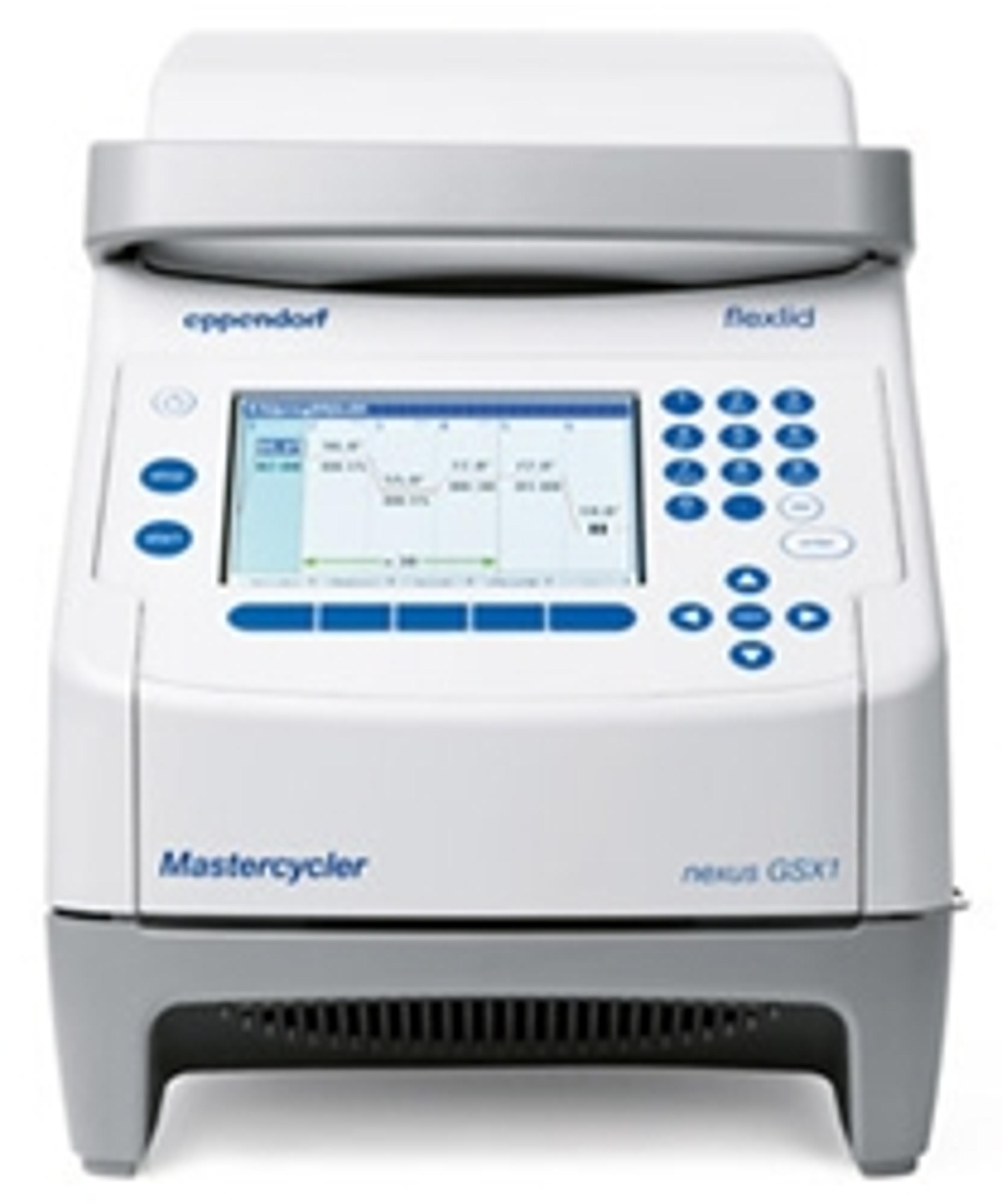
Mastercycler® Series

Eppendorf

Eppendorf Mastercycler is the economical option when, after having optimized your PCR using Mastercycler gradient, you wish to carry out an experiment with the usual Mastercycler quality, but without blocking your optimization cycler.The entire Eppendorf Mastercycler family boasts the personal card system. Chip-based memory cards enable not only simple and reliable transfer of your individual protocols between different Mastercycler workstations but also ensure unlimited expansion of the memory capacity.The universal block for different tube types extends the applicational range of Mastercycler and Mastercycler gradient as well as saving time and money. It is possible to use 96 x 0.2 ml tubes, 77 x 0.5 ml tubes or one microtiter plate - without having to change the block. Based on its recent analysis of the PCR instrumentation market, Frost & Sullivan recognizes Eppendorf with the 2012 European Green Excellence Award for its Mastercycler nexus. Mastercycler® Series Features: Heating rate: 5°C/s Fast silver block Small footprint Intuitive graphic programming Up to two other units can be connected to a central unit E-mail notification Flexlid concept: automatic height adjustment of the lid allows you to use all types of consumables 2-year warranty Optional self-test functionality Mastercycler® Series Applications: Fast PCR Standard PCR Cycle sequencing
(24)

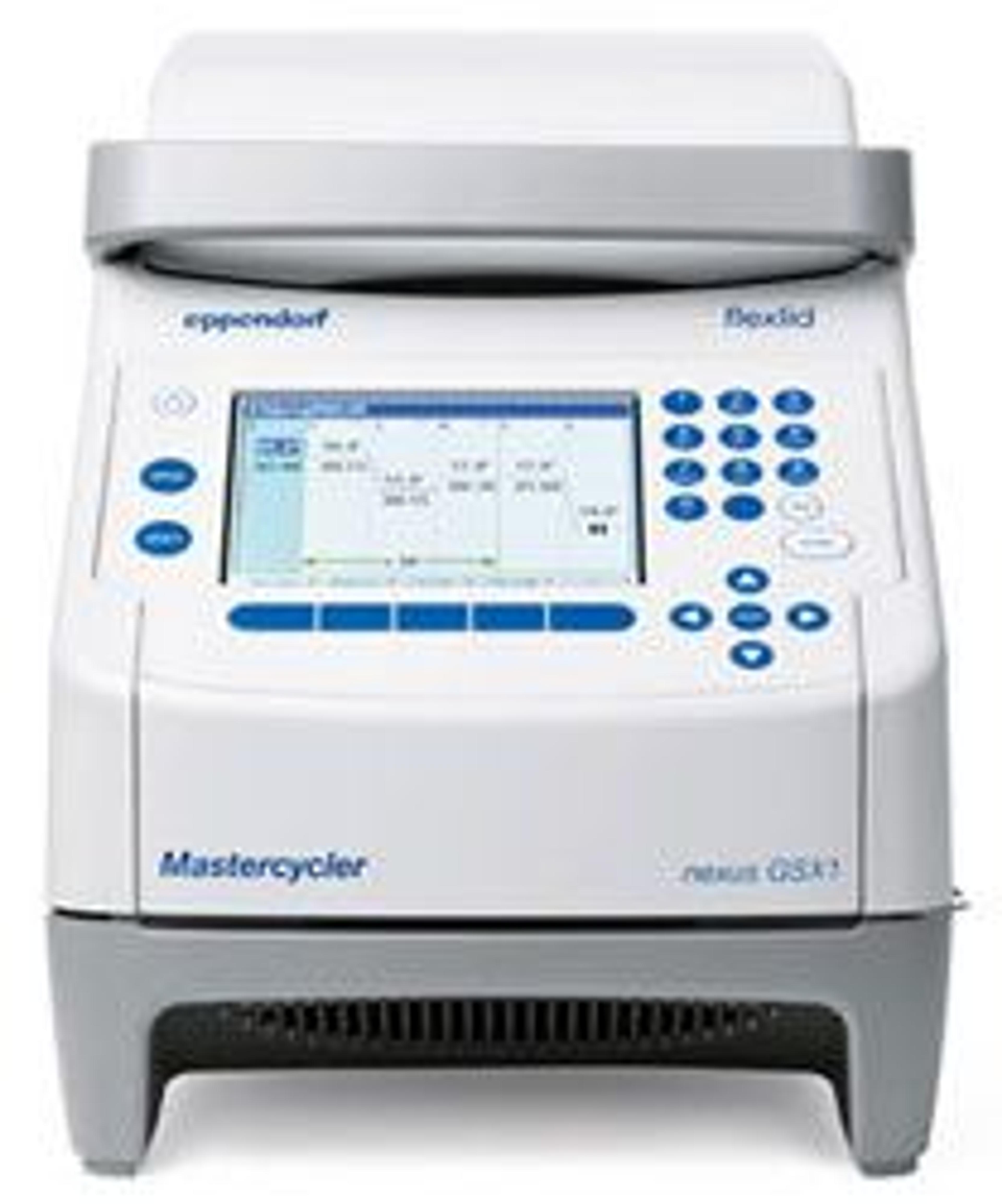
Mastercycler nexus X1

Eppendorf

The new Mastercycler nexus X1 combines the modern and intuitive software from the Mastercycler nexus with a fast 96-well silver block for increased heating and cooling rates. It is fast, easy to use, does not need much space or energy and sends you an e-mail when it is done—what else do you need from a PCR cycler? Combine, Connect, Control • Combine up to 3 units for maximum throughput! • Connect your Mastercycler nexus to your computer network and get a status e-mail to your desk! • Control all the relevant parameters of your PCR through the intuitive software Do you need a fast, intuitive and reliable PCR instrument? The Mastercycler nexus X1 is exactly that. It brings the reliability and ease of use of Mastercycler nexus at the speed of a silver block. Low energy consumption, easy expansion to 3 units and a small footprint make it even more attractive.

(0)

Links

Tags

PCR and Thermal CyclingPolymerase chain reaction (PCR) kits and thermal cyclers are used for the in vitro amplification of DNA permitting subsequent analysis and experimental procedures. Explore a range of high-quality polymerase, primers and nucleotides or simplify your workflow with a PCR mastermix. Find reverse transcription PCR (RT-PCR) and cDNA synthesis kits for RNA products and libraries. Quantitatively measure the amplification of DNA with real-time PCR (qPCR) and droplet digital PCR (ddPCR) kits and systems, and discover automated PCR setup solutions to increase throughput. Alternative DNA amplification methods also include recombinase polymerase amplification (RPA) kits. Find the best PCR kits and thermal cyclers and purification equipment in our peer-reviewed product directory: compare products, check customer reviews and receive pricing direct from manufacturers.DNA / RNA Extraction and PurificationPurified DNA and RNA are required for numerous downstream molecular biology applications. Consequently, the importance of high-quality DNA/RNA extraction and purification equipment cannot be underestimated. Many purification kits are available and are typically optimized for nucleic acid type and source, including plasmid DNA, genomic DNA, mRNA, RNA and viral nucleic acid purification kits. Automated extraction and purification of nucleic acids can be implemented with magnetic bead separator instruments or high-throughput purification workstations. Find the best DNA/RNA extraction and purification equipment in our peer-reviewed product directory: compare products, check customer reviews and receive pricing direct from manufacturers.Protein PurificationProtein purification is a vital step in drug discovery, therapeutics, biotech and life science research. The purification process typically involves subcellular or membrane protein extraction with cell lysis kits, separation of proteins from cell debris by filtration or spin columns, and the isolation of proteins of interest from other proteins and impurities with affinity purification (including fusion protein tags and antibody binding proteins A, G and L), immunoprecipitation or chromatographic methods, such as ion exchange, size exclusion and immobilized metal affinity chromatography. All purification methods come in multiple formats for your laboratory needs, including agarose or magnetic beads, resins, columns and filter plates. Find the best protein purification equipment in our peer-reviewed product directory: compare products, check customer reviews and receive pricing direct from manufacturers.Gene Expression and Molecular CloningMolecular cloning is a set of techniques that utilizes vectors to transfer recombinant DNA into host cells and is an essential tool for investigating the expression of genes and proteins in bacterial or mammalian cells. A variety of vectors optimized for gene cloning and expression in a range of host organisms are available, alongside competent cells for genetic replication. Here, you can explore a range of molecular tools, high-quality genomic and cDNA libraries, premade clones, transformation and transfection reagents and mutagenesis or gene expression detection assays and expression arrays. Find the best gene expression and molecular cloning products in our peer-reviewed product directory: compare products, check customer reviews and receive pricing direct from manufacturers.Robotic InstrumentsRobotic instruments can be used for high-throughput automation of many lab processes. Such processes use instruments for assays like cell based assays and ELISA, for sample preparation like shakers, centrifuges and incubators, and for analysis such as sequencing and western blot analyzers. Useful features of robotic instruments include speed, reproducibility, barcode readers, software and automation.Thermal Analysis EquipmentThermal analysis equipment is used for measuring heat flow, weight loss, dimension changes or thermomechanical properties and is important for analyzing a material’s performance and stability. Thermal analysis equipment includes differential scanning calorimeters (DSC), thermogravimetric analyzers (TGA), thermomechanical analyzers (TMA), dilatometers, thermometers, vapor sorption analyzers, boiling and melting point apparatus. Thermal analyzers can reveal properties such as melting, crystallization and glass transitions or other processes such as oxidation, decomposition, volatilization, as well as coefficients of thermal expansion and modulus. Find the best thermal analysis equipment in our peer-reviewed product directory: compare products, check customer reviews and receive pricing direct from manufacturers.Thermal ProcessesMethod DevelopmentMethod development is the process of creating and optimizing experimental techniques and protocols to achieve reliable, reproducible results. This is essential in various fields, including pharmaceuticals, environmental science, and diagnostics. Browse our peer-reviewed product directory to find the best method development solutions, compare products, check reviews, and get pricing directly from manufacturers.PCR AutomationPCR automation describes the process of using a thermocycler to complete the polymerase chain reaction (PCR) process quickly and efficiently.Assay DevelopmentThe process of proving an assay to be sensitive with respect to the target is known as assay development. The assay should be able to characterize novel compounds and measure the potency of these compounds against a validated biological target.