ResourceForensics

Enhanced LC-MS/MS separation of Δ⁸ and Δ⁹-THC metabolites and other cannabinoids extracted from urine samples using a polymeric SPE column

19 Oct 2023

In this application note, UCT, Inc. presents a method addressing the challenge posed by the increased use of Δ⁸-THC products. Drug testing labs face the need to separate parent THC isomers Δ⁸ and Δ⁹-THC. THC metabolites, particularly isomeric ones like Δ⁸-OH-THC and Δ⁹-OH-THC, present a challenge. Additionally, new cannabinoids such as Δ10 and Δ6a,10a-THC, and THC-O-Acetate are emerging. The note introduces an LC-MS/MS method employing UCT’s SelectraCore® PFPP column to separate 16 cannabinoids, including isomeric metabolites of Δ⁸ and Δ⁹ -THC. Solid-phase extraction from urine is detailed using UCT’s Styre Screen® HLB column.

Styre Screen® Extraction Columns

UCT, Inc.

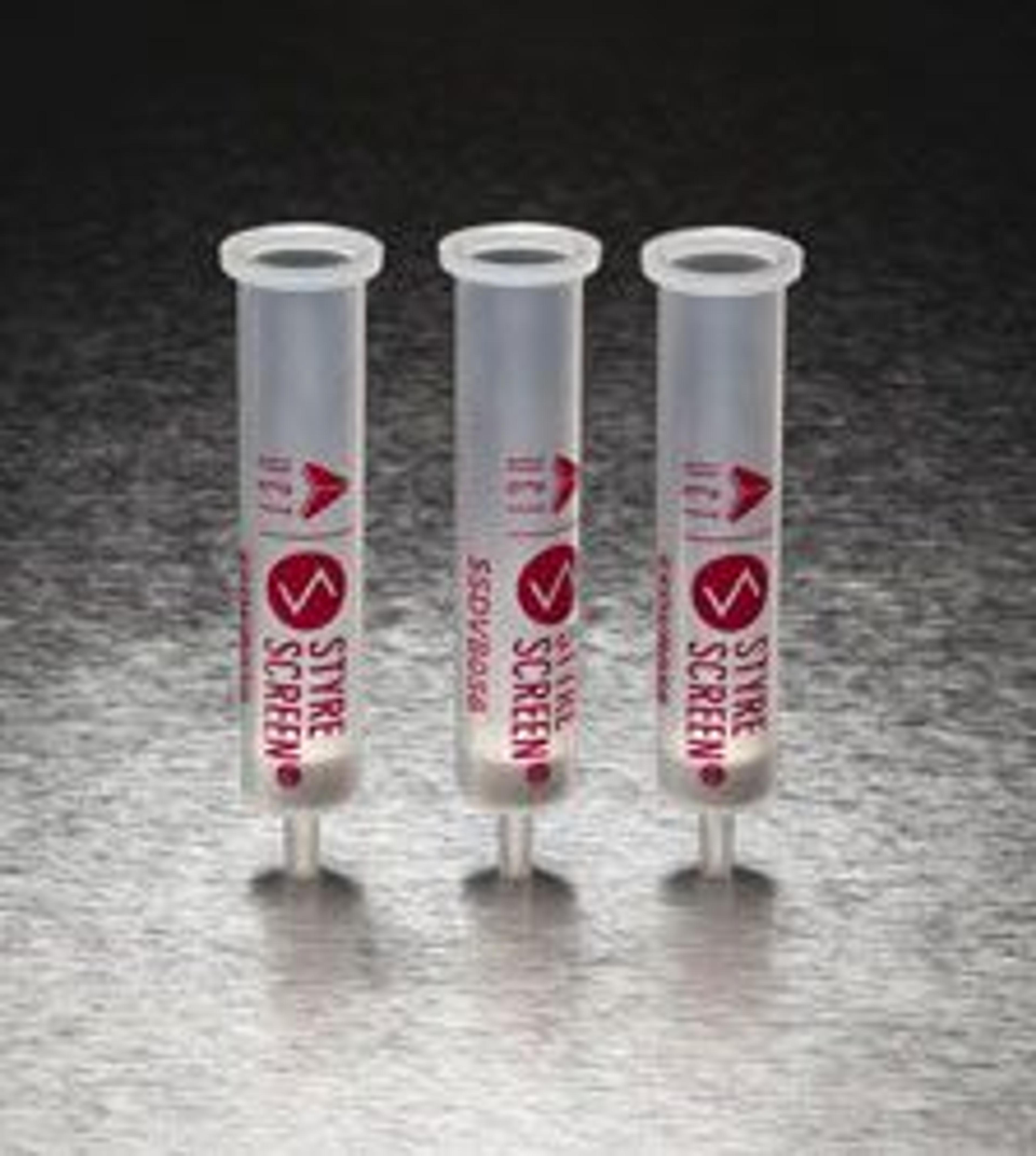
Styre Screen® Extraction Columns contain an ultra clean, highly cross-linked styrene and divinylbenzene copolymer. The Styre Screen particles have an average particle size of 30 microns and a very high analyte capacity making them ideal for standard solid phase extraction applications. The increased analyte capacity means that less sorbent bed mass is needed which results in faster flow rates and less solvent use. Higher throughput and less solvent waste disposal translate into significant savings in both time and money. In addition, no conditioning steps are required for most analyte applications.   Styre Screen® Extraction Columns Advantages:   Copolymer allows for extraction of acids, neutrals and bases High and reproducible recoveries Clean extractions Highly cross-linked styrene/divinylbenzene polymer Reduction in sorbent mass Faster flow rates pH stable (1 to 14) Reduction in solvent use High sorbent capacity Methods for NIDA/SAMHSA 5 Drugs

(0)

Links

Tags

UHPLC and HPLCHigh performance liquid chromatography (HPLC) and ultra high performance liquid chromatography (UHPLC), also known as UPLC, are analytical techniques used to separate, identify and quantitate components of complex mixtures including biological samples such as proteins and lipids as well as chemical mixtures of pesticides, drugs and oils. Both techniques are liquid chromatographic methods but differ by operating pressures (HPLC < 6000 psi < UHPLC ). Components of HPLC and UHPLC systems include columns, detectors, pumps, autosamplers and column heaters. Explore a range of UHPLC and HPLC columns for your specific sample needs including reverse phase, normal phase, ion exchange, HILIC, ion exclusion and size exclusion columns. For more specialized HPLC, explore FPLC, countercurrent LC and simulated moving bed systems. Find the best UHPLC and HPLC equipment in our peer reviewed product directory: compare products, check customer reviews and receive pricing direct from manufacturers.LC-MSLC-MS (liquid chromatography-mass spectrometry) systems and equipment are used for separation and quantitative analysis of complex mixtures, combining liquid chromatography and mass spectrometry. Quantify proteins, contaminants, pesticides or screen for drug metabolites with a high level of sensitivity. LC-MS systems and equipment include reverse phase, normal phase and specialized columns integrated with various MS detectors such as time-of-flight (TOF), quadrupole, orbitrap or ion trap mass analyzers. LC-MS/MS instruments equipped with a qTOF or triple quadrupole analyzer give greater sensitivity and resolving power to your analysis. Find the best LC-MS equipment in our peer-reviewed product directory: compare products, check customer reviews and receive pricing direct from manufacturers.Mass SpectrometryMass spectrometry (MS) is a powerful analytical technique used to identify and quantify molecules based on the mass-to-charge ratio of gas-phase ions. It provides detailed information about the structure, composition, and properties of compounds and is widely used across fields such as environmental monitoring, materials science, drug discovery and development, food and beverage testing, and wider chemical research. Key MS techniques include tandem mass spectrometry (MS/MS), liquid chromatography–mass spectrometry (LS-MS) and inductively coupled plasma (ICP-MS). Choosing from these wide range of techniques and technologies can be a daunting task, so keep up to date with scientific applications, performance expectations, and customer reviews here all in one place. Visit our product directory to receive quotes direct from the manufacturer. Solid-Phase ExtractionSolid-phase extraction (SPE) is used for clean-up, extraction and concentration of semi-volatile or non-volatile analytes from complex mixtures including blood, urine and food samples. Multiple formats are available for conducting SPE, including prepacked SPE cartridges, disks and microplates, as well as SPE sorbent powders for manual packing. SPE systems can be used to automate the process and extract multiple samples at once. Solid-phase microextraction (SPME) and supported liquid extraction (SLE) products are also available in the same formats. Find the best SPE, SLE and SPME equipment in our peer-reviewed product directory: compare products, check customer reviews and receive pricing direct from manufacturers.Toxicology / Drugs of Abuse TestingToxicology and Drugs of Abuse Testing is the investigation into toxic and illegal substances found at the scene of a crime or from a suspect and / or victim associated with a scene of a crime. Analyzers, immunoassays and drugs of abuse test kits and presumptive test kits are an essential aspect of toxicology investigation.Drugs of AbuseA drug of abuse is a drug that has been taken for non-medical purposes. Such drugs can have mind-altering effects, with some causing dependence and addiction.Drug TestingIt is essential to test the efficacy and toxicity of drugs at every stage of their development to ensure that a pharmaceutical product is fit for purpose and safe for use before reaching the stage of mass production and distribution.CannabinoidsCannabinoids are compounds found in cannabis that have therapeutic effects, such as pain relief, anti-inflammatory properties, and potential neuroprotective benefits. Research into cannabinoids is growing, particularly in the fields of pain management, neurological diseases, and cancer treatments. Browse our peer-reviewed product directory to find the best cannabinoid research tools, compare products, check reviews, and get pricing directly from manufacturers.Cannabis
Enhanced LC-MS/MS separation of Δ⁸ and Δ⁹-THC metabolites and other cannabinoids extracted from urine samples using a polymeric SPE column