DNA Quantitation in Next-Generation Sequencing Library Workflows

27 Apr 2016

The rapid advancement of next-generation (NGS) technology has impacted all branches of life science research. For any NGS workflow, the success of the NGS depends to a large extent on using high-quality starting DNA that is quantitated accurately. This article discusses the role of DNA quantitation during typical NGS library preparation workflows.

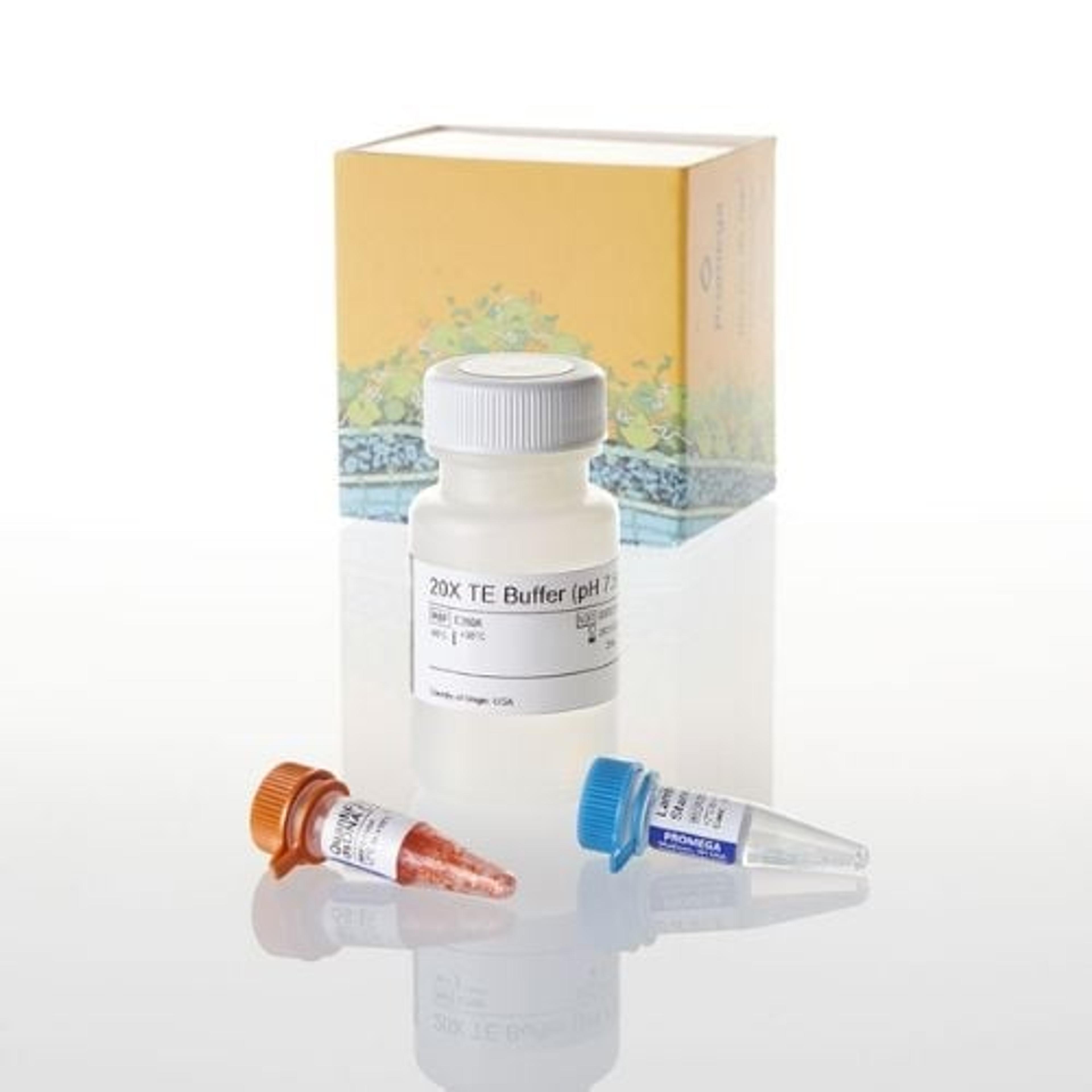
QuantiFluor® dsDNA System

Promega Corp.

The QuantiFluor® dsDNA System contains a fluorescent DNA-binding dye that enables sensitive quantitation of small amounts of double-stranded DNA (dsDNA) in solution.   The quantitation of dsDNA is a very important step in many biological applications, particularly in standard molecular biology techniques. The dye shows minimal binding to single stranded DNA (ssDNA) and RNA, allowing specific quantitation of dsDNA. The QuantiFluor® dsDNA System was developed using the fluorescence module of the GloMax® Multi+ Detection System and the QuantiFluor®-ST Handheld Fluorometer. The QuantiFluor® dsDNA System can be used with any fluorometer that is capable of measuring fluorescence at the appropriate excitation and emission wavelengths, including the Quantus™ Fluorometer. Each QuantiFluor® dsDNA System contains sufficient volume to perform 200 assays at 2ml or 2,000 assays at 200μl. QuantiFluor® dsDNA System Features & Benefits:   Specificity - Highly specific to dsDNA, minimal binding to ssDNA, RNA, protein and interfering compounds. Sensitivity - Significantly increased sensitivity over absorbance at 260nm (NanoDrop® spectrophotometer) for low-concentration samples. Performs better or equal to PicoGreen® dye and can detect as little as 50pg/ml. Ease of Use - System includes all required reagents to quickly set up and quantitate dsDNA. Instrument Compatibility - Pre-optimized on both the Quantus™ Fluorometer and GloMax®-Multi+ Instrument.

(2)

Quantus™ Fluorometer

Promega Corp.

  The Quantus™ Fluorometer is an easy-to-use and affordable single-tube fluorometer.   The highly sensitive instrument is preprogrammed with QuantiFluor® Dye protocols for single-stranded DNA, double-stranded DNA and RNA quantitation but is also compatible with other fluorescent assays. Quantus™ Fluorometer does the math for you and displays your concentration after each measurement automatically. No computer is required. The Quantus™ Fluorometer will save and display the 20 most recent measurements. However, the fluorometer can be connected to a computer to transfer data in real time. Quantus™ Fluorometer Features: High Performance - Integrated with QuantiFluor® Dyes for high sensitivity, broad dynamic range and target specificity. Great for low-level sample quantitation such as FFPE or viral samples. Increased Sensitivity - Significantly increased sensitivity over absorbance at 260nm (NanoDrop®) for those samples that are low in concentration. Ten times more sensitive than Qubit® 2.0. A detection limit of 50pg/ml, compared to 500pg/ml for the Qubit® 2.0. With a customized low standard curve, the detection limit can read as low as 1pg/ml. Easy-to-Use Workflow and Navigation - Flexible with custom protocols and user-defined settings. PC software for data management workflow. Affordable Price - Cost-effective to easily incorporate into your laboratory.

(3)

Links

Tags

Genome AnalysisGenomics, the study of genomes, includes functional genomics, evolutionary genomics and comparative genomics. There are many genomic technologies such as DNA sequencing of whole genomes, computational biology and bioinformatics. DNA and nucleic acids must be isolated and concentrated from cells for analysis with kits, automated analyzers and software. Other useful technologies for studying genomics include PCR, microarrays and electrophoresis.Data AnalysisData analysis hardware and software is available to make data processing straight-forward yet powerful. Data software can be used for math and stats, technical graphing and image analysis. In addition, software is available for specific data analysis of electrophoresis, densitometry, ELISA and DNA sequencing.Chem / BioinformaticsCheminformatics and bioinformatics are computational techniques used in chemistry and biology, respectively, for data acquisition, processing and storage. Cheminformatics focuses on compound information, whereas bioinformatics is mainly applied to analysis and modeling of genomics, genetic and sequencing information. Hardware and software is available for data acquisition, analysis, management and storage.Sample ManagementSample management systems include sample storage devices such as freezers and plate storers, sample environment enclosures and sample organization, retrieval and sorter systems. Useful system features include high-throughput, automation, robotic arms, automated liquid handling and associated database systems. Accessories in sample management include barcode scanners, heat sealers and tubes.DNA / RNA Extraction and PurificationPurified DNA and RNA are required for numerous downstream molecular biology applications. Consequently, the importance of high-quality DNA/RNA extraction and purification equipment cannot be underestimated. Many purification kits are available and are typically optimized for nucleic acid type and source, including plasmid DNA, genomic DNA, mRNA, RNA and viral nucleic acid purification kits. Automated extraction and purification of nucleic acids can be implemented with magnetic bead separator instruments or high-throughput purification workstations. Find the best DNA/RNA extraction and purification equipment in our peer-reviewed product directory: compare products, check customer reviews and receive pricing direct from manufacturers.DNA SequencingDNA sequencing, such as sanger sequencing, is a biological technique that determines the precise order of nucleotide bases in a fragment or template of DNA. DNA sequencers and genetic analyzers are based on capillary electrophoresis, where labeled DNA fragments are electrophoretically separated by size as they migrate through a polymer. Find the best DNA sequencing products, including DNA sequencing kits, genomic libraries and genetic identity kits in our peer-reviewed product directory: compare products, check customer reviews and receive pricing direct from manufacturers.Gene Expression and Molecular CloningMolecular cloning is a set of techniques that utilizes vectors to transfer recombinant DNA into host cells and is an essential tool for investigating the expression of genes and proteins in bacterial or mammalian cells. A variety of vectors optimized for gene cloning and expression in a range of host organisms are available, alongside competent cells for genetic replication. Here, you can explore a range of molecular tools, high-quality genomic and cDNA libraries, premade clones, transformation and transfection reagents and mutagenesis or gene expression detection assays and expression arrays. Find the best gene expression and molecular cloning products in our peer-reviewed product directory: compare products, check customer reviews and receive pricing direct from manufacturers.Software PlatformsSoftware platforms are useful for various stages of laboratory experiments from data collection to data storage and processing. For instance lab software is available for system control, data management, data analysis and qualification / validation.Next Generation SequencingNext-generation sequencing (NGS), also known as whole-genome sequencing, high-throughput sequencing and massive parallel sequencing, produces and analyses thousands to millions of nucleotide sequences at once. Sequencing systems operate via varying technologies depending on the manufacturer, including sequencing by synthesis, ligation, pyrosequencing, ion semiconductor and single-molecule real-time sequencing. For NGS, library preparation is paramount to successful sequencing. In this section, explore a range of library preparation kits, from targeted, amplicon-based or hybridization-based kits including epigenomic, transcriptomic and genomic workflows to fragmentation kits. Find the best next-generation sequencing products in our peer-reviewed product directory: compare products, check customer reviews and receive pricing direct from manufacturers.DNA QuantificationDNA quantification is the process of measuring the amount of DNA in a sample. It is vital in genomics, molecular biology, and biotechnology, helping to ensure accurate experiments and data analysis. Explore DNA quantification tools in our peer-reviewed product directory; compare products, check reviews, and get pricing directly from manufacturers.Library GenerationLibrary generation refers to the construction of NGS libraries from RNA and DNA sources.DNADeoxyribonucleic Acid (DNA) is the main component of chromosomes and the carrier of genetic information of living organisms. Find out here about PCR, NGS, ChIP-Seq, gel imaging, and many other techniques which can be used for the analysis of DNA.Library PreparationLibrary preparation is a critical step in sequencing workflows, where DNA or RNA samples are converted into libraries for high-throughput, next generation sequencing. This step ensures accurate results and minimizes biases. Explore library preparation kits in our peer-reviewed product directory; compare products, check reviews, and get pricing directly from manufacturers.SequencingSequencing refers to determining the order of nucleotides in a DNA or RNA molecule. This process is essential in genomics, diagnostics, and evolutionary biology. Techniques like next-generation sequencing (NGS) and Sanger sequencing provide high-throughput and precise data for analyzing genomes and transcriptomes. Browse our peer-reviewed product directory to find the best sequencing tools and reagents, compare products, check reviews, and get pricing directly from manufacturers.