Development of a Rapid Test for the Measurement of Kappa and Lambda Free Light Chains in Serum and Urine from Patients with Myeloma Kidney

5 Mar 2014

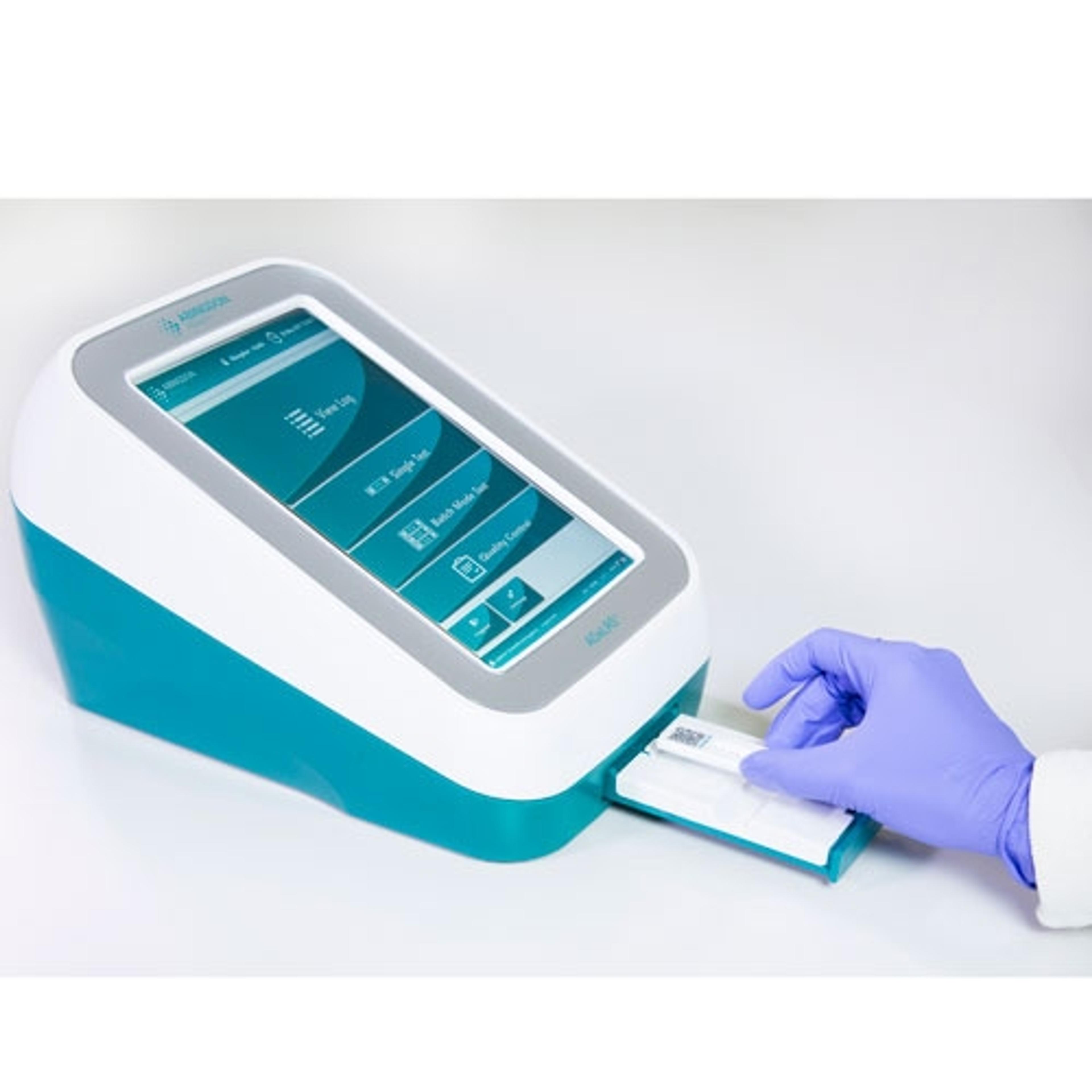
At present, laboratory free light chain tests offer the only means of quantitating kappa and lambda free light chains (FLC) and have a slow turnaround time that prevents early diagnosis of myeloma kidney, and increases the risk of kidney failure. This poster shows that a new rapid test (Seralite™) is capable of rapidly identifying abnormal FLC levels in blood, providing precise quantitation of FLC is serum and urine within 10 minutes.

Seralite

Abingdon Health

Seralite® is a rapid diagnostic device for the quantitative measurement of kappa (K) and lambda (λ) immunoglobulin free light chains (FLCs) in serum. The assay utilises highly specific, anti-K and anti-λ monoclonal antibodies which are conjugated to gold particles and incorporated into a simple to use lateral flow device. Utilising a portable reader the results are presented on screen in mg/L along with the calculated K/λ ratio. Seralite® provides an accurate picture of disease status in 10 minutes. With this simple to use, portable, rapid test, clinicians are able to monitor patients in “real time” supporting faster decision making. The measurement of FLCs for diagnosis and monitoring of myeloma and related disorders has been widely published. As a result of these many years of research, UK, European and International guidelines recommend the measurement of serum FLCs. As FLCs have a short half-life of a few hours, changes to tumour load and the response to chemotherapy can be observed more rapidly by measuring FLCs. This rapid test provides the clinician with an accurate picture of disease status within minutes rather than days, supporting faster decision making. FLCs are also recommended as prognostic indicators in Monoclonal Gammopathy of Undetermined Significance (MGUS). In MGUS the FLC ratio is helpful in identifying individuals who are at an increased risk of progression to Multiple Myeloma and related disorders. Using Seralite in a clinic setting can allow improved management of patients with MGUS.

(0)

Links

Tags

ImmunologyImmunological techniques measure and characterize immune responses. Immunology kits and analysis systems often use techniques such as ELISA, radioimmunoassay (RIA) and immunodiffusion assays, Immunohistochemistry, and flow cytometry. Immunologists use equipment such as flow Cytometers, plate readers, plate washers and fluorescent microscopes.Cell-Based AssaysCell-based assays are used to monitor the presence, quantity and activities of a desired cellular analyte including drug molecules or biomarkers. This can reveal information on cell health (apoptosis, cytotoxicity, viability and proliferation assays), cell metabolism, cell migration and cell signaling mechanisms. Find the best cell-based assay products, kits and equipment with our peer reviewed product directory: compare products, check customer reviews and receiving pricing direct from manufacturers.Point-of-CarePoint-of-Care Testing (POCT) or Near Patient Testing (NPT) products are available for urine, blood and other clinical chemistry analyses. POCT includes: blood glucose testing, blood gas and electrolytes analysis, rapid coagulation testing (PT / INR), rapid cardiac markers diagnostics, drugs of abuse screening, urine strips testing, pregnancy testing, fecal occult blood analysis, food pathogens screening, hemoglobin diagnostics, infectious disease testing and cholesterol screening.BiomarkersBiomarkers are biological markers which can be measured and evaluated to indicate a biological state. The use of biomarkers in research and diagnosis can indicate a normal or disease state or drug response of cells / tissues. Biomarkers include genetic markers, cell surface markers such as antigens, antibodies or receptors and secreted molecules such as cytokines. An assay system is required for identification of biomarkers. :Clinical ChemistryBiochemistry (or clinical chemistry) involves the analysis of bodily fluids using chemical tests. Techniques used include HPLC, chromatography, spectroscopy, mass spectrometry, immunochemical, electrophoresis, turbidometric / spectrophotometric assay, MRI and ISE analysis. Tests are often carried out on plasma or serum but urine (urinalysis) and fecal specimens are also processed.Myeloma
Development of a Rapid Test for the Measurement of Kappa and Lambda Free Light Chains in Serum and Urine from Patients with Myeloma Kidney