
ResourceMaterials
Determine Whether Your Sample is Dispersing or Milling with Hydro Sight’s In-Line Insight
2 Sept 2015Accurately measuring the particle size distribution of a sample relies on various factors. Foremost amongst these is a reliable, high-precision sizing instrument, and equally as important is the successful dispersion of the sample to its constituent primary particles. In this application note, use of the Hydro Sight imaging accessory in-line with the Mastersizer 3000 has been demonstrated in assisting rapid and simple determination of whether the application of ultrasound results in dispersion or milling of a sample of urea-formaldehyde.
Related products
Request Quote for All Products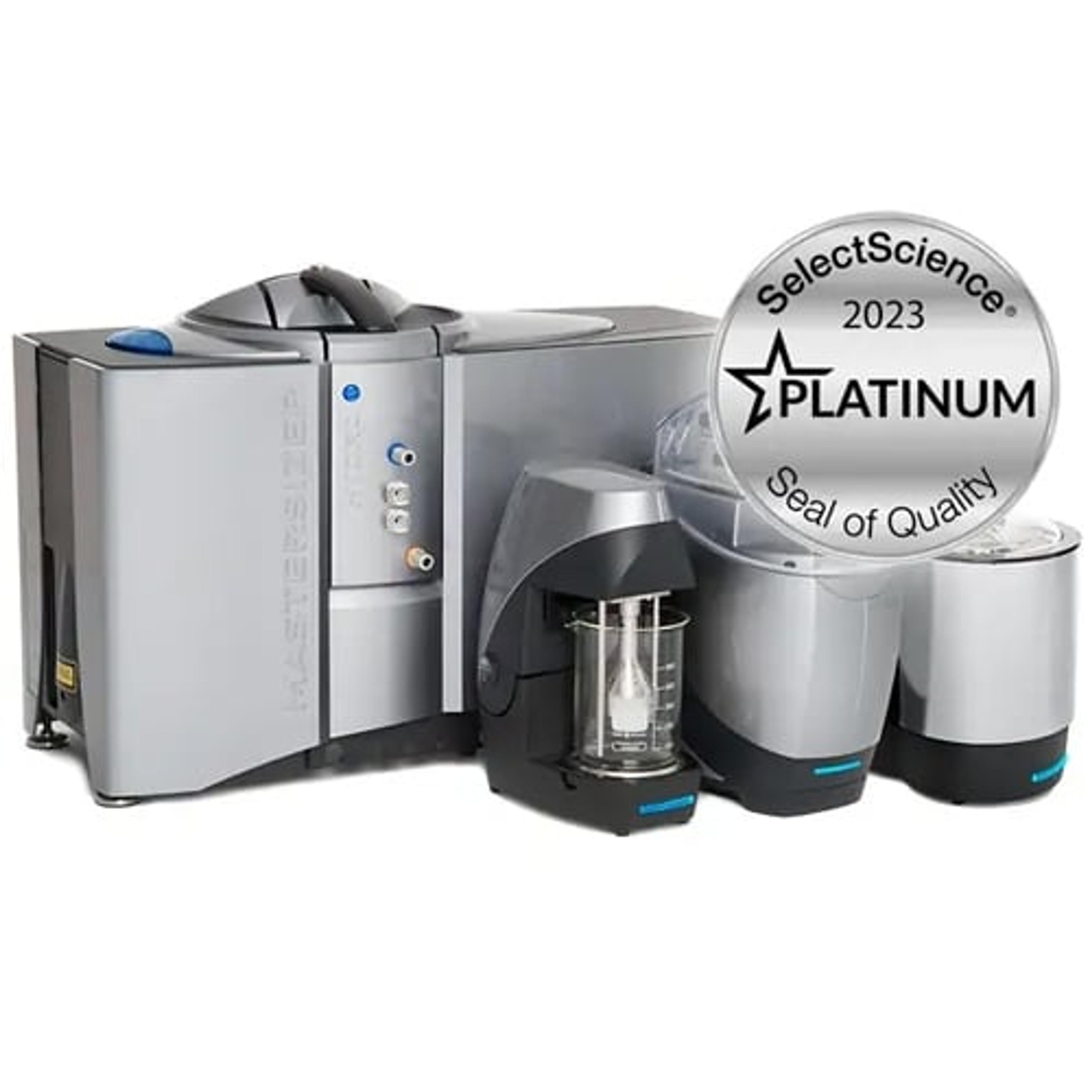
Mastersizer 3000
Malvern PanalyticalWorld’s most widely used particle size analyzers, the smartest way to measure particle size. There is a newer version of this product avilable, the Mastersizer 3000+ Ultra.
Links
Tags
Particle CharacterizationParticle characterization instruments are used to determine particle size distribution, shape, surface area, zeta potential, density and porosity of particles and materials. Multiple tecchniques are available for determining particle size, shape and count including dynamic light scattering (DLS), laser diffraction, electrozone (Coulter technique), imaging particle analysis and single particle optical sensing. Determine the density of your material with a gas pycnometer or examine its surface area and porosity with gas adsorption analyzers and mercury porosimeters. Find the best particle characterization instruments in our peer-reviewed product directory: compare products, check customer reviews and receive pricing direct from manufacturers.sCMOSImagingImaging techniques are essential for obtaining visual representations of samples to understand structures, processes, and function in biological, chemical, and physical research. These tools range from traditional light microscopy to advanced imaging modalities like MRI and electron microscopy, providing researchers with valuable data for diagnostics, drug discovery, and material analysis. Explore imaging solutions in our peer-reviewed product directory to compare products, check reviews, and get pricing directly from manufacturers.MillingMilling is the process of grinding, crushing, or cutting materials into smaller parts. In scientific research, it plays a crucial role in sample preparation for analysis in areas such as food, pharmaceuticals, and materials science. Explore milling equipment in our peer-reviewed product directory; compare products, check reviews, and get pricing directly from manufacturers.Sample ProcessingSample processing is required to prepare samples prior to analysis. Technologies used for sample processing include homogenizers, grinders, mills and mixers.