
ResourceMaterials
Determination of Nitrogen Content in Heavy Petroleum Fractions
Determination of Nitrogen Content in Heavy Petroleum Fractions
13 Jul 2015Heavy petroleum is very difficult to extract and analyze due to its high viscosity and high nitrogen content, and requires specialized strategies for quality control. The high nitrogen content in particular can slow down the refining process through poisoning of catalysts. This application note explains a modified combustion process to help with processing these 'difficult' matrices.
Related products
Request Quote for All Products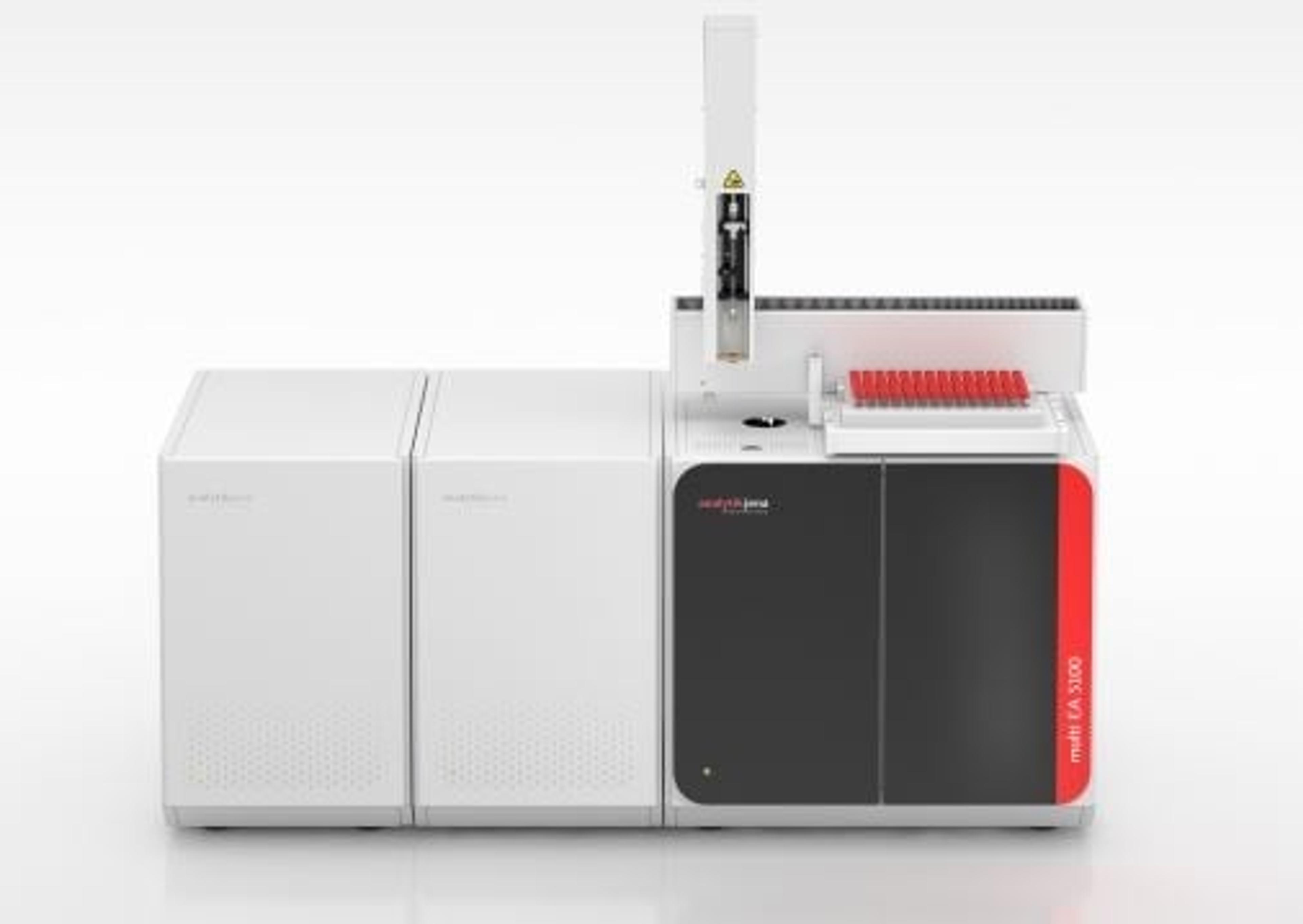
multi EA 5100 - C/N/S/X Elemental Analyzer
Analytik Jena GmbH+Co. KGYour entire C/N/S/X lab in one device

C, S and Cl Solid Analysis with multi EA 4000
Analytik Jena GmbH+Co. KGMultifunctionality + ease of use + flexible analysis + stability and precision of performance
Links
Tags
Atomic Absorption / Emission SpectroscopyAtomic absorption spectroscopy (AAS) and atomic emission spectroscopy (AES) — also called optical emission spectroscopy (OES) — are used to detect the elemental constituents in samples. Both techniques involve the atomization of a sample. Atomic absorption spectrometers may use a flame or furnace to create an atomic vapor of the sample before irradiation with spectral light. Optical emission spectrometers may use a flame, inductively coupled plasma (ICP), microwave plasma (MP) or spark arcs to atomize and excite the sample. At higher excitation energies, electrons can be emitted instead of photons, which can be useful for samples that can’t be atomized and for surface analysis. Explore electron spectroscopy equipment such as Auger spectrometers and photoelectron spectrometers for surface elemental analysis of samples. Find the best atomic absorption, photoelectron and optical emission spectrometers in our peer-reviewed product directory: compare products, check customer reviews and receive pricing direct from manufacturers.Environmental Monitoring and TestingEnvironmental monitoring and testing uses handheld portable analyzers, kits, spectrometers or chromatography systems for air, water, soil, food and other sample testing. Useful features of analyzers such as BOD and COD include portability, easy calibration, automation and sensitivity. Environmental test kits for pH, water, moisture, etc, should be accurate, sensitive, reliable, fast and easy to use.Non-Destructive TechniquesNon-destructive techniques (NDT) describes a variety of analytical techniques used to evaluate the properties of a material. Common methods include ultrasonic, magnetic-particle, liquid penetrant, radiographic, remote visual inspection (RVI), and eddy-current testing. NDT is regularly used in forensic engineering, civil engineering, mechanical engineering, electrical engineering, systems engineering, aeronautical engineering, and medicine.Sample PreparationSample preparation can improve the quality and speed of separation techniques. Products to assist sample preparation include filtration equipment, evaporators, membranes and sieves.PetroleumCrude OilThe chemical evaluation of the complex combination of hydrocarbons and organometallic compounds found within crude oil. The results provide data on the chemical characteristics of a sample for petroleum testing laboratories.PetrochemicalsPetrochemicals are chemical products derived from petroleum or natural gas, essential in creating plastics, fuels, and synthetic materials. Analytical techniques help ensure product quality and environmental compliance. Browse equipment for petrochemical analysis in our product directory.NitrogenFuel and Energy