
ResourceMaterials
Detecting the Presence of Anomolous Large Particles within Powders Using Laser Diffraction Particle Size Analysis
15 Apr 2015This application note demonstrates the ability of the Mastersizer 3000 and Aero S dispersion unit to detect a small proportion of anomalously large particles added to a small aliquot in a 'seeding' experiment. A fine grade of lactose was used as a model for pharmaceutical API or excipient powders.
Related products
Request Quote for All Products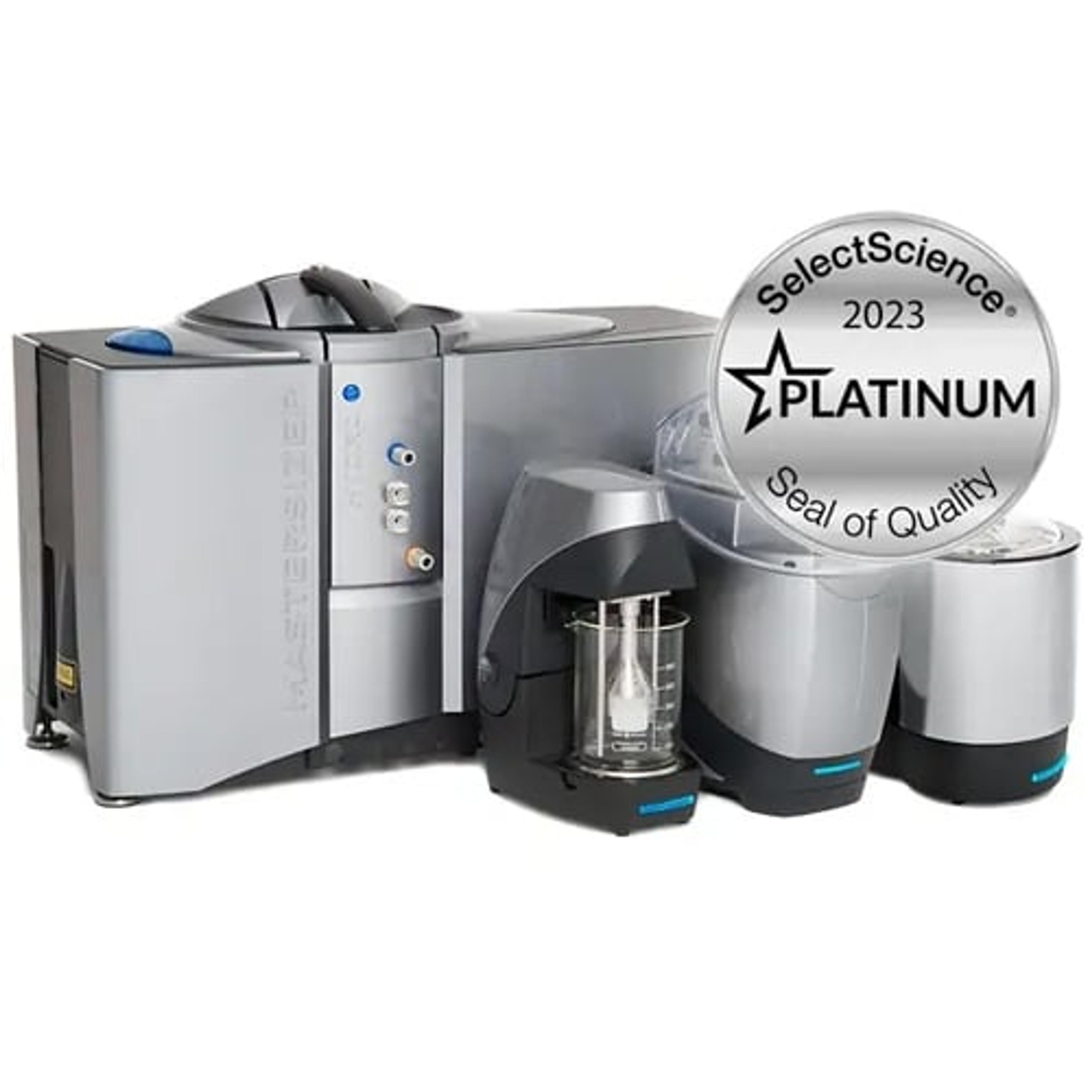
Mastersizer 3000
Malvern PanalyticalWorld’s most widely used particle size analyzers, the smartest way to measure particle size. There is a newer version of this product avilable, the Mastersizer 3000+ Ultra.
Links
Tags
Particle CharacterizationParticle characterization instruments are used to determine particle size distribution, shape, surface area, zeta potential, density and porosity of particles and materials. Multiple tecchniques are available for determining particle size, shape and count including dynamic light scattering (DLS), laser diffraction, electrozone (Coulter technique), imaging particle analysis and single particle optical sensing. Determine the density of your material with a gas pycnometer or examine its surface area and porosity with gas adsorption analyzers and mercury porosimeters. Find the best particle characterization instruments in our peer-reviewed product directory: compare products, check customer reviews and receive pricing direct from manufacturers.Lactose