Cultivation of Human CAP® Cells: Evaluation of Scale-Down Capabilities using Single-Use Bioreactors

6 Oct 2013

The following application note illustrates how the DASbox® Mini Bioreactor System combined with the BioBLU® 0.3c single-use vessels supports bioprocess development in human cell culture.

BioBLU® 0.3 Single-Use Vessels

Eppendorf

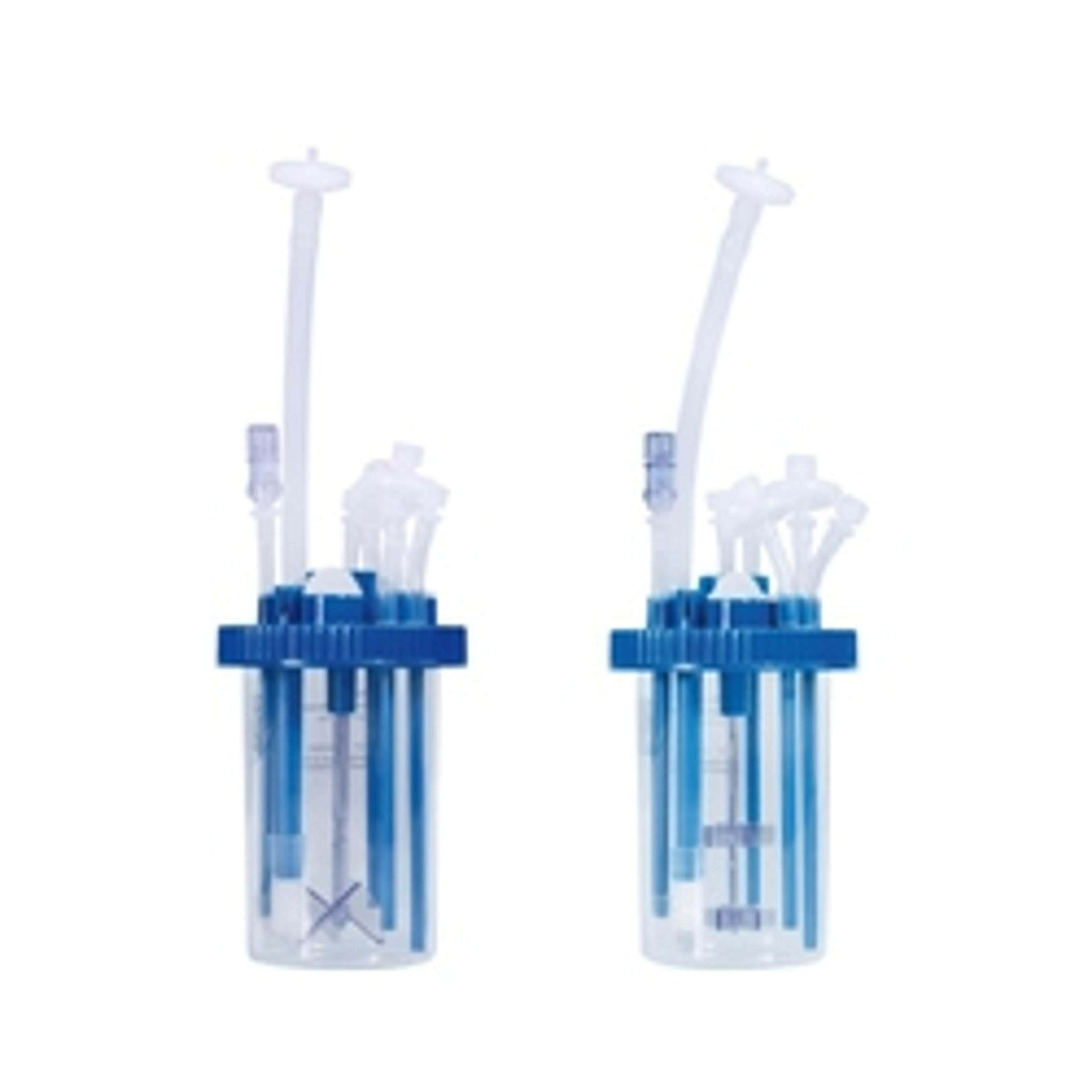
As the smallest vessel of the Eppendorf single-use bioreactor family the BioBLU 0.3 is ideally suited for use as a scale-down model. Designed for use with the DASbox Mini Bioreactor System it is able to accelerate process development in biopharmaceutical and biotechnological applications using cell cultures and microorganisms.All critical process parameters can be precisely controlled and users benefit from easy handling, minimized set-up time and the elimination of cleaning and sterilization steps. The unique liquid-free exhaust gas condenser reduces negative effects caused by change of medium osmolarity and efficiently prevents blocking of the exhaust gas filter.BioBLU® 0.3 Single-Use Vessels Features: Fully instrumented single-use mini bioreactors for accelerated process development in cell culture and microbial applications. Excellent scalability and reproducibility. Small working volumes starting at 65 mL save on cell material, media and supplements. Used with the DASbox mini bioreactor system for parallel set-up of 4, 8, 12 or more bioreactors. Liquid-free exhaust condenser with easy handling by automatic click in activation and click out deactivation mode. Magnet-coupled overhead drive reduces the risk of contamination, up- or downflow. Headplate with 2x PG 13.5 ports, 4x integrated long dip tubes, 2x integrated short dip tubes, one thermowell, DO sensor port with permeable membrane. Operating with industry standard probes for precise measurement and control of temperature, pH, DO. Vessels are delivered pre-sterilized by ß-irradiation to dose exceeding 15 kGy (DIN EN ISO 11137-2:2007). All wetted materials are USP Class VI certified. Applications: Process development in cell culture and microbiology Design of Experiments (DoE) Media optimization Clone & cell line screening, strain characterization

(0)

Links

Tags

Cell / Tissue CultureCell culture or tissue culture is used to study the biology of cells or tissues and to isolate cellular products in an environment which can be manipulated and well defined. Accurately control your culture environment with bioreactors or culture incubators, bind your cells to a surface or together with an extracellular matrix. Distinguish cell types with differential media or proliferate cells with certain characteristics using selective media. Enrich your media with supplements such as growth factors, sera and vitamins. Find the best cell and tissue culture products, kits and equipment in our peer-reviewed product directory: compare products, check customer reviews and receive pricing direct from manufacturers.Cell-Based AssaysCell-based assays are used to monitor the presence, quantity and activities of a desired cellular analyte including drug molecules or biomarkers. This can reveal information on cell health (apoptosis, cytotoxicity, viability and proliferation assays), cell metabolism, cell migration and cell signaling mechanisms. Find the best cell-based assay products, kits and equipment with our peer reviewed product directory: compare products, check customer reviews and receiving pricing direct from manufacturers.Bioprocessing / FermentationBioprocessing is the use of biological materials to perform commercial, scientific or medical research processes. Biological materials used include cells, enzymes and organisms. Usually bioprocessing requires a batch or continuous bioreactor such as a fermentor or cell culture system. The advantages of using a reactor include high productivity, easy configuration, adjustable values and automation.Cell GrowthCell growth refers to the process by which cells increase in size and number. It is essential for tissue development, wound healing, and cancer research. Understanding and controlling cell growth is a fundamental part of cell biology and regenerative medicine. Browse our peer-reviewed product directory to find the best tools for studying cell growth, compare products, check reviews, and get pricing directly from manufacturers.Cell IncubationCell incubation involves maintaining controlled environmental conditions for growing and nurturing cells. It is essential for cell culture studies, drug testing, and regenerative medicine. Explore cell incubation solutions in our peer-reviewed product directory; compare products, check reviews, and get pricing directly from manufacturers.