ResourceSeparations

Considerations for Analytical to Preparative Scaling

4 Apr 2016

Developing separation methods on a small scale and transferring them to a larger scale can help a lab reduce its consumption of sample and solvents. Using the appropriate factors scientists can scale up from analytical chromatography to larger scale preparative separations. In this application note the Prep 150 LC System from Waters, a system for preparative chromatography, is used with egg white to demonstrate transference from a 4.6mm ID analytical column to a 19mm ID preparatory column separation.

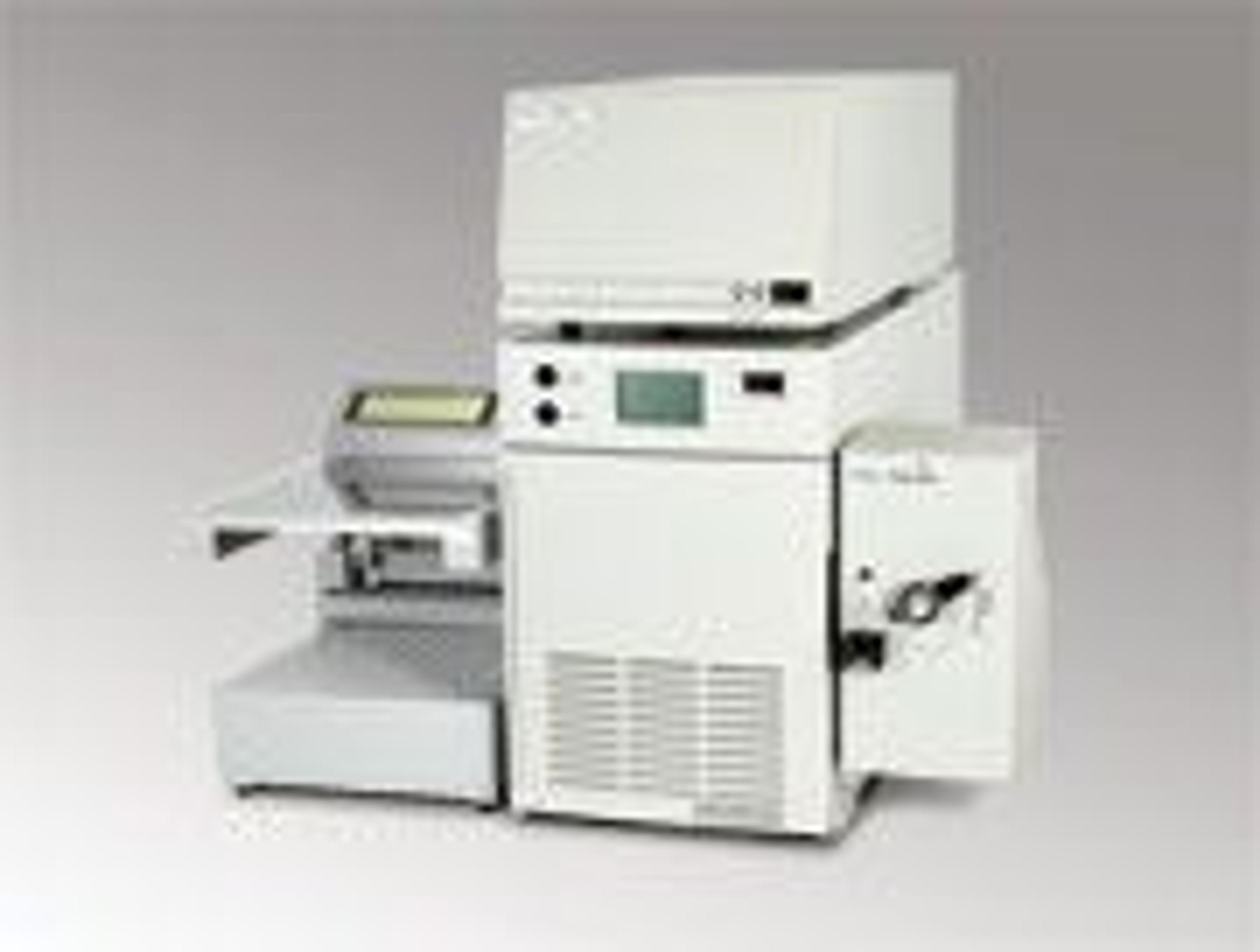
Prep 150 LC System

Waters

The Prep 150 LC System is a fit for purpose solution designed for scientists requiring robust system performance with intuitive software for dedicated personal purification or quick adoption in centralized labs. Systems are designed to satisfy your application requirements, whether you are processing a few samples a day, or your workload demands greater through-put with unattended automation. The Prep 150 LC System allows you to rapidly process your valuable complex mixtures resulting in high-purity and recovery with complete confidence. Features of the Prep 150 LC System: Flexible solvent delivery options allowing binary or quaternary based pumps providing low-pressure multi-solvent blending or high pressure gradient mixing of flow rates up to 150 ml/min. Easy to use manual or automated sample injection options allow the versatility to accommodate a wide range of workload requirements. Identify and isolate your compounds of interest with the highly sensitive 2489 UV/Visible or 2998 Photodiode Array detectors, providing enhanced linear range to accommodate highly concentrated samples. Confidently purify sample loads of milligrams to grams when using internal column diameters of up to 50mm. Use the easy-to-navigate ChromScope software delivered with sample set wizard, stacked injection wizard, key fraction collection parameters, fraction simulation modeling, and customizable reporting with drop and drag features.

(0)

Links

Tags

AutosamplersAutosamplers are automated sample loaders used with a number of separation and analytical techniques. HPLC autosamplers use automated partial or full-loop injection systems and place samples in vials or microplates for analysis. Autosamplers can also be used for elemental analysis. Features to consider include repeatability, syringe capacity, footprint and temperature controls.  Sample PreparationSample preparation can improve the quality and speed of separation techniques. Products to assist sample preparation include filtration equipment, evaporators, membranes and sieves.LC-MSLC-MS (liquid chromatography-mass spectrometry) systems and equipment are used for separation and quantitative analysis of complex mixtures, combining liquid chromatography and mass spectrometry. Quantify proteins, contaminants, pesticides or screen for drug metabolites with a high level of sensitivity. LC-MS systems and equipment include reverse phase, normal phase and specialized columns integrated with various MS detectors such as time-of-flight (TOF), quadrupole, orbitrap or ion trap mass analyzers. LC-MS/MS instruments equipped with a qTOF or triple quadrupole analyzer give greater sensitivity and resolving power to your analysis. Find the best LC-MS equipment in our peer-reviewed product directory: compare products, check customer reviews and receive pricing direct from manufacturers.Preparative ChromatographyPreparative chromatography equipment is used for purification purposes, separating and collecting compounds eluted from a mixture which can then be subsequently used for further purposes. This can be done in large quantities or small. Preparative chromatography systems are usually low to medium pressure liquid chromatographs that are semi-automated. Explore a range of preparative columns and fraction collectors. Find the best preparative chromatography equipment in our peer-reviewed product directory: compare products, check customer reviews and receive pricing direct from manufacturers.Sample ManagementSample management systems include sample storage devices such as freezers and plate storers, sample environment enclosures and sample organization, retrieval and sorter systems. Useful system features include high-throughput, automation, robotic arms, automated liquid handling and associated database systems. Accessories in sample management include barcode scanners, heat sealers and tubes.Robotic InstrumentsRobotic instruments can be used for high-throughput automation of many lab processes. Such processes use instruments for assays like cell based assays and ELISA, for sample preparation like shakers, centrifuges and incubators, and for analysis such as sequencing and western blot analyzers. Useful features of robotic instruments include speed, reproducibility, barcode readers, software and automation.Robotic WorkstationsRobotic workstations are automated platforms enabling the user to perform high-throughput, multi-application processes, from sample preparation tasks such as PCR set-up, DNA purification and NGS library preparation, to integrated sample prep and analysis workstations. Automation makes processes consistent, fast, precise and fully walk-away. Find the best robotic workstations in our peer-reviewed product directory: compare products, check customer reviews and receive pricing direct from manufacturers.Automated Liquid HandlingAutomated liquid handling equipment is used to mix, dilute and dispense allotted volumes of liquid into microplates and other vessels automatically. The robotic, liquid handling arms can dispense from single channel to 3456 multichannel as well as operate nanoliter dispensing, enabling high throughput of samples. Find the best automated liquid handlers in our peer-reviewed product directory: compare products, check customer reviews and receive pricing direct from manufacturers.UltraPerformance Convergence ChromatographyConvergence Chromatography expands the capabilities of reversed phase LC and conventional GC techniques. By varying mobile phase strength, pressure, temperature and stationary phase Convergence Chromatography facilitates the separation, detection and quantification of many compounds and samples. The CO<sub>2< / sub> mobile phase used reduces the need for toxic solvents.Software PlatformsSoftware platforms are useful for various stages of laboratory experiments from data collection to data storage and processing. For instance lab software is available for system control, data management, data analysis and qualification / validation.Chromatography Method DevelopmentChromatography method development is the process of designing and optimizing chromatographic techniques to separate and analyze complex mixtures. This includes selecting appropriate stationary and mobile phases, determining flow rates, and optimizing detection methods. Successful method development is essential for high-quality results in fields like pharmaceuticals, food safety, and environmental analysis. Explore chromatography method development tools in our peer-reviewed product directory; compare products, check reviews, and get pricing directly from manufacturers.Sample HandlingProper and careful handling of samples is important in scientific studies to ensure the integrity of specimens. This will prevent deterioration and cross contamination, and improve the accuracy of sample tracking procedures.ChromatographyChromatography is a powerful technique used to separate and analyze components of mixtures based on their chemical properties. It is widely used in fields like biochemistry, pharmaceuticals, and environmental analysis. By exploiting differences in the interaction of substances with a stationary phase and a mobile phase, chromatography enables precise purification and quantification of compounds. Whether you're working with complex biological samples or industrial chemicals, chromatography is essential for obtaining high-quality results. Browse our peer-reviewed product directory to find the best chromatography systems, compare products, read customer reviews, and get pricing directly from manufacturers.Solvent ReductionSample ProcessingSample processing is required to prepare samples prior to analysis. Technologies used for sample processing include homogenizers, grinders, mills and mixers.