
Chlormequat & Mepiquat analyzed with LCMS
24 Mar 2022Analysis of Chlormequat and Mepiquat can be challenging since they are extremely hydrophilic and are only weakly retained in reversed-phase HPLC which makes their separation difficult. In addition, these compounds are retained too strongly in normal-phase (non-polar solvents) chromatography. Due to this situation, the preferred method of analysis for these compounds was ion-pair chromatography using high ionic strength (> 150mM) ion-pair reagents.
Related products
Request Quote for All Products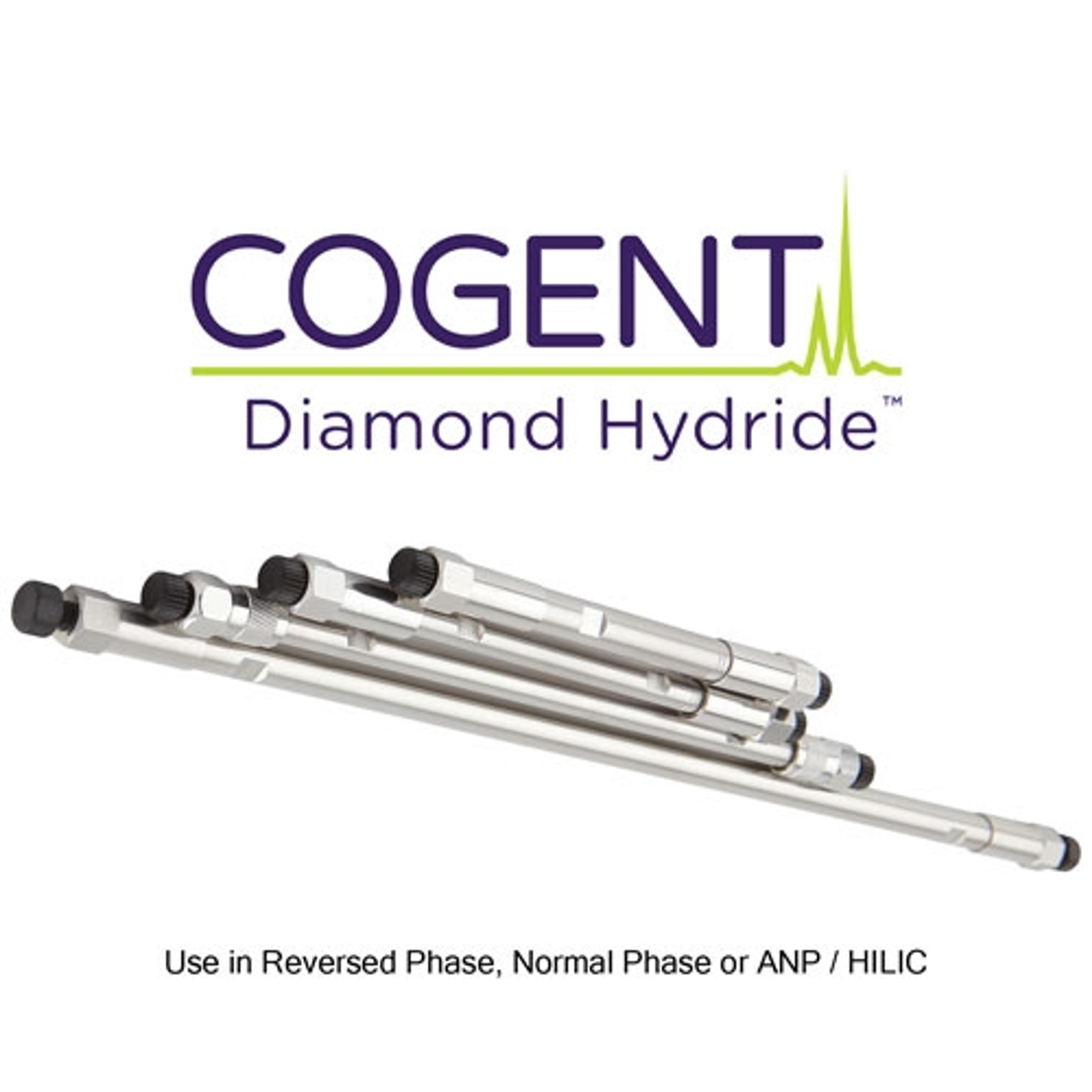
Cogent Diamond Hydride™ HPLC Columns
MicroSolv Technology Corp.Cogent Diamond Hydride HPLC Columns are manufactured with TYPE-C™ silica (silica hydride) and a very small amount of carbon on the surface that adjusts the column hydrophobicity to an important level. This makes these columns have unique separation capabilities for scientists working in LCMS, metabolomics, bioanalytical, amino acids, organic acids, carbohydrates, and very polar small molecules.