
Chlorite and Bromate in Drinking Water on a Microbore Column
1 Jun 2016This application note briefly describes how the determination of chlorite, bromate and the standard anions in drinking water using a microbore column Metrosep A Supp 5 - 250/2.0 followed by conductivity detection after sequential suppression.
Related products
Request Quote for All Products
856 Conductivity Module
Metrohm AGThe 856 Conductivity Module is the new conductivity meter from Metrohm. It measures with state-of-the-art conductivity measuring cells – five-ring measuring cells. They achieve high linearity without platinization of the cell and are maintenance-free. The five-ring cells also yield accurate measurement data irrespective of the immersion depth. Broad range of applications The 856 Conductivity Module is versatile and can be used: - to extend a Titrando with an additional measurement input for pH or ion measurement - as an integrated conductometer in conjunction with the software packages PC Control or tiamo™ (from version 2.0) - as a stand-alone conductometer together with the 840 Touch Control operating unit - as a fully automated conductometer combined with the 814 USB Sample Processor or 815 Robotic USB Sample Processor XL Thanks to the galvanically separated measuring input, pH and conductivity measurements can now be performed simultaneously in the same sample vessel. Regardless of the application – measurements always meet GLP and FDA requirements. For use with the latest conductivity measuring cell technology The 856 Conductivity Module’s new five-ring conductivity measuring cells provide a wide linear measuring range. In contrast to four-ring cells, the electrode can be fully immersed in the sample solution. In a stirred solution, this results in faster mixing within the measuring cell. Thanks to the removable cap, the conductivity measuring cells are very easy to clean. Plug-and-play functionality for numerous peripheral devices Two USB and four MSB ports make the 856 Conductivity Module incredibly flexible. Plug-and-play functionality means the user can connect a multitude of devices: - printers, sample changers, barcode readers, etc. - up to four stirrers and four 800 Dosinos

858 Professional IC Sample Processor
Metrohm AGAutomating ion chromatography will save you costs while improving traceability and reproducibility of results. Metrohm offers the 858 Professional IC Sample Processor is the high-end version. It allows you to run simple as well as complex sample series combined with inline sample preparation techniques prior to injection.
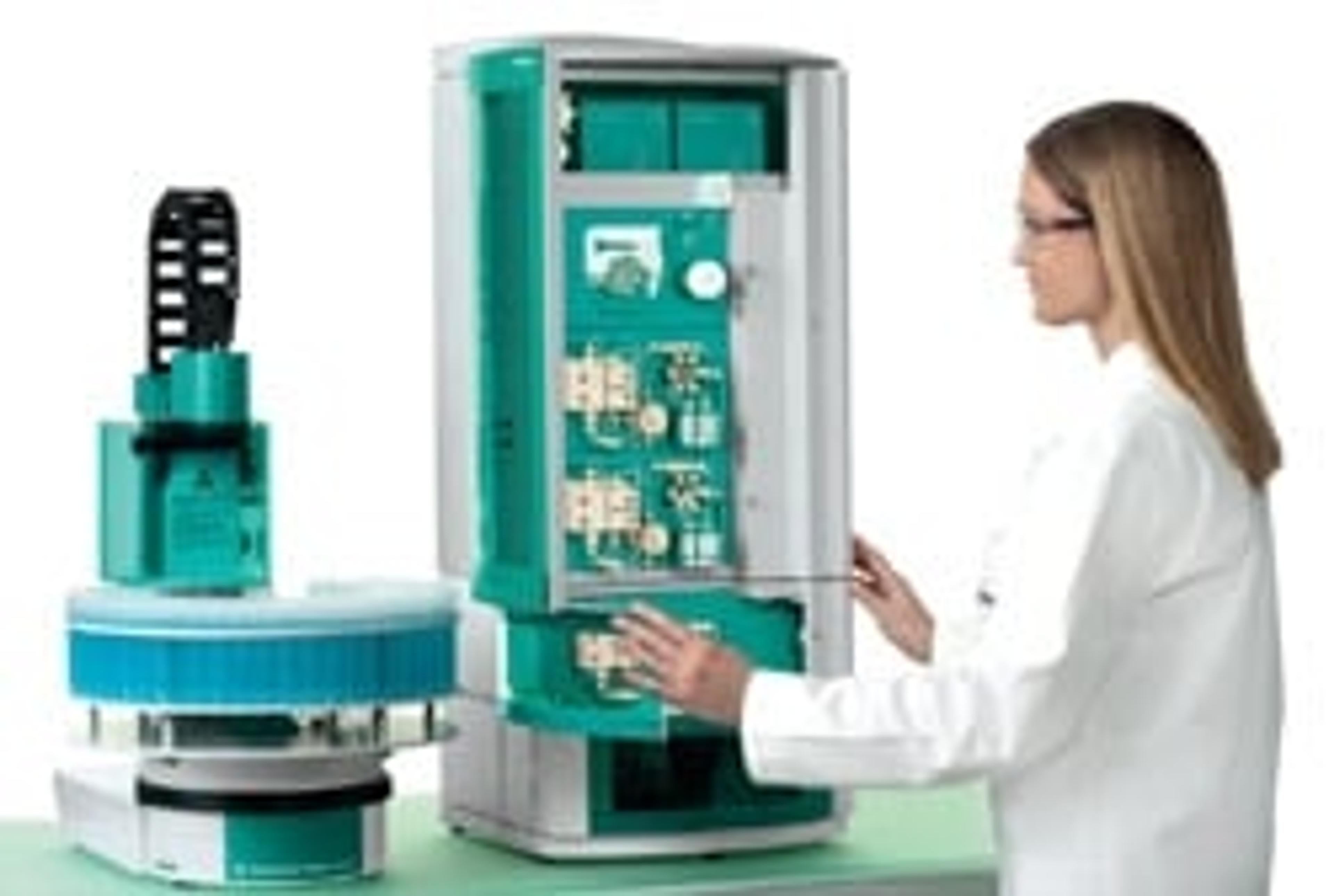
940 Professional IC Vario
Metrohm AGWith the 940 Professional IC Vario system, Metrohm sets a new standard in ion chromatography. 940 Professional IC Vario stands for maximum flexibility combined with most easy operation and perfect reliability. Entirely modular by design, the new 940 Professional IC Vario meets your particular requirements while keeping you perfectly flexible. Based on one and the same system, you can configure any IC system you want or need.All solutions – including standards – are produced fully automatically, if desired. Starting with sample injection, the system works completely autonomously. Moreover, it is self- monitoring: All system and method parameters are permanently checked; if any system component should require maintenance, the system tells you so – with a message in plain text.The 940 Professional IC Vario system provides superior reliability of both the system itself and the analytical results produced on it: Because the system is self-monitoring, operator errors are virtually ruled out. You can absolutely rely on your measuring results. Moreover, all results can be traced back to every single step of the analysis and even sample preparation. Thus, even the strictest audits are no reason to worry any more.940 Professional IC Vario Features: Modular high-performance ion chromatography system. Unlimited possibilities for system configuration. Compact dimensions, small footprint. For routine analyses and research applications in the ng/L- to %-range. Highest sensitivity for lowest detection limits. Intelligent system components for reliable results. Wide range of detection options: conductivity, UV/VIS, amperometry, ... Free choice of suppressor and column. All gradient options. Inline eluent preparation integrated in the system. Multi-language MagIC Net software for intuitive and simple operation. Complies with GLP and the FDA regulations. Compatible with the unique and partly patented Metrohm Inline Sample Preparation techniques (MISP). Complete automation for high sample throughput. Low maintenance costs and long lifetime. Rugged Swiss quality.