ResourceSeparations

Characterization of the new PAL micro-SPE cartridge for pesticides extract clean-up

18 Jun 2023

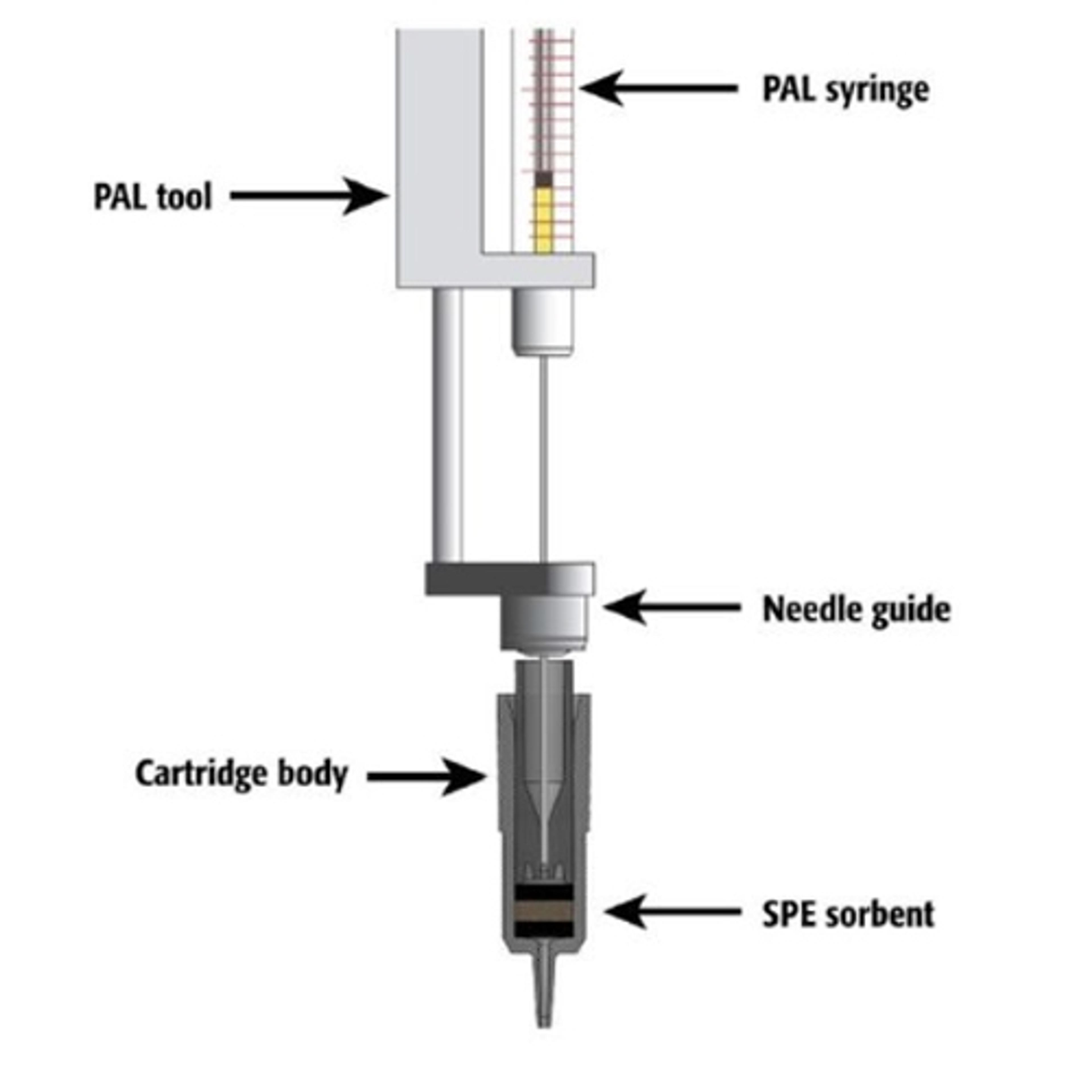
Micro-SPE (µSPE) has emerged as a micromethod for sample preparation and clean-up in food safety, proteomics, forensic, environmental and analysis. Applications are wide-ranging and cover drugs, environmental contaminants, and, in particular, the QuEChERS extract cleanup in multiresidue pesticide analysis. The automation of the µSPE sample preparation steps led to the desired increase in sample throughput, unification of the used sorbent materials for food commodities, and the potential for the online hyphenation with GC-MS and LC-MS instrumentation. With the increasing demand and the use of automated µSPE workflows on PAL Systems, the requirement for extended functionality evolved due to mechanical and also analytical limitations of the initially employed ITSP micro-SPE cartridge (ITSP Solutions Inc., Hartwell GA, USA). With the new PAL µSPE cartridge CTC Analytics introduced a novel septumless cartridge design dedicated to an extended application range and a reliable high throughput automation. In this poster, the evaluation of the new cartridge design is presented with results for pesticides analysis from leading laboratories.

PAL µSPE

CTC Analytics AG

The PAL µSPE cartridge stands for a miniaturized and robust SPE technology that allows reliable automation and reduction of used sample and solvent without compromising performance. The µSPE has therefore emerged as a new standard for extraction, purification, concentration or filtration for automated environmentally friendly analysis processes.

(1)

Links

Tags

Solid-Phase ExtractionSolid-phase extraction (SPE) is used for clean-up, extraction and concentration of semi-volatile or non-volatile analytes from complex mixtures including blood, urine and food samples. Multiple formats are available for conducting SPE, including prepacked SPE cartridges, disks and microplates, as well as SPE sorbent powders for manual packing. SPE systems can be used to automate the process and extract multiple samples at once. Solid-phase microextraction (SPME) and supported liquid extraction (SLE) products are also available in the same formats. Find the best SPE, SLE and SPME equipment in our peer-reviewed product directory: compare products, check customer reviews and receive pricing direct from manufacturers.QuEChERSThe QuEChERS (Quick, Easy, Cheap, Effective, Rugged, and Safe) method is a streamlined approach that is used to extract multi-residue target compounds from food samples. It is most commonly used by analytical chemists studying pesticide residues in food.PesticidesPesticides are used to protect crops from diseases, pests and unwanted plants. They are classed as persistent organic pollutants (POPs) and can be harmful to humans. The Environmental Protection Agency (EPA) currently regulates the use of pesticides in the USA. Solid Phase Extraction (SPE)Solid phase extraction (SPE) is a sample preparation technique used to separate and concentrate analytes from complex mixtures. It is widely used in environmental, pharmaceutical, and clinical analysis. SPE provides higher sensitivity and selectivity compared to traditional liquid-liquid extraction methods, making it essential for accurate and reproducible results. Explore SPE tools and systems in our peer-reviewed product directory; compare products, check reviews, and get pricing directly from manufacturers.GC-MSGas Chromatography-Mass Spectrometry (GC-MS) combines the separation power of gas chromatography with the detection capabilities of mass spectrometry, allowing for the analysis of complex mixtures. It is widely used in environmental, forensic, and pharmaceutical analysis. Explore GC-MS systems in our peer-reviewed product directory; compare products, check reviews, and get pricing directly from manufacturers.LC-MSLiquid Chromatography-Mass Spectrometry (LCMS) is a powerful analytical technique that combines the separation power of liquid chromatography with the detection capabilities of mass spectrometry. It is widely used for qualitative and quantitative analysis of complex mixtures in pharmaceuticals, proteomics, and environmental studies. Browse our peer-reviewed product directory to find the best LCMS systems, compare products, check reviews, and get pricing directly from manufacturers.