
ResourceLife Sciences
Capture Brilliance with the Celena S
24 Apr 2017This brochure provides an overview of the Celena S from Logo Biosystems. The Celena S is an all-in-one digital imagining system, for your benchtop. It is equipped with advanced optics, highly sensitive CMOS sensor and digitally controlled LED light source.
Related products
Request Quote for All Products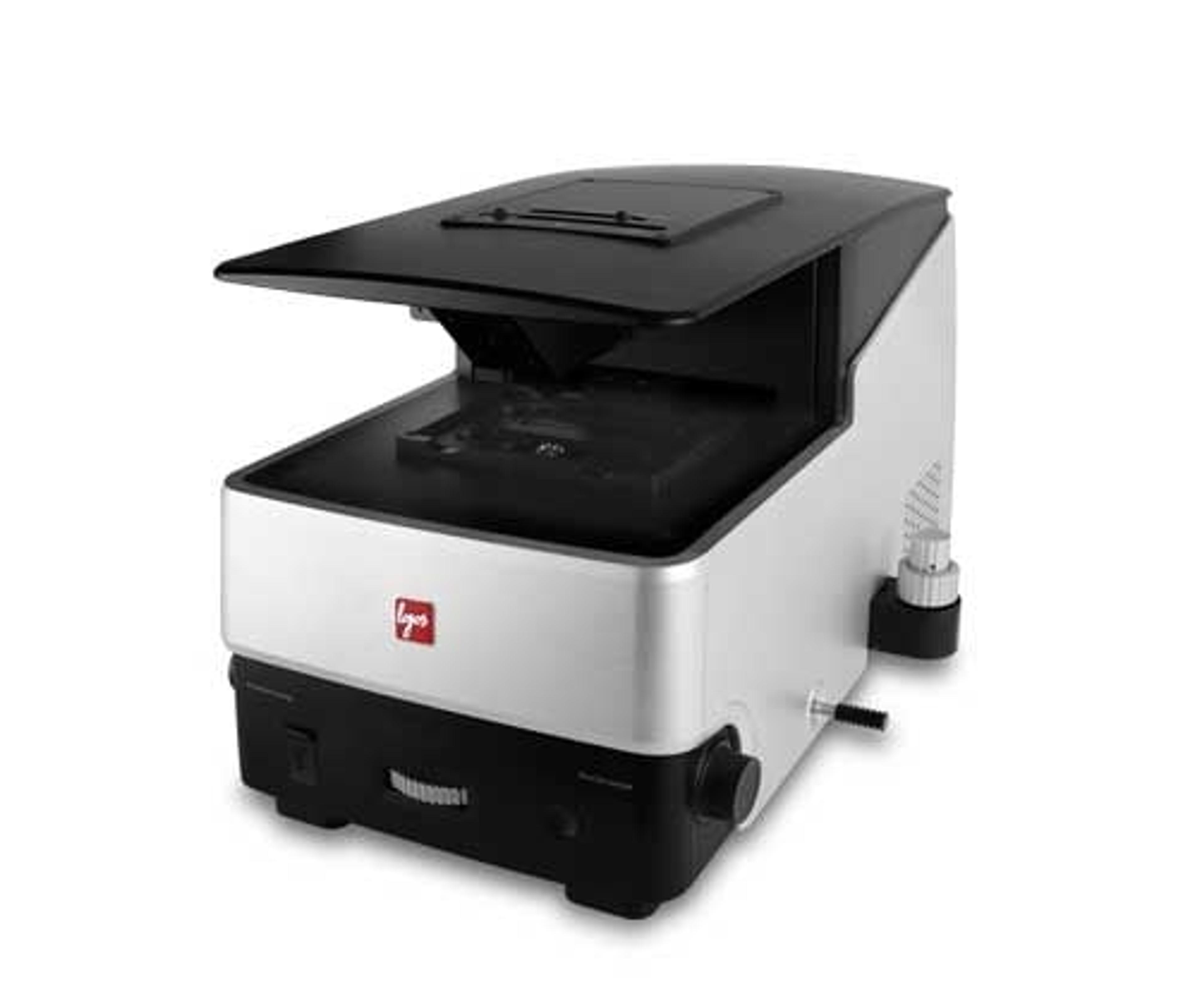
CELENA® S Digital Imaging System
Logos BiosystemsThe CELENA® S is a comprehensive solution for capturing publication-quality fluorescence, brightfield and phase contrast images. The sophisticated software accommodates a wide range of imaging applications such as image capture and analysis, live cell imaging, and even automated cell counting. Capture amazing detail with a few clicks of your mouse.
Links
Tags
Gel Doc / Image AnalysisGel documentation (gel doc) or gel imaging systems are used for the analysis of proteins, antibodies and nucleic acid immobilized in polyacrylamide or agarose gels, membranes or microarrays. Explore a range of a gel imaging systems, densitometers, scanners, transilluminators or UV lamp + CCD cameras for your image analysis solutions. Colorimetric, fluorescent and/or radioisotopic samples can be visualized and documented for further analysis. See gel doc / Image analysis software for quantitative 1D and 2D analysis of your samples. Find the best gel doc / image analysis products in our peer-reviewed product directory: compare products, check customer reviews and receive pricing direct from manufacturers.In Vivo Imaging Systems<i>In vivo</i> imaging systems, including pre-clinical imaging systems and medical imaging systems are used to non-invasively visualize and capture images of live animals and plants. Monitor the natural processes or diseases of your subjects using small-animal pre-clinical imaging systems, including single photon positron emission tomography (SPECT), positron emission tomography (PET), computed tomography (micro-CT), magnetic resonance imaging (MRI), X-ray radiography, ultrasound, fluorescence and bioluminescence imagers. Multimodal systems and software solutions are also available for correlative analysis of organ, tissue, cell, or molecular-level processes. Find the best in vivo imaging products in our peer-reviewed product directory: compare products, check customer reviews and receive pricing direct from manufacturers.Light MicroscopyLight microscopes or optical microscopes are used to visualize microscale objects under magnification, including cells, clinical specimens and materials. Lab equipment for light microscopy includes confocal microscopes, fluorescence microscopes, zoom and stereo microscopes. Microscope slides and imaging reagents are available for visualizing samples, as well as various microscope stages and incubators for large or temperature-sensitive samples. Find the best light microscopes in our peer-reviewed product directory: compare products, check customer reviews and receive pricing direct from manufacturers.Gel ImagingGel imaging captures high-resolution images of electrophoresis gels to analyze DNA, RNA, and proteins. Essential in molecular biology, this technique helps visualize results for accurate quantification and documentation. Discover top imaging systems and compare user-reviewed options in our directory.Image AnalysisImage analysis involves the extraction of meaningful information from images, often using software to quantify and interpret visual data. It is widely used in cell biology, material science, and diagnostics. Increasingly, AI is being used to streamline image analysis. Explore image analysis tools in our peer-reviewed product directory; compare products, check reviews, and get pricing directly from manufacturers.ImagingImaging techniques are essential for obtaining visual representations of samples to understand structures, processes, and function in biological, chemical, and physical research. These tools range from traditional light microscopy to advanced imaging modalities like MRI and electron microscopy, providing researchers with valuable data for diagnostics, drug discovery, and material analysis. Explore imaging solutions in our peer-reviewed product directory to compare products, check reviews, and get pricing directly from manufacturers.Live Cell ImagingLive cell imaging is the study of living cells using microscopes and high-content imaging systems. This technique provides in-depth insight into fast and complex biological processes, by allowing dynamic imaging of living cells instead of acquiring an individual image at a single point in time.MicroscopyMicroscopy is a technique used to observe small objects in detail, from cells to materials, using light or electron microscopes. It enables researchers to examine structures with high resolution, aiding in fields such as biology, medicine, and materials science. With advanced microscopy techniques, scientists can gain insights into cellular processes, tissue structures, and material properties. Explore the best microscopy solutions in our peer-reviewed product directory, compare products, read customer reviews, and get pricing directly from manufacturers.