
Bispecific antibodies and the quantification of their activity using iLite bioassays
3 Apr 2023In this application note, the use of therapeutic monoclonal antibodies (mAbs) is discussed as treatment for many disorders. The note also outlines how bispecific antibodies (BsAbs) work, how they are useful, and how cell-based reporter-gene assays can be used as valuable tools in the development of new therapeutic BsAbs. Different configurations and functions of BsAbs are also described, including how they work in the lysis of cancer cells.
Related products
Request Quote for All Products
iLite® Target cells
Svar Life Science ABEngineered, homologous, and specific target cells that enable screening for antibody-induced effector functions.
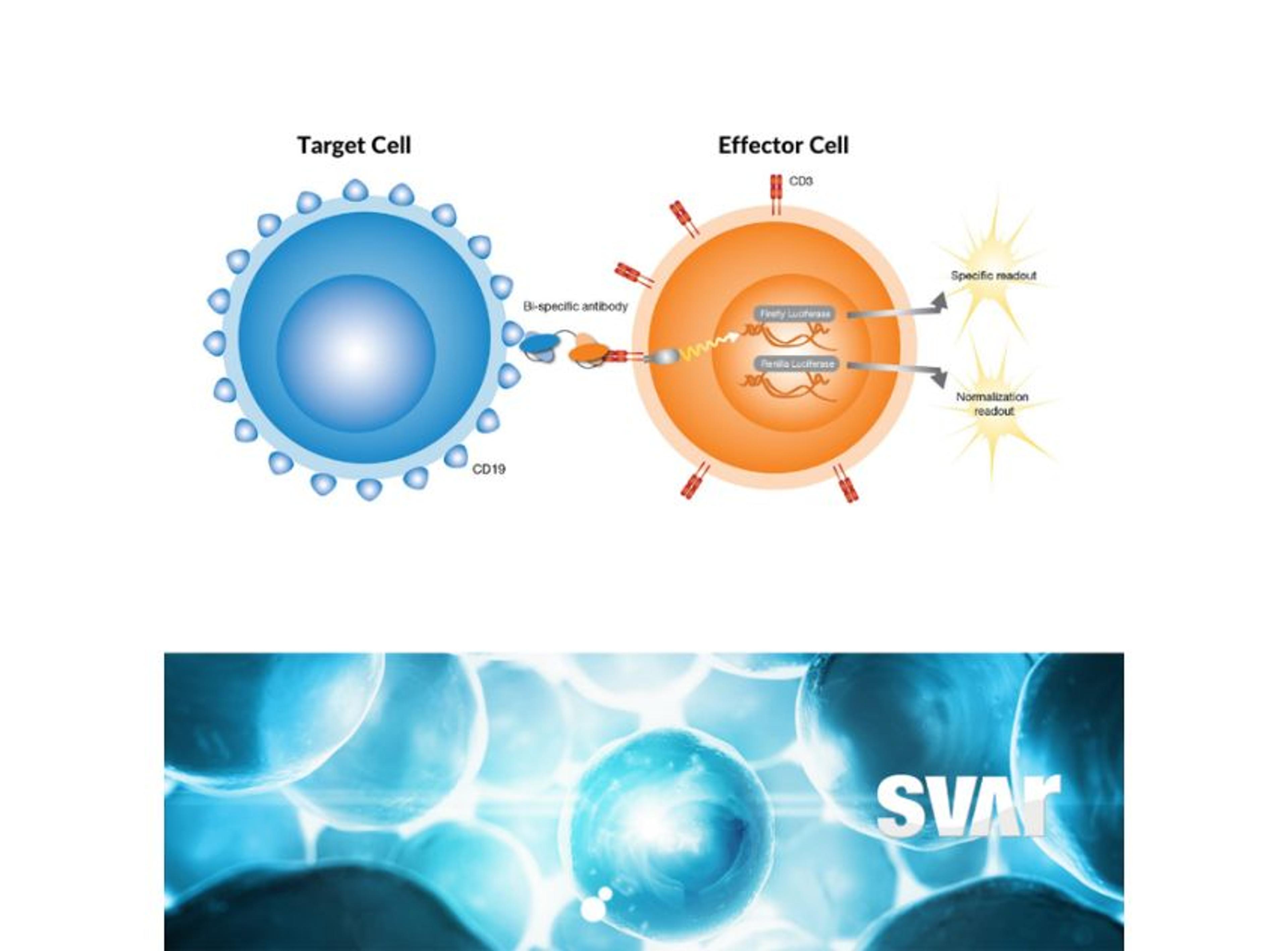
iLite® CD3 effector cell/ T-Cell activation Bioassays
Svar Life Science ABThe iLite® CD3 Effector Cell line is a reporter gene cell line that offers a convenient and powerful way of measuring the efficacy antibodies have to elicit T cell activation through CD3 interactions.