Biomarker Discovery Directly from Tissue Xenograph Using High Definition Imaging: MALDI Combined with Multivariate Analysis

8 Oct 2014

In this application note, the authors demonstrate the use of high definition MALDI imaging combined with multivariate analysis in studying changes in the proteome on xenograph tissues sections over time, after administering an anti-cancer drug.

MALDI SYNAPT G2-Si High Definition Mass Spectrometry

Waters

Redefining Resolution - Resolution in 3 Dimensions. MALDI SYNAPT G2-Si is a uniquely powerful and versatile MS platform. It's the only way to combine multiple dimensions of separation for analysis of complex samples, from imaging to biological research to chemical materials characterization. The MALDI SYNAPT G2-Si gives you high performance, accurate mass MALDI MS/MS, superior post-ionization separation with T-Wave IMS, High Definition Imaging (HDI) MALDI workflows, versatile experimental options, and the ultimate UPLC/MS/MS performance.
(0)

MassLynx MS Software

Waters

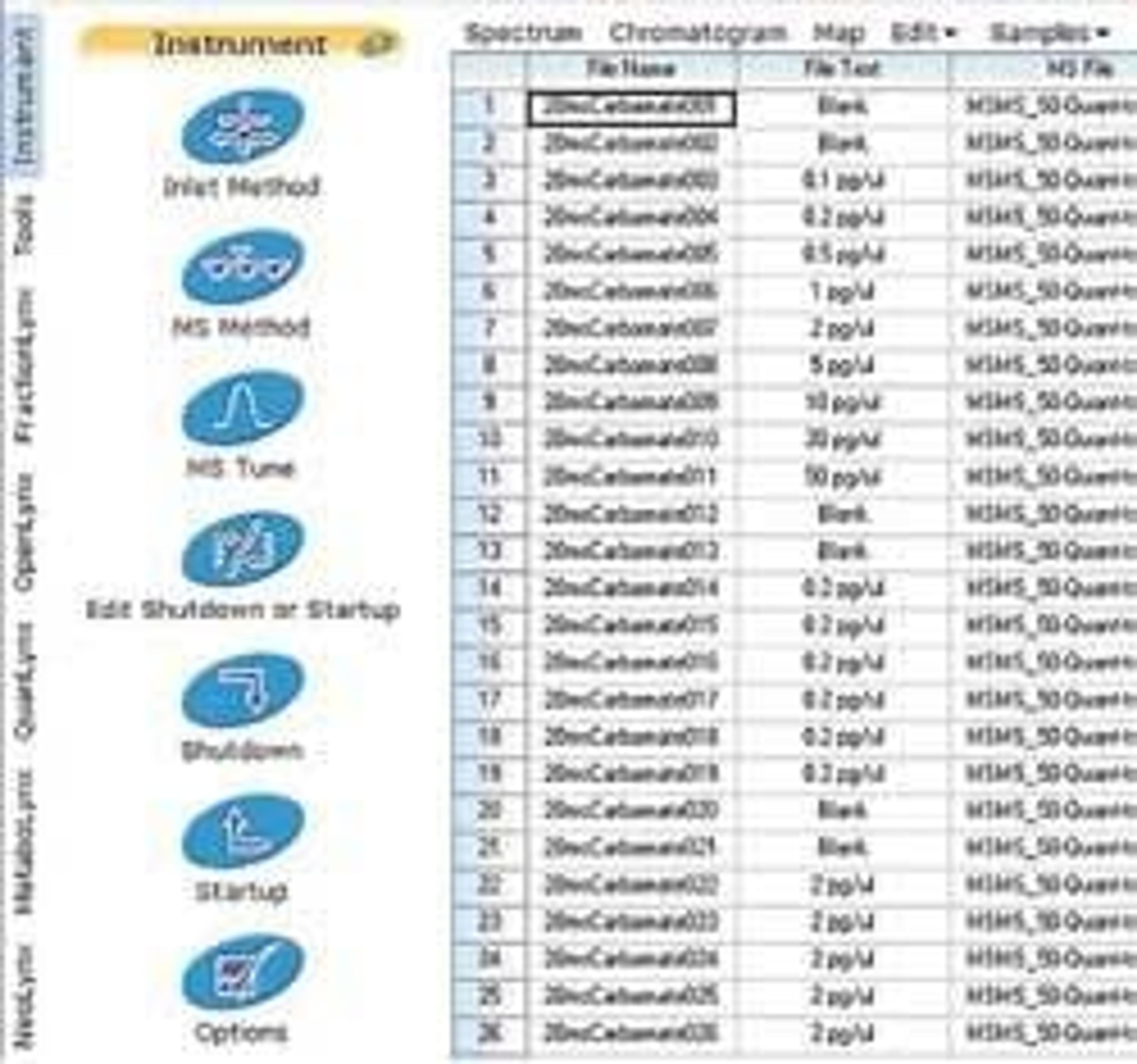
Acquire, Analyze, Manage, and Share Mass Spectrometry Information MassLynx™ Software increases the speed at which you can convert your sample data into valuable knowledge. It provides you with the fundamental platform to acquire, analyze, manage, and share your mass spectrometry information. MassLynx intelligently controls any Waters mass spectrometry system, from sample and solvent management components to mass spectrometer and auxiliary detectors. MassLynx Software may acquire nominal mass, exact mass, MS/MS and exact mass MS/MS data. MassLynx’s Sample List is the core of the system. It maintains and consolidates the data on all of your samples. You also initiate any activities related to your sample from the Sample List. This "sample centric" approach simplifies the interaction with your LC/MS or GC/MS system, acquired data and processed results. Process Application-specific Data MassLynx Software features general purpose and specialized Application Managers that provide information for your specific MS analyses and data. Two come standard with MassLynx: QuanLynx™ for automated quantification included as standard with MassLynx OpenLynx™ for qualitative screening and identification Optional Application Managers can perform: Targeted quantitative analysis Mass-directed purification Metabolite identification Deconvolution of complex chromatograms Metabonomics & metabolomics Protein identification and protein characterization

(8)

Links

Tags

Mass SpectrometryMass spectrometry (MS) is a powerful analytical technique used to identify and quantify molecules based on the mass-to-charge ratio of gas-phase ions. It provides detailed information about the structure, composition, and properties of compounds and is widely used across fields such as environmental monitoring, materials science, drug discovery and development, food and beverage testing, and wider chemical research. Key MS techniques include tandem mass spectrometry (MS/MS), liquid chromatography–mass spectrometry (LS-MS) and inductively coupled plasma (ICP-MS). Choosing from these wide range of techniques and technologies can be a daunting task, so keep up to date with scientific applications, performance expectations, and customer reviews here all in one place. Visit our product directory to receive quotes direct from the manufacturer. ImmunologyImmunological techniques measure and characterize immune responses. Immunology kits and analysis systems often use techniques such as ELISA, radioimmunoassay (RIA) and immunodiffusion assays, Immunohistochemistry, and flow cytometry. Immunologists use equipment such as flow Cytometers, plate readers, plate washers and fluorescent microscopes.Cellular PathologyCellular Pathology deals with the microscopic analysis of tissue samples and cells. Sample preparation and processing includes fixation, staining, sectioning and slide mounting, using equipment such microtomes and cryostats. In choosing immunohistochemistry and immunocytochemistry kits, consider chromogens, staining method, antibodies, microscopes and imaging.Cell-Based AssaysCell-based assays are used to monitor the presence, quantity and activities of a desired cellular analyte including drug molecules or biomarkers. This can reveal information on cell health (apoptosis, cytotoxicity, viability and proliferation assays), cell metabolism, cell migration and cell signaling mechanisms. Find the best cell-based assay products, kits and equipment with our peer reviewed product directory: compare products, check customer reviews and receiving pricing direct from manufacturers.BiomarkersBiomarkers are biological markers which can be measured and evaluated to indicate a biological state. The use of biomarkers in research and diagnosis can indicate a normal or disease state or drug response of cells / tissues. Biomarkers include genetic markers, cell surface markers such as antigens, antibodies or receptors and secreted molecules such as cytokines. An assay system is required for identification of biomarkers. :Biopharmaceutical AdvancesBiopharmaceutical advances follow the development of pharmaceuticals derived from biotechnology, also known as biotechnology medicines. Biopharmaceuticals may be produced from cell lines, plants, or microbial cells. Important considerations of biopharmaceutical use include application, cost, production process and purification.Clinical ChemistryBiochemistry (or clinical chemistry) involves the analysis of bodily fluids using chemical tests. Techniques used include HPLC, chromatography, spectroscopy, mass spectrometry, immunochemical, electrophoresis, turbidometric / spectrophotometric assay, MRI and ISE analysis. Tests are often carried out on plasma or serum but urine (urinalysis) and fecal specimens are also processed.Biomarker DiscoveryClinical biomarkers refer to substances related to known medical conditions that can be accurately measured <i>in vitro</i>. Biomarkers can be used to diagnose presence of a disease and indicate disease severity. The discovery of new biomarkers is incredibly valuable in the field of diagnostics.