ResourceSeparations

Automated Sample Preparation for the Monitoring of Ethanol Metabolites in Urine by LC-MS/MS

Automated Sample Preparation for the Monitoring of Ethanol Metabolites in Urine by LC-MS/MS

21 Sept 2015

Ethylglucuronide (EtG) and Ethylsulphate (EtS) are stable Phase II metabolites of ethanol, which can be detected in urine until several days after alcoholic beverage consumption. This application note describes an LC-MS/MS method for the analysis of EtG and EtS in urine employing a simple, automated sample preparation methodology using a liquid handling-based automation system. The Biomek 4000 Workstation was used to automate the sample processing for the forensic screening of EtG and EtS on the SCIEX Triple Quad™ 4500 LC/MS/MS system.

Triple Quad 4500 system

SCIEX

The Triple Quad 4500 system takes the legendary API 4000 platform and intelligently re-engineers it to set a new benchmark for reliable quantitation - with a 10X increase in sensitivity over competitive triple quads in the same class. The LC/MS/MS workhorse is intelligently re-engineered. Whether your research is focused on ADME, regulated bioanalysis, food, and environmental contaminant screening targeted quantitative proteomics or clinical research, the SCIEX Triple Quad 4500 system covers your key performance criteria: quantitative sensitivity dynamic range scan speed ionization source flow range footprint.
(11)

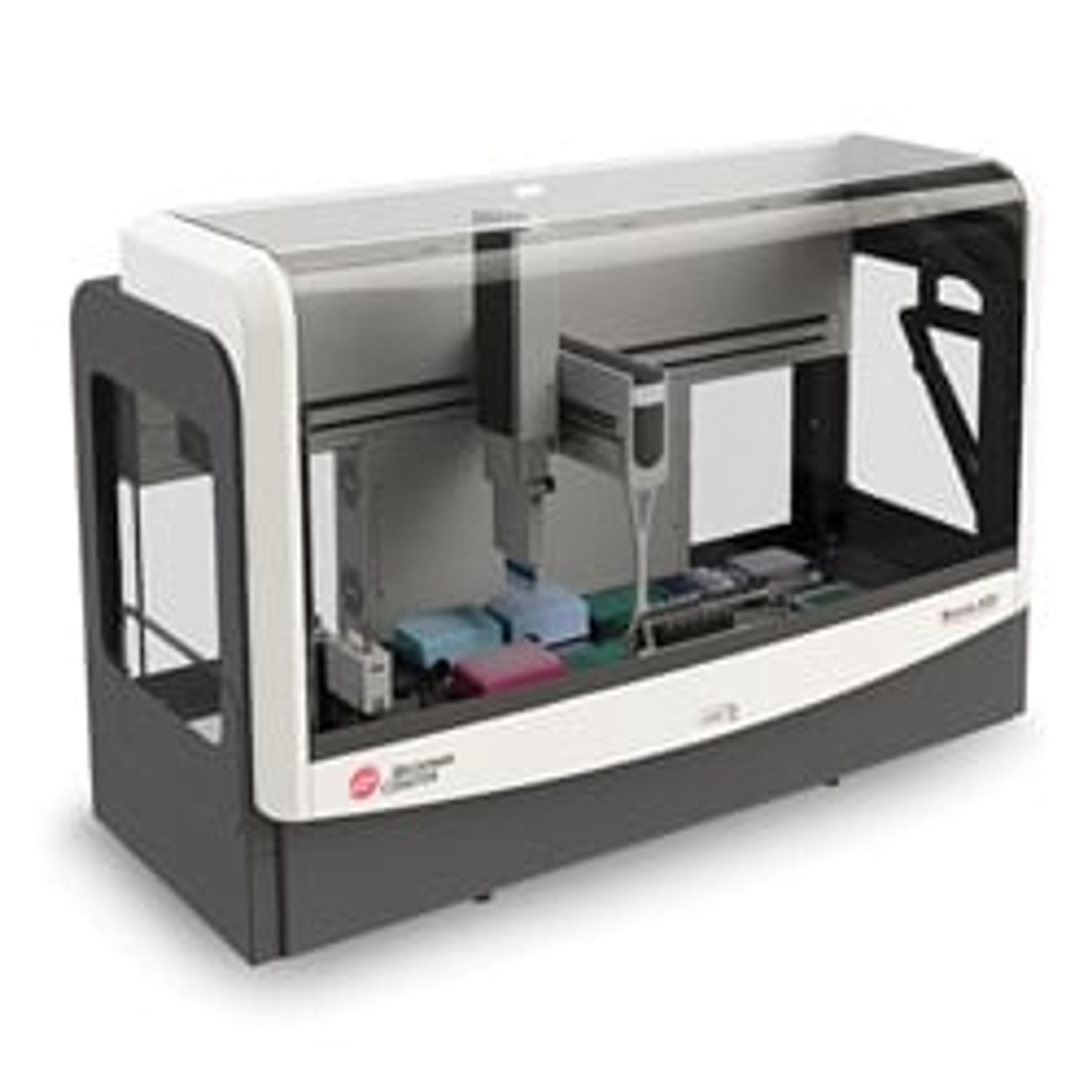
Biomek® 4000 Laboratory Automation Workstation

Beckman Coulter Life Sciences

Biomek Liquid Handlers enable you can spend less time on manual process and more time on powerful discoveries. Beckman Coulter Life Sciences is a leader when it comes to providing solutions and support that cover the full spectrum of the NGS sample preparation workflow with reagents and automation. Throughput options allow you to choose the right solution for your laboratory.

(8)

Links

Tags

UHPLC and HPLCHigh performance liquid chromatography (HPLC) and ultra high performance liquid chromatography (UHPLC), also known as UPLC, are analytical techniques used to separate, identify and quantitate components of complex mixtures including biological samples such as proteins and lipids as well as chemical mixtures of pesticides, drugs and oils. Both techniques are liquid chromatographic methods but differ by operating pressures (HPLC < 6000 psi < UHPLC ). Components of HPLC and UHPLC systems include columns, detectors, pumps, autosamplers and column heaters. Explore a range of UHPLC and HPLC columns for your specific sample needs including reverse phase, normal phase, ion exchange, HILIC, ion exclusion and size exclusion columns. For more specialized HPLC, explore FPLC, countercurrent LC and simulated moving bed systems. Find the best UHPLC and HPLC equipment in our peer reviewed product directory: compare products, check customer reviews and receive pricing direct from manufacturers.LC-MSLC-MS (liquid chromatography-mass spectrometry) systems and equipment are used for separation and quantitative analysis of complex mixtures, combining liquid chromatography and mass spectrometry. Quantify proteins, contaminants, pesticides or screen for drug metabolites with a high level of sensitivity. LC-MS systems and equipment include reverse phase, normal phase and specialized columns integrated with various MS detectors such as time-of-flight (TOF), quadrupole, orbitrap or ion trap mass analyzers. LC-MS/MS instruments equipped with a qTOF or triple quadrupole analyzer give greater sensitivity and resolving power to your analysis. Find the best LC-MS equipment in our peer-reviewed product directory: compare products, check customer reviews and receive pricing direct from manufacturers.Mass SpectrometryMass spectrometry (MS) is a powerful analytical technique used to identify and quantify molecules based on the mass-to-charge ratio of gas-phase ions. It provides detailed information about the structure, composition, and properties of compounds and is widely used across fields such as environmental monitoring, materials science, drug discovery and development, food and beverage testing, and wider chemical research. Key MS techniques include tandem mass spectrometry (MS/MS), liquid chromatography–mass spectrometry (LS-MS) and inductively coupled plasma (ICP-MS). Choosing from these wide range of techniques and technologies can be a daunting task, so keep up to date with scientific applications, performance expectations, and customer reviews here all in one place. Visit our product directory to receive quotes direct from the manufacturer. Toxicology / Drugs of Abuse TestingToxicology and Drugs of Abuse Testing is the investigation into toxic and illegal substances found at the scene of a crime or from a suspect and / or victim associated with a scene of a crime. Analyzers, immunoassays and drugs of abuse test kits and presumptive test kits are an essential aspect of toxicology investigation.MetabolitesMetabolites are the intermediate and end products of metabolism. Analyzing metabolites offers insight into cellular processes and disease mechanisms and is critical in fields like pharmacology, toxicology, and diagnostics. Explore our peer-reviewed product directory to find the best tools for metabolite analysis, compare products, check reviews, and get pricing directly from manufacturers.Liquid Handling WorkstationLiquid handling workstations automate the process of sample preparation, improving accuracy and efficiency. These systems are essential for high-throughput applications in biological, chemical, and pharmaceutical research, reducing human error and increasing reproducibility. Workstations come equipped with robotic arms, pipetting tools, and other accessories to streamline lab workflows. Explore liquid handling workstations in our peer-reviewed product directory; compare products, check reviews, and get pricing directly from manufacturers.ScreeningUsing robotics, data processing and control software, liquid handling devices and sensitive detectors, screening allows a researcher to quickly conduct millions of chemical, genetic or pharmacological tests.Alcoholic BeveragesThe analysis of alcoholic beverages involves testing their composition, quality, and safety, including alcohol content, flavor compounds, and impurities. This is essential for quality control and regulatory compliance. Explore tools for alcoholic beverage testing in our peer-reviewed product directory; compare products, check reviews, and get pricing directly from manufacturers.UrineThe analysis of urine is important in medicinal, anti-doping, forensic and life sciences applications. The ability to evaluate what someone has ingested through their urine enables fast detection and diagnosis of certain illnesses.