ResourceSeparations

Automated Extraction and Determination of Human Hormones in Drinking Water Using Solid-Phase Extraction and HPLC with UV Detection

3 Apr 2014

This Technical Note describes the use of high-surface-area SPE (Dionex SolEx SPE HRPHS) to extract seven sex hormones from drinking water using the Dionex AutoTrace 280 SPE instrument. Extracts were subsequently quantified using high-performance liquid chromatography (HPLC) to determine the recovery.

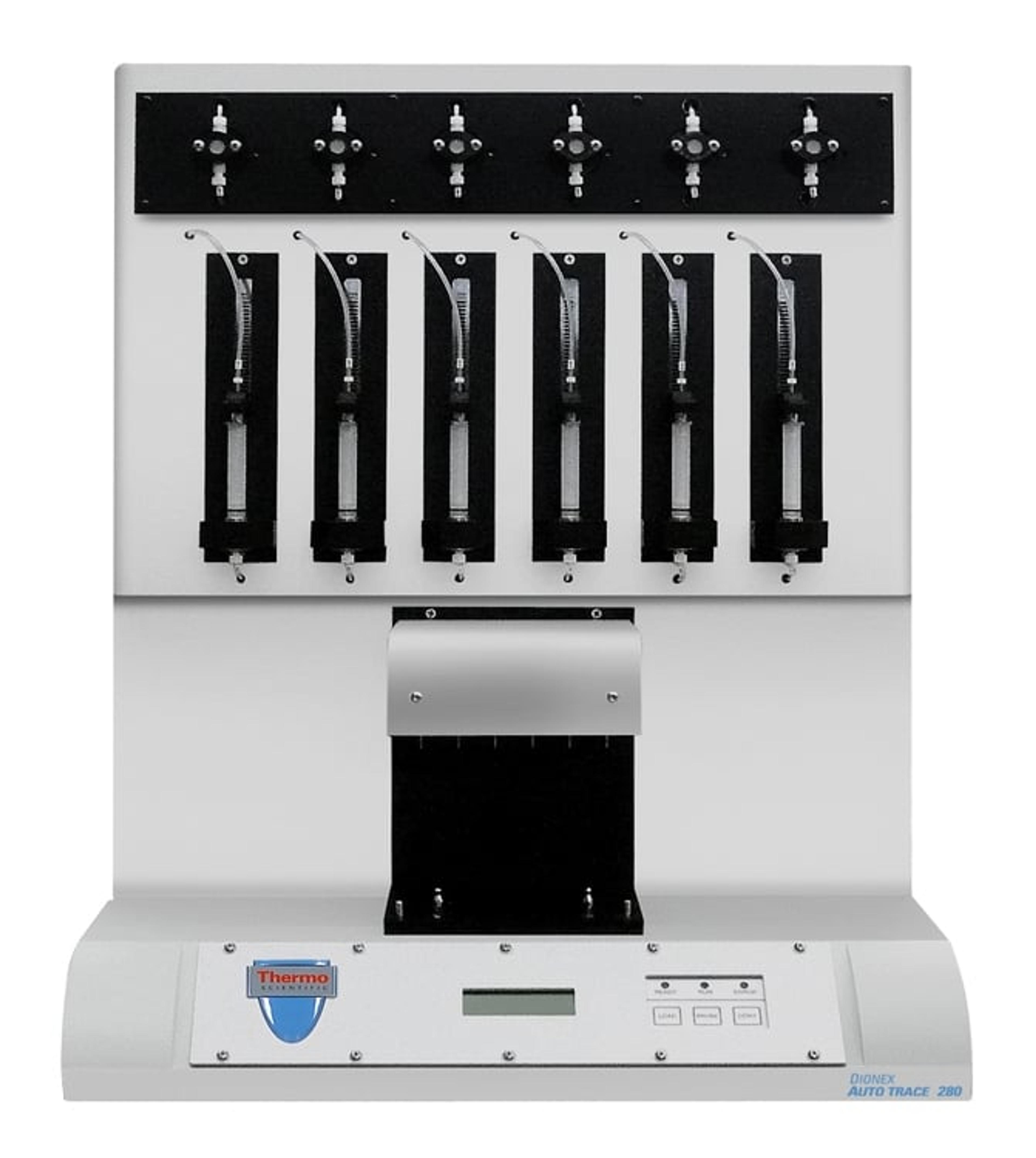
Thermo Scientific™ Dionex™ AutoTrace™ 280 Solid-Phase Extraction Instrument

Thermo Fisher Scientific

The Thermo Scientific™ Dionex™ AutoTrace™ 280 Solid-Phase Extraction (SPE) instrument is a powerful, high-throughput workstation dedicated specifically for automating SPE. The Dionex AutoTrace 280 instrument automates the cartridge or disk conditioning, sample loading, rinsing, and eluting steps for large volume aqueous solution extractions (20 mL to 20 L).The unit can process up to six samples in parallel, automatically conditioning, washing, and eluting SPE cartridges or disks with a choice of up to five reagents. The unit also segregates aqueous and solvent waste using separate waste lines for efficient, cost effective waste handling.AutoTrace 280 Solid-Phase Extraction Instrument Features: Use SPE technology for liquid-liquid extraction Automated sample loading of liquids onto SPE cartridges Automated eluting of SPE cartridges with organic solvent Closed systems with a fan to vent solvent vapors Positive pressure loading and elution of samples and solvents Benefits: Reduced solvent usage and elimination of glassware Does not require technician involvement to maintain a reservoir of liquid in the SPE cartridge Does not require technician involvement to control the flow of organics solvent through the SPE cartridge No hood required Provides constant flow of liquids through SPE cartridges

(0)

Links

Tags

Ion ChromatographyIon chromatography, also known as ion exchange chromatography, is a high-performance liquid chromatographic technique used for the separation and identification of ions or polar molecules in a sample, including proteins, nucleotides and amino acids. Equipment includes ion exchange columns, ion exclusion columns, ion chromatography systems, pumps, and detectors. Find the best ion chromatography equipment in our peer-reviewed product directory: compare products, check customer reviews and receive pricing direct from manufacturers.Mass SpectrometryMass spectrometry (MS) is a powerful analytical technique used to identify and quantify molecules based on the mass-to-charge ratio of gas-phase ions. It provides detailed information about the structure, composition, and properties of compounds and is widely used across fields such as environmental monitoring, materials science, drug discovery and development, food and beverage testing, and wider chemical research. Key MS techniques include tandem mass spectrometry (MS/MS), liquid chromatography–mass spectrometry (LS-MS) and inductively coupled plasma (ICP-MS). Choosing from these wide range of techniques and technologies can be a daunting task, so keep up to date with scientific applications, performance expectations, and customer reviews here all in one place. Visit our product directory to receive quotes direct from the manufacturer. Environmental Monitoring and TestingEnvironmental monitoring and testing uses handheld portable analyzers, kits, spectrometers or chromatography systems for air, water, soil, food and other sample testing. Useful features of analyzers such as BOD and COD include portability, easy calibration, automation and sensitivity.  Environmental test kits for pH, water, moisture, etc, should be accurate, sensitive, reliable, fast and easy to use.Drinking Water AnalysisAnalytical methods used to test the purity of drinking water include determining the level of contaminants abides to the level set by the Environmental Protection Agency (EPA).HormonesWater AnalysisAnalytical methods used to test the purity of drinking water include determining the level of contaminants abides to the level set by the Environmental Protection Agency (EPA).UVUltraviolet (UV) light is used in a variety of applications, including disinfection, spectrophotometry, and molecular biology. UV light can damage DNA, making it a powerful tool in sterilization and in studies of mutagenesis and gene repair. Explore UV-related products in our peer-reviewed product directory; compare products, check reviews, and get pricing directly from manufacturers.