Automated Bioreactor Sampling – Process Trigger Sampling for Enhancing Microbial Strain Characterization

28 Jun 2015

This application note describes the integration of a Flownamics Seg-Flow® 4800 Automated On-line Sampling System with the Eppendorf DASGIP® Parallel Bioreactor. The automated process trigger sampling technology enables rapid characterization of process events, parameters and stress responses that impact yeast strain gene regulation.

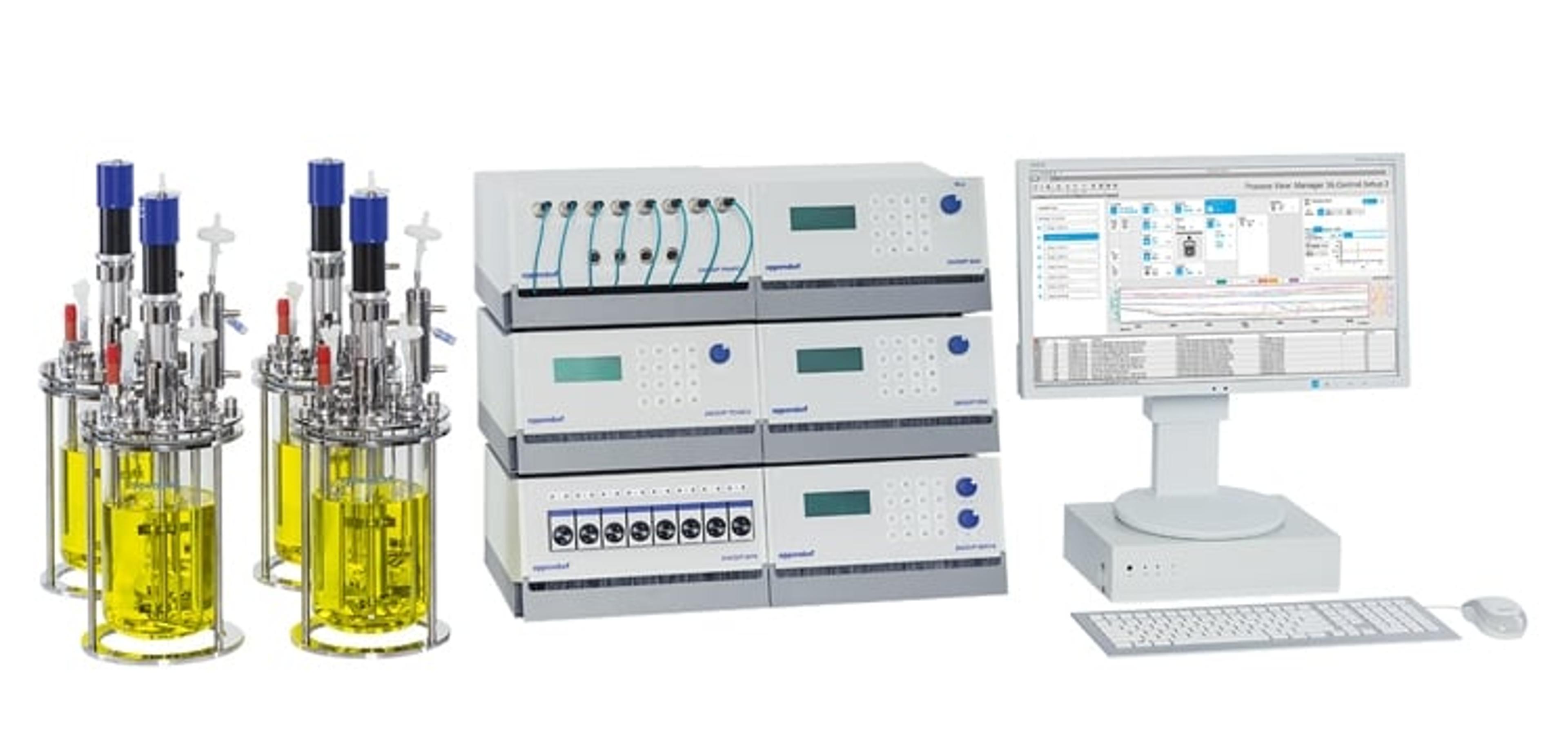
Eppendorf DASGIP® Parallel Bioreactor System

Eppendorf

DASGIP Parallel Bioreactor Systems for R&D and process development in both cell culture and microbiology allow for advanced bioprocess control and automation. Parallel processing, precise control of all relevant parameters, user-defined profiles and innumerable automation features result in accelerated and highly efficient process development. Our DASware software solutions support DoE, process historians and comprehensive data management. Configurable solutions address the unique requirements of microbial, phototrophic, mammalian and human cells, stem cell applications, as well as biofuel and biopolymer processes.   Eppendorf DASGIP® Parallel Bioreactor System Features: Advanced process control and parallel operation of up to 16 glass or single-use bioreactors; DASGIP Bioblock for advanced and user-friendly temperature control; Modular design of control units allows for flexible system configurations that meet the demands of specific applications; Control of agitation, pH, level and DO (including customizable cascade modes) in each bioreactor; Variable speed pumps for accurate liquid addition and operation in batch, fed-batch, continuous and cyclic perfusion mode; Optical absorbance measurement for online calculation of e.g. OD600 or cell dry weight; TMFC individual gas mixing of air, N2, O2 and CO2; Online calculation of OTR, CTR and RQ; DASware control Software for advanced process control; Compatible with DASware Software Suite for interconnectivity and bioprocess information management. Applications: Research and development in cell culture and microbiology as well as phototrophic applications; Lab scale fermentation of aerobe and anaerobe bacteria, yeasts and fungi; Cultivation of mammalian, insect and human cell lines; Special applications such as stem cell culture or biofuel/biopolymer development.

(2)

Links

Tags

MicrobiologyMicrobiology is the study of microorganisms including protists, prokaryotes, fungi, and, often, viruses. Microorganisms are a useful research tool as genetic vectors and, in immunology, for antibiotic susceptibility testing, cellular biology and genetics. Microorganisms commonly grow readily in incubators with microbial culture media; this can contain chromogenic supplements to differentiate between cell lines. Estimate your culture’s density of microorganisms with colony counters, or screen and select colonies for desirable clones with automated colony pickers. Additionally, equipment is available to monitor environments for the presence of microbes and identify with microbial identification instruments. Find the best microbiology products in our peer-reviewed product directory: compare products, check customer reviews and receive pricing direct from manufacturers.Bioprocessing / FermentationBioprocessing is the use of biological materials to perform commercial, scientific or medical research processes. Biological materials used include cells, enzymes and organisms. Usually bioprocessing requires a batch or continuous bioreactor such as a fermentor or cell culture system. The advantages of using a reactor include high productivity, easy configuration, adjustable values and automation.YeastAutomationAutomation in laboratories and manufacturing processes enhances efficiency, precision, and scalability by reducing the need for manual intervention. It plays a critical role in improving productivity, minimizing human error, and accelerating workflows in fields like diagnostics, drug development, and industrial testing. Automation technologies include robotic systems, automated liquid handlers, and process control systems that streamline complex tasks and ensure consistent, reproducible results. Explore our peer-reviewed product directory to discover the best automation solutions, compare options, read user reviews, and get prices directly from manufacturers.MetabolomicsMetabolomics is the study of small metabolites (the intermediates and products of metabolism). It involves the identification and quantification of cellular metabolites using analytical technologies such as GC, HPLC, NMR, and LC/MS.BiofuelSample ProcessingSample processing is required to prepare samples prior to analysis. Technologies used for sample processing include homogenizers, grinders, mills and mixers.