
Applications of the New Eppendorf 5.0 mL system
14 Nov 2013The new Eppendorf Tube 5.0 mL is a practical alternative for sample volumes in the range between 2 and 5 mL. It provides comfortable and ergonomic handling, combined with a lower risk of contamination. Compared with aliquoting the sample into several smaller tubes, considerably less work is required. Owing to its conical shape, which is akin to that of a 15 mL tube, it can be easily integrated into many existing workflows. Simultaneously, an extensive collection of accessories is now available, providing the basis for safe performance of standard applications such as pipetting, centrifugation, mixing, temperature control and storage.
Related products
Request Quote for All Products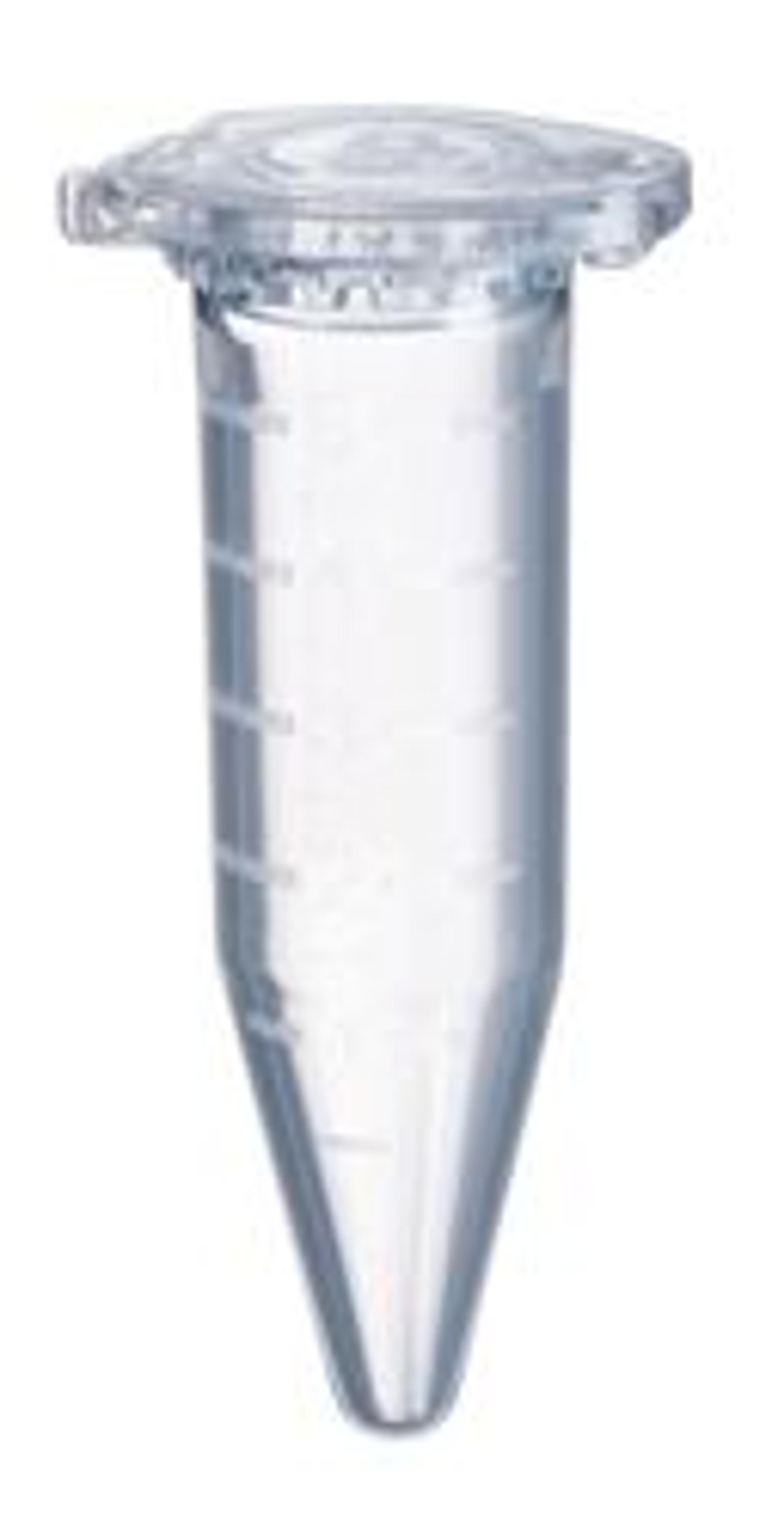
Eppendorf Tubes® 5.0 mL
EppendorfEppendorf Tubes are the benchmark for simple and safe sample preparation from 0.5 to 2.0 mL. For larger volumes, 15 mL and 50 mL conical tubes are available. With medium sample volumes you may face an issue: they need to be processed with large conical screw cap tubes - impractical, inconvenient and often prone to contamination. Eppendorf now offers the "missing link": the Eppendorf Tube 5.0 mL. This product fills the gap between existing tube versions and enables the simple and safe processing of sample volumes up to 5.0 mL!Eppendorf Tubes® 5.0 mL Features: Ergonomic operation - Simple, practical and ergonomic single-hand operation. Large labeling area. Lid design - Hinged lid for minimized sample evaporation during storage and incubation in a wide range of temperatures from -86 °C to 80 °C. Material - Exceptionally high-quality, transparent polypropylene, free of plasticizers, biocides or mold release agents, for reliable test results. Certified purity - Available in lot-tested and certified Eppendorf Quality, PCR clean, Sterile and Eppendorf Biopur® purity levels. Centrifugation safety - Maximum safety and stability for centrifugation up to 25,000 × g and fast and efficient protocols. Conical shape - Compatible with accessories for conical 15 mL tubes - many existing adapters and racks can be used. Sample recovery - Available in Eppendorf LoBind® material for maximum recovery of valuable samples. Applications: Easier processing of samples up to 5.0 mL Higher yields in DNA isolation, especially with samples with limited quantity of source material Convenient and safe cell culture applications Easier sample access lowers the risk of contamination Preparation of mastermixes and buffers Less storage space needed Safe cell and tissue lysis