
An Introduction to Particle Size Characterization by DCS: Do You Know the Real Size of Your Nano Particles?
24 Jul 2013Differential centrifugal sedimentation (DCS) is a novel and innovative, yet simple technique, which has become ‘reborn’ in recent years. DCS is now a powerful tool in measuring nano particle size distributions down to around 2nm. With the unique ability to resolve very close multi-modal particle distributions, and to distinguish extremely small shifts and changes in particle size, DCS is once more gaining in popularity. This white paper covers the benefits and applications of DCS. Theory, instrument design and operation are also discussed.
Related products
Request Quote for All Products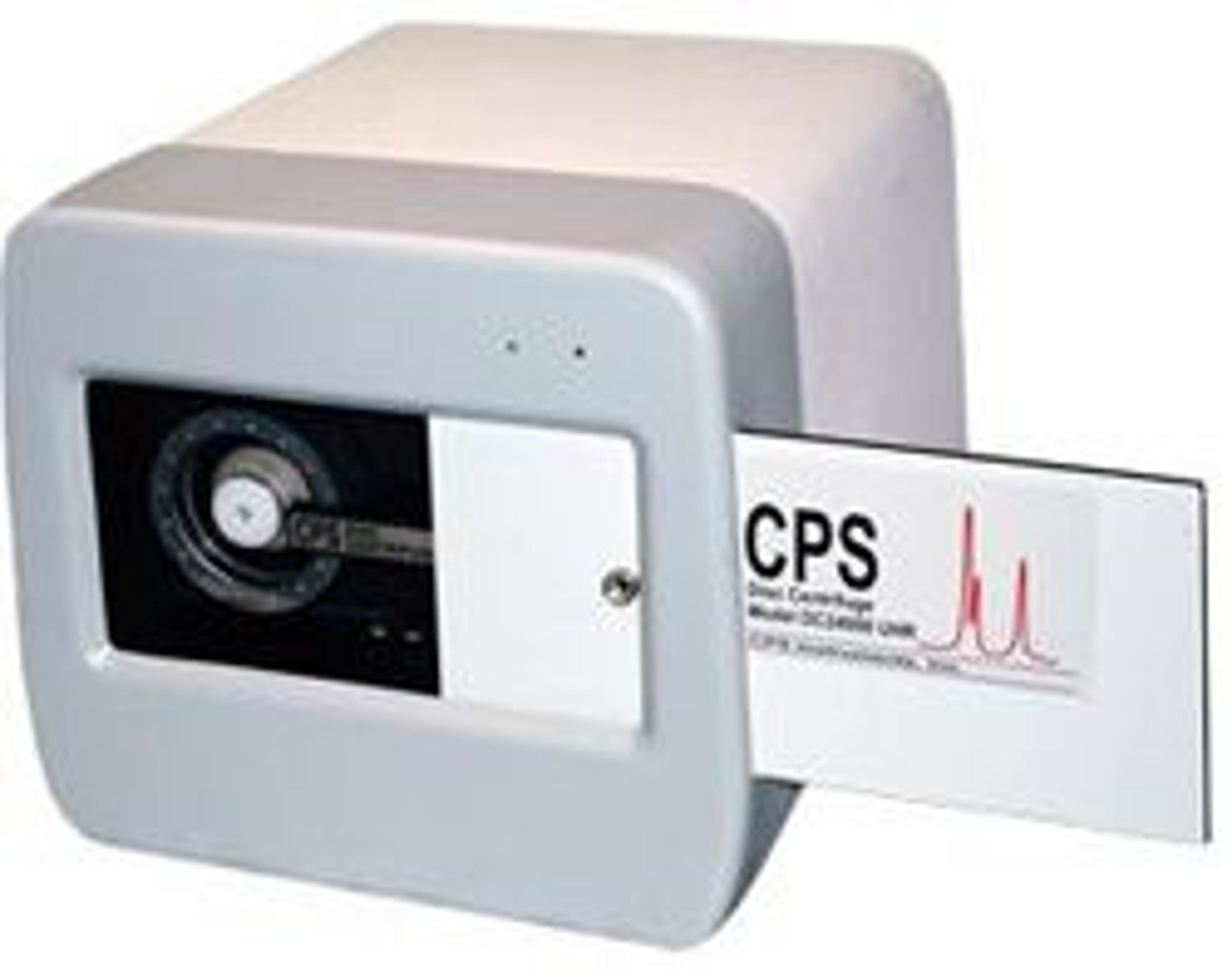
CPS Disc Centrifuge UHR Nanoparticle Size Analyser
Analytik LtdCPS DC24000 UHR nanoparticle size analyser is an effective analytical tool for ultra high resolution, high accuracy measurement of particle size distribution. Highly poly-dispersed particles can be measured in the size range of ~2.0nm to ~75 microns, at 2 to 10 times better resolution than any other particle sizing instrument, regardless of measurement technique.Utilising Differential Centrifugal Sedimentation (DCS), the CPS Disc Centrifuge UHR offers the unique ability to resolve very close multimodal particle distributions and to distinguish extremely small shifts in particle size. Rather than using a predictive algorithm, the instrument physically separates the nanoparticles and then measures them as they pass a light source detector - providing full characterisation in real time.CPS Disc Centrifuge UHR Nanoparticle Size Analyser Features: Ultra high resolution with clean separation of narrow peaks that differ in size by as little as 2% Able to detect and measure very small and subtle changes / differences in particle size Able to measure / monitor nanoparticle coating thickness Very high sensitivity; minimum detection limit below 10-8 gram active sample for narrow peaks Highly reproducible results Dynamic range capability >1000 for measurement of broad and multimodal distributions Measurement of particles of virtually any density Wide range of data presentation options, including multiple distribution overlays