Agilent Automated Electrophoresis compendium

15 Nov 2021

Automated electrophoresis is a powerful tool for microbial, fungal, and viral nucleic acid analysis. The Agilent Fragment Analyzer, Agilent TapeStation, and Agilent Bioanalyzer systems provide a fast and effective method for sample quality control as part of the workflow for genomic analysis applications such as next-generation sequencing (NGS) or new method development. Download this Agilent compendium to learn the numerous ways that Agilent electrophoresis systems are utilized for the analysis of infectious diseases

Fragment Analyzer Systems

Agilent Technologies

The Agilent Fragment Analyzer systems are fluorescence-based capillary electrophoresis instruments for the accurate sizing, quantification, and qualification of nucleic acids (DNA and RNA).
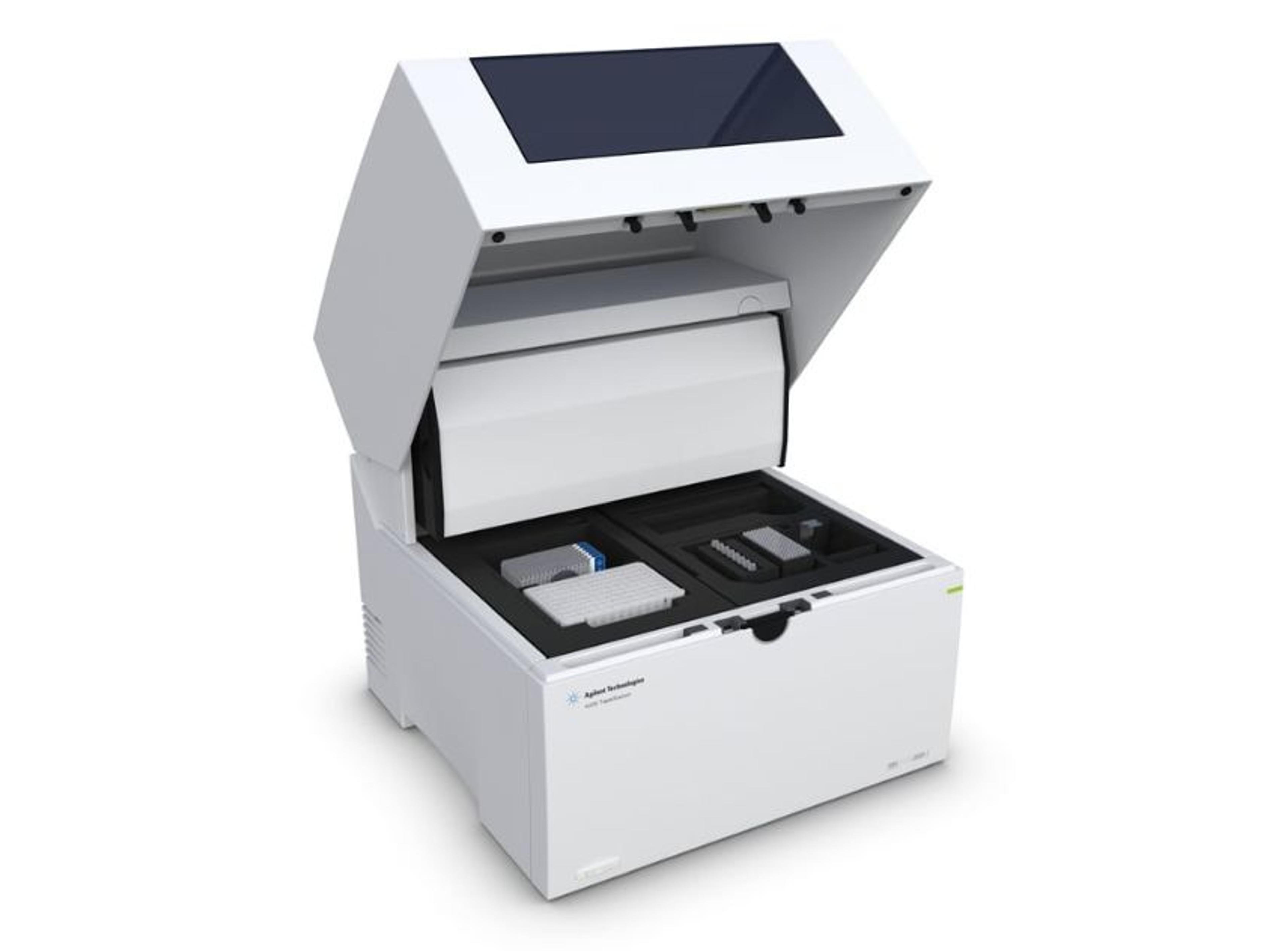
(12)

4200 TapeStation Instrument

Agilent Technologies

The Agilent 4200 TapeStation system is an established automated electrophoresis tool for DNA and RNA sample quality control. Fully automated sample processing enables the unattended analysis of size, concentration and integrity. Choose any sample number between 1 and 96 and analyze at constant cost per sample.
(18)

2100 Bioanalyzer

Agilent Technologies

The Agilent 2100 Bioanalyzer is a microfluidics-based platform for sizing, quantification and quality control of DNA, RNA, proteins and cells on a single platform. Results are delivered within 30-40 minutes in automated, high quality digital data. The Agilent 2100 Bioanalyzer system provides sizing, quantitation and quality control of DNA, RNA, proteins and cells on a single platform, providing high quality digital data.A unique feature of the Agilent 2100 bioanalyzer is that it can be used for both electrophoretic separation and flow cytometric analysis of cell fluorescence parameters. This versatility makes the Agilent 2100 bioanalyzer an indispensable tool for the molecular biologist and biochemist.2100 Bioanalyzer Features: Ready-to-use assays and pre-packaged reagent kits Minimal sample consumption (1-4 µL) and results within 30 minutes Replaceable electrode cartridge for contamination-free switch of methods Improved assay accuracy and precision Comparable results from lab to lab Digital data for convenient analysis, archiving and storage Various data-display options as gel view, electropherograms and tables Easy to use with simplified sample comparison Minimum exposure to hazardous materials Supports compliance with 21 CFR Part 11

(30)

Links

Tags

PCR and Thermal CyclingPolymerase chain reaction (PCR) kits and thermal cyclers are used for the in vitro amplification of DNA permitting subsequent analysis and experimental procedures. Explore a range of high-quality polymerase, primers and nucleotides or simplify your workflow with a PCR mastermix. Find reverse transcription PCR (RT-PCR) and cDNA synthesis kits for RNA products and libraries. Quantitatively measure the amplification of DNA with real-time PCR (qPCR) and droplet digital PCR (ddPCR) kits and systems, and discover automated PCR setup solutions to increase throughput. Alternative DNA amplification methods also include recombinase polymerase amplification (RPA) kits. Find the best PCR kits and thermal cyclers and purification equipment in our peer-reviewed product directory: compare products, check customer reviews and receive pricing direct from manufacturers.Clinical MicrobiologyMicrobiology is the study of microorganisms including protists, prokaryotes, fungi, and, often, viruses. Microorganisms are a useful research tool as genetic vectors and, in immunology, for antibiotic susceptibility testing, cellular biology and genetics. Microorganisms commonly grow readily in incubators with microbial culture media; this can contain chromogenic supplements to differentiate between cell lines. Estimate your culture’s density of microorganisms with colony counters, or screen and select colonies for desirable clones with automated colony pickers. Additionally, equipment is available to monitor environments for the presence of microbes and identify with microbial identification instruments. Find the best microbiology products in our peer-reviewed product directory: compare products, check customer reviews and receive pricing direct from manufacturers.ElectrophoresisElectrophoresis equipment is used to separate mixtures of protein, DNA or RNA, based on their electric charge, size and other physical characteristics, by passing them through a medium such as a polyacrylamide gel, an agarose gel or a capillary tube. Electrophoresis equipment includes horizontal and vertical gel electrophoresis chambers, isoelectric focusing systems, 2D electrophoresis and capillary electrophoresis instruments. Precast gels with a gradient can be used or gels can be hand cast. Samples are run alongside ladders or markers to identify the approximate size of a molecule. Separated proteins and nucleic acids in the gel can be stained or probed with fluorescent markers and then imaged and detected using gel documentation instruments, transilluminators, densitometers and scanners. Find the best electrophoresis equipment in our peer-reviewed product directory: compare products, check customer reviews and receive pricing direct from manufacturers.AutomationAutomation in laboratories and manufacturing processes enhances efficiency, precision, and scalability by reducing the need for manual intervention. It plays a critical role in improving productivity, minimizing human error, and accelerating workflows in fields like diagnostics, drug development, and industrial testing. Automation technologies include robotic systems, automated liquid handlers, and process control systems that streamline complex tasks and ensure consistent, reproducible results. Explore our peer-reviewed product directory to discover the best automation solutions, compare options, read user reviews, and get prices directly from manufacturers.PCR AutomationPCR automation describes the process of using a thermocycler to complete the polymerase chain reaction (PCR) process quickly and efficiently.Infectious DiseasesInfectious diseases are caused by pathogens such as bacteria, viruses, and fungi. Effective detection, prevention, and treatment are crucial to control outbreaks and improve public health. Diagnostic tools, vaccines, and antimicrobial treatments are essential components of managing these diseases. Research into emerging pathogens and resistance patterns continues to evolve. Browse our peer-reviewed product directory to find the best diagnostic tools, prevention solutions, and treatment options; compare products, read customer reviews, and get pricing directly from manufacturers.