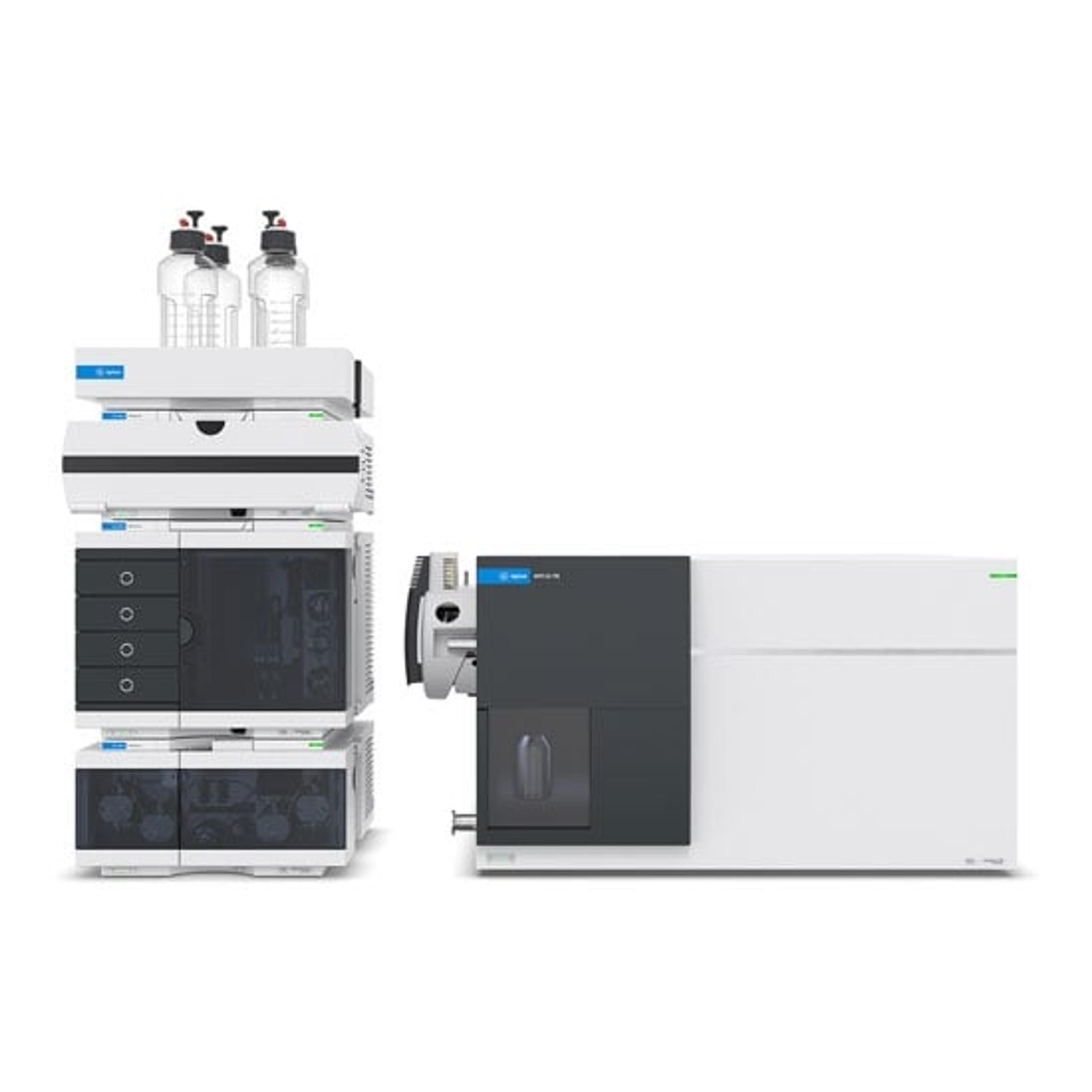
Agilent 6475 LC/TQ performance highlights with EPA draft method 1633 for per and polyfluoroalkyl substances (PFAS) in solid samples

10 Sept 2023

In this application note, Agilent Technologies details the performance of its 6475 Triple Quadrupole LC/MS (LC/TQ) system coupled with the Agilent 1290 Infinity II liquid chromatograph (LC) system for the analysis of per- and polyfluoroalkyl substances (PFAS) in accordance with the third draft of EPA 1633. Method transfer between the Agilent 6475 and 6470 B triple quadrupole LC/MS systems was seamless, and the new intelligent source optimization algorithm was tested, as the EPA 1633 analyte list includes thermally sensitive compounds. Calibration linearity and reproducibility were verified, and the results met all method requirements. The same soil extracts were analyzed on both systems (6470 B and 6475 LC/TQ) to demonstrate comparable performance. Finally, instrument robustness was challenged by >1,000 noninterrupted injections of extracted fish samples while monitoring calibration verification standards after every 50 injections of matrix.

6475 triple quadrupole LC/MS

Agilent Technologies

The Agilent 6475 triple quadrupole LC/MS is the next step in evolution, building on the LC/TQ platform that customers trust most. The latest intelligent innovations will empower your lab to meet increasing sample throughput and productivity demands.

(11)

Links

Tags

LC-MSLC-MS (liquid chromatography-mass spectrometry) systems and equipment are used for separation and quantitative analysis of complex mixtures, combining liquid chromatography and mass spectrometry. Quantify proteins, contaminants, pesticides or screen for drug metabolites with a high level of sensitivity. LC-MS systems and equipment include reverse phase, normal phase and specialized columns integrated with various MS detectors such as time-of-flight (TOF), quadrupole, orbitrap or ion trap mass analyzers. LC-MS/MS instruments equipped with a qTOF or triple quadrupole analyzer give greater sensitivity and resolving power to your analysis. Find the best LC-MS equipment in our peer-reviewed product directory: compare products, check customer reviews and receive pricing direct from manufacturers.Mass SpectrometryMass spectrometry (MS) is a powerful analytical technique used to identify and quantify molecules based on the mass-to-charge ratio of gas-phase ions. It provides detailed information about the structure, composition, and properties of compounds and is widely used across fields such as environmental monitoring, materials science, drug discovery and development, food and beverage testing, and wider chemical research. Key MS techniques include tandem mass spectrometry (MS/MS), liquid chromatography–mass spectrometry (LS-MS) and inductively coupled plasma (ICP-MS). Choosing from these wide range of techniques and technologies can be a daunting task, so keep up to date with scientific applications, performance expectations, and customer reviews here all in one place. Visit our product directory to receive quotes direct from the manufacturer. Environmental Monitoring and TestingEnvironmental monitoring and testing uses handheld portable analyzers, kits, spectrometers or chromatography systems for air, water, soil, food and other sample testing. Useful features of analyzers such as BOD and COD include portability, easy calibration, automation and sensitivity.  Environmental test kits for pH, water, moisture, etc, should be accurate, sensitive, reliable, fast and easy to use.EPA MethodsEPA methods are procedures approved by the U.S. Environmental Protection Agency for monitoring and analyzing environmental pollutants, including air, water, and soil samples. These methods are critical in ensuring public health and environmental safety. Explore EPA methods and tools in our peer-reviewed product directory; compare products, check reviews, and get pricing directly from manufacturers.
Agilent 6475 LC/TQ performance highlights with EPA draft method 1633 for per and polyfluoroalkyl substances (PFAS) in solid samples