Advanced Analysis of Human T Cell Subsets on the Cytoflex Flow Cytometer using Duraclone Dry Reagent Technology

Advanced Analysis of Human T Cell Subsets on the Cytoflex Flow Cytometer using Duraclone Dry Reagent Technology

25 Aug 2015

Multi-color flow cytometry is a powerful tool to analyze the highly heterogeneous human T cell compartment. This application note defines a 13-color tube which allows for the identification of major peripheral T cell subsets according to classical and more recent characterization criteria, with a minimum of sample preparation effort. T lymphocytes (T cells) form an essential part of the adaptive immune system and are therefore of major interest for the research community.

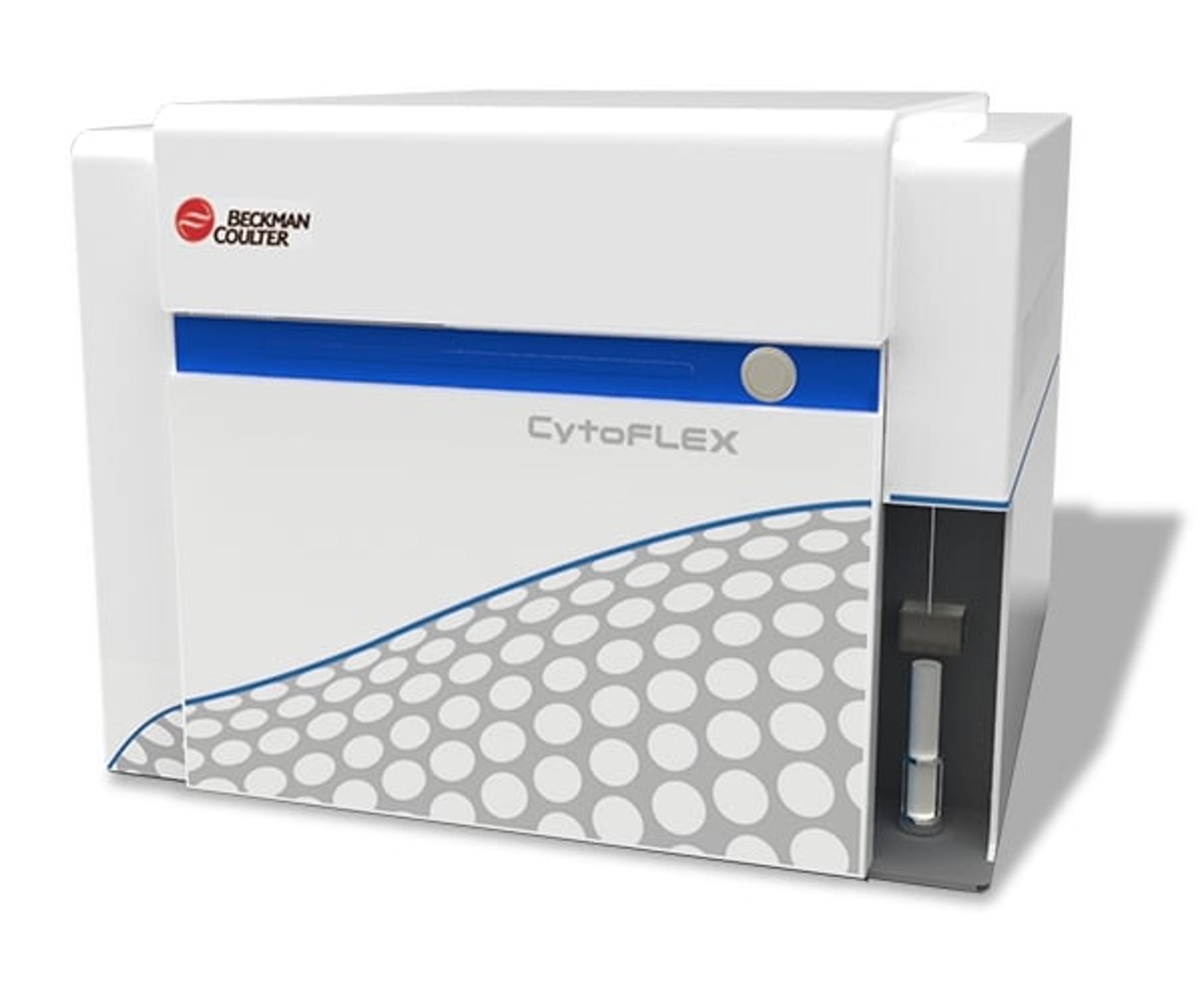
CytoFLEX Flow Cytometer

Beckman Coulter Life Sciences

Providing quality and performance at any configuration, the CytoFLEX system provides powerful sensitivity and resolution for the simple to the most challenging applications. CytoFLEX delivers and surpasses capabilities expected in top tier analyzers, with excellent performance and nanoparticle resolution.

(23)

Links

Tags

Flow Cytometry / Cell CountingFlow cytometers are used to count, sort and examine multiple characteristics of cells. Other cell analysis equipment includes image cytometers, cell counters, fluorescence-activated cell sorters (FACS), magnetic-activated cell sorters (MACS), and a range of flow cytometry assay kits. Flow cytometers can reveal information on cell viability, cell proliferation, apoptosis and cell cycle progression, as well as identify cell populations and intracellular or cell-surface molecules. Additionally, some flow cytometers, known as FACS, have an additional sorting function after analysis. Cell counters and image cytometers count live and dead cell populations and can also conduct cell proliferation assays. Find the best flow cytometers, cell counters and cell sorters in our peer-reviewed product directory: compare products, check customer reviews and receive pricing direct from manufacturers.ImmunologyImmunological techniques measure and characterize immune responses. Immunology kits and analysis systems often use techniques such as ELISA, radioimmunoassay (RIA) and immunodiffusion assays, Immunohistochemistry, and flow cytometry. Immunologists use equipment such as flow Cytometers, plate readers, plate washers and fluorescent microscopes.Clinical ChemistryBiochemistry (or clinical chemistry) involves the analysis of bodily fluids using chemical tests. Techniques used include HPLC, chromatography, spectroscopy, mass spectrometry, immunochemical, electrophoresis, turbidometric / spectrophotometric assay, MRI and ISE analysis. Tests are often carried out on plasma or serum but urine (urinalysis) and fecal specimens are also processed.Sample PreparationSample preparation can improve the quality and speed of separation techniques. Products to assist sample preparation include filtration equipment, evaporators, membranes and sieves.ImmunologyImmunology is the branch of medical science that covers the study of all aspects of the immune system of multicellular organisms.CytometryCytometry is a broad term for the quantitative analysis of cells and cell systems. The most popular methods to study cytometry are flow cytometry and image cytometry.LymphocytesBlood AnalysisThe analysis of blood is vital for many areas of life sciences and forensic investigations. Blood samples can be tested for a number of different reasons such as diagnosis, glucose levels, cholesterol and drug testing.