ResourceSpectroscopy

A Novel Food Freshness Assay Based on ATP Depletion Part 2

27 Jul 2016

This application note discusses the use of the BioTek Precision XS Liquid Handler and the Epoch Microplate Spectrophotometer to validate automation and monochromator detection of a Freshness Assay. In addition, the Epoch 2 has been verified to produce equivalent calculated results for the assay. Challenge test data using a variety of sample matrices and experimental conditions suggest that the combination of BioTek instrumentation and the Freshness Assay offer an effective screening and analytical tool for diverse seafood freshness testing requirements, typical of many food quality control or research environments.

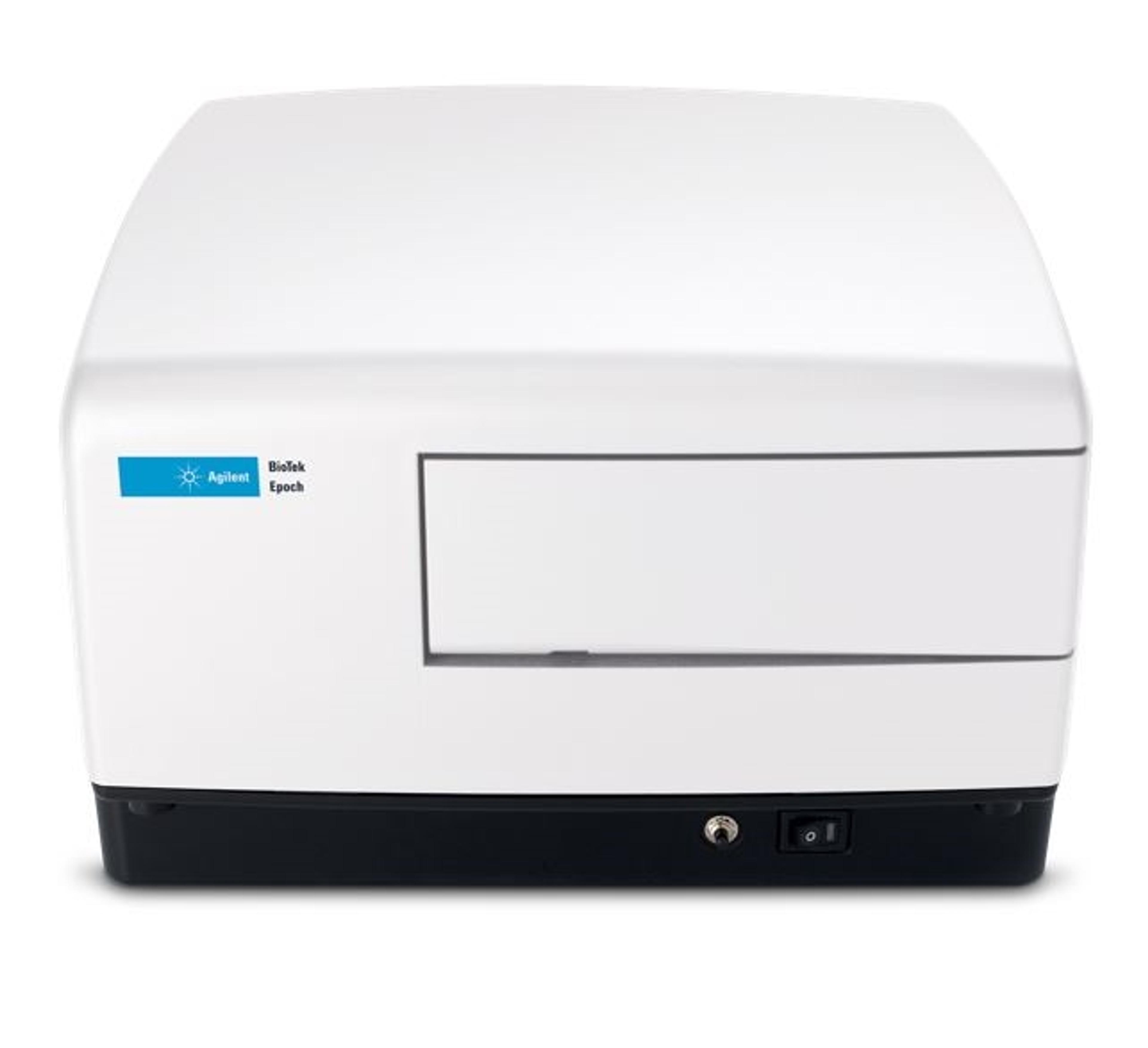
Agilent BioTek Epoch Microplate Spectrophotometer

Agilent Technologies

The Agilent BioTek Epoch microplate spectrophotometer has monochromator-based optics, for a filter-free, wide wavelength range for UV-Vis absorbance measurements. These measurements can be done in many microplate formats and in 2 µL samples when the available Take3 microvolume plate is used.

(8)

Links

Tags

UV-Visible SpectroscopyUltraviolet-visible (UV-Vis) spectrophotometers are used to measure the interaction of UV and visible light with a sample, including transmission, reflectance & absorbance. The two major instrument classes are single-beam or double-beam spectrophotometers. More specialized equipment includes colorimeters, spectroradiometers and refractometers. Portable and microvolume spectrophotometers are also available. For the modular spectroscopy lab, explore a range of light sources for combination with a spectrograph/spectrometer and optics. Find the best UV-Vis spectroscopy products in our peer-reviewed product directory: compare products, check customer reviews and receive pricing direct from manufacturers.MicroplatesMicroplates are multi-well plates used to increase the throughput of biological investigations. The number of wells microplates contain can range from 6 to 3243 wells, with the 96-well format being the most commonly used. Microplates can come tailored for a range of applications including cell culture, PCR, filtration, storage, non-binding surface, protein crystallization, as well as pre-coated, deep well and normal Standard microplates. Additionally, options for microplate colors include clear , black, white or black with clear bottom and white with clear bottom for absorbance microplate reader applications. Find the best microplates for your lab in our peer-reviewed product directory: compare products, check customer reviews and receive pricing direct from manufacturers.Microplate Readers / DetectorsMicroplate readers are used to automate the detection and analysis of labeled or label-free components in microplates during assays or live-cell monitoring. Microplate readers are generally distinguished by their mode of detection. Types include absorbance, luminescence, fluorescence intensity, fluorescence polarization, TRF / FRET and multimode microplate readers. Microplate readers deliver a high throughput of samples by reading multiple wells simultaneously, with the 96-well format the most commonly used. As a result, microplate readers are often used in the drug discovery, bioassays, research and pharmaceutical industries for screening applications. Microplate loading can also be automated, with robotic microplate stackers to increase throughput. Find the best microplate readers in our peer-reviewed product directory: compare products, check customer reviews and receive pricing direct from manufacturers.Automated Liquid HandlingAutomated liquid handling equipment is used to mix, dilute and dispense allotted volumes of liquid into microplates and other vessels automatically. The robotic, liquid handling arms can dispense from single channel to 3456 multichannel as well as operate nanoliter dispensing, enabling high throughput of samples. Find the best automated liquid handlers in our peer-reviewed product directory: compare products, check customer reviews and receive pricing direct from manufacturers.ATP MonitoringFood QualityFood quality refers to the attributes of food that influence its safety, nutrition, and taste. Monitoring and ensuring food quality are essential in production to meet health regulations and consumer expectations. Techniques like spectroscopy, chromatography, and microbial testing are used to assess food properties and detect contaminants. Browse our peer-reviewed product directory to find food quality testing solutions; compare products, check reviews, and get pricing directly from manufacturers.SeafoodFood FraudFood adulteration refers to food when it has been has been altered unlawfully with the addition of another lower commodity food product to increase quantity. The 2013 European horsemeat scandal saw the adulteration of beef products with the addition of horse meat.