
A guide to high quality laboratory water
3 Mar 2023Water is the most important laboratory reagent. It serves as the principal ingredient in the preparation of media, buffers, samples, dilution series, and blanks. It is also used to flush instruments, wash glassware and perform a range of routine cleaning procedures. Given its wide use in virtually every life science and analytical application, having a reliable source of high-quality water that delivers the right volume and purity of water is a vital part of operating a lab. In this this eBook, Sartorius guides you on choosing the right water purification system for your laboratory, and describes the impurities found in water, different water standards, and methods of water purification. It will also guide you on purification methods and important standards, which must be considered when selecting a water system.
Related products
Request Quote for All Products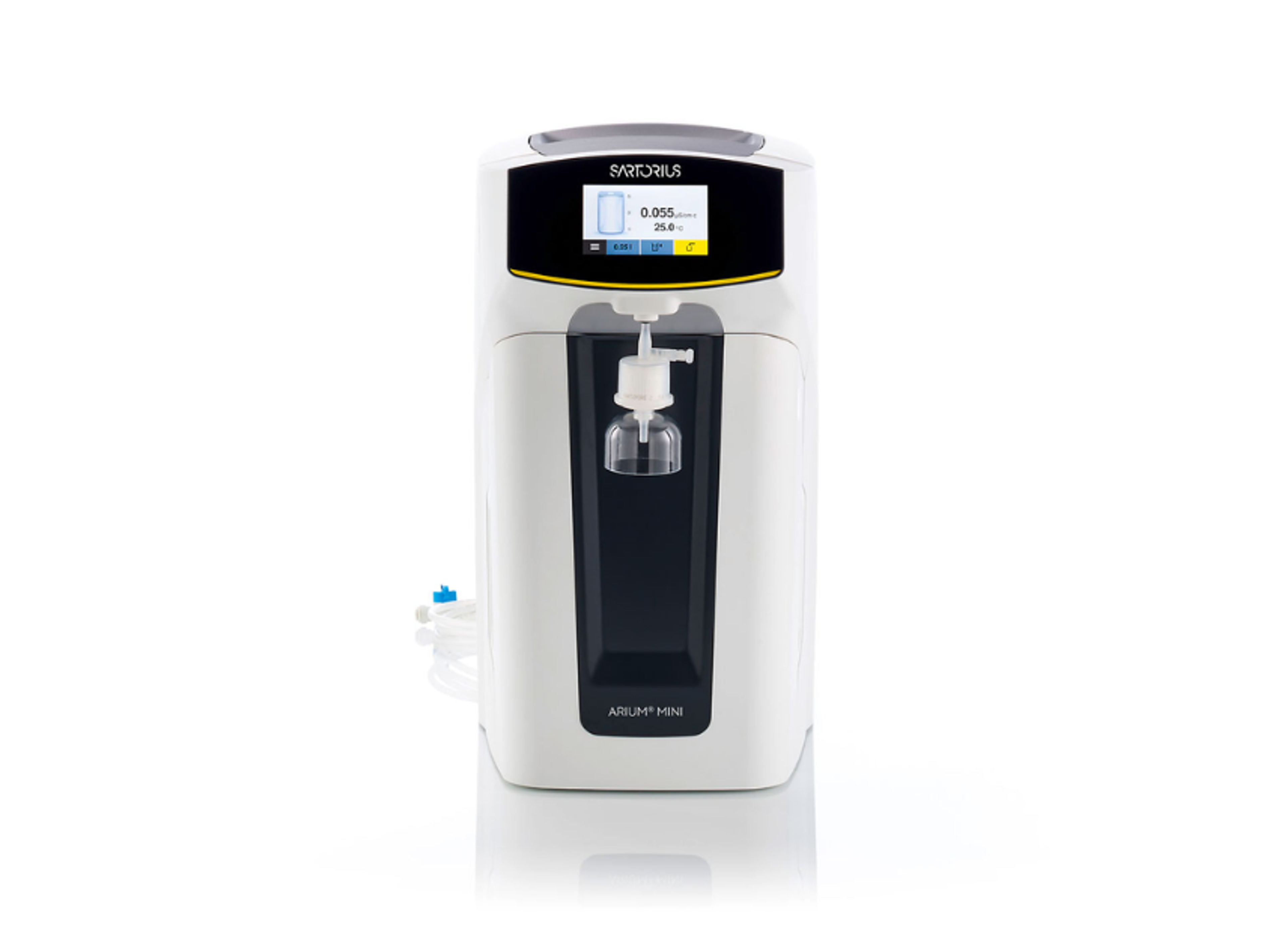
Arium® Mini Ultrapure Lab Water System
Sartorius GroupA compact ultrapure water system specially designed for requirements of less than 10 liters per day. This space-saving unit with a width of only 28 centimeters (11 inches) easily integrates into nearly any lab environment. The closed Bagtank system prevents secondary contamination while ensuring consistent long-term water quality.