ResourceMaterials

A comparison of HRAM Orbitrap and MS/MS for anaylsis of polyfluoroalkyl substances by EPA Method 537

26 Feb 2020

In this application note, Thermo Fisher Scientific demonstrates liquid chromatography - high-resolution, accurate-mass (LC-HRAM) methodology using Orbitrap™ technology as a sensitive, accurate and reliable quantitative alternative to the use of triple quadruple mass spectrometers, while stimultaneously determining unknown perfluorinated compounds in the same drinking water extracts.

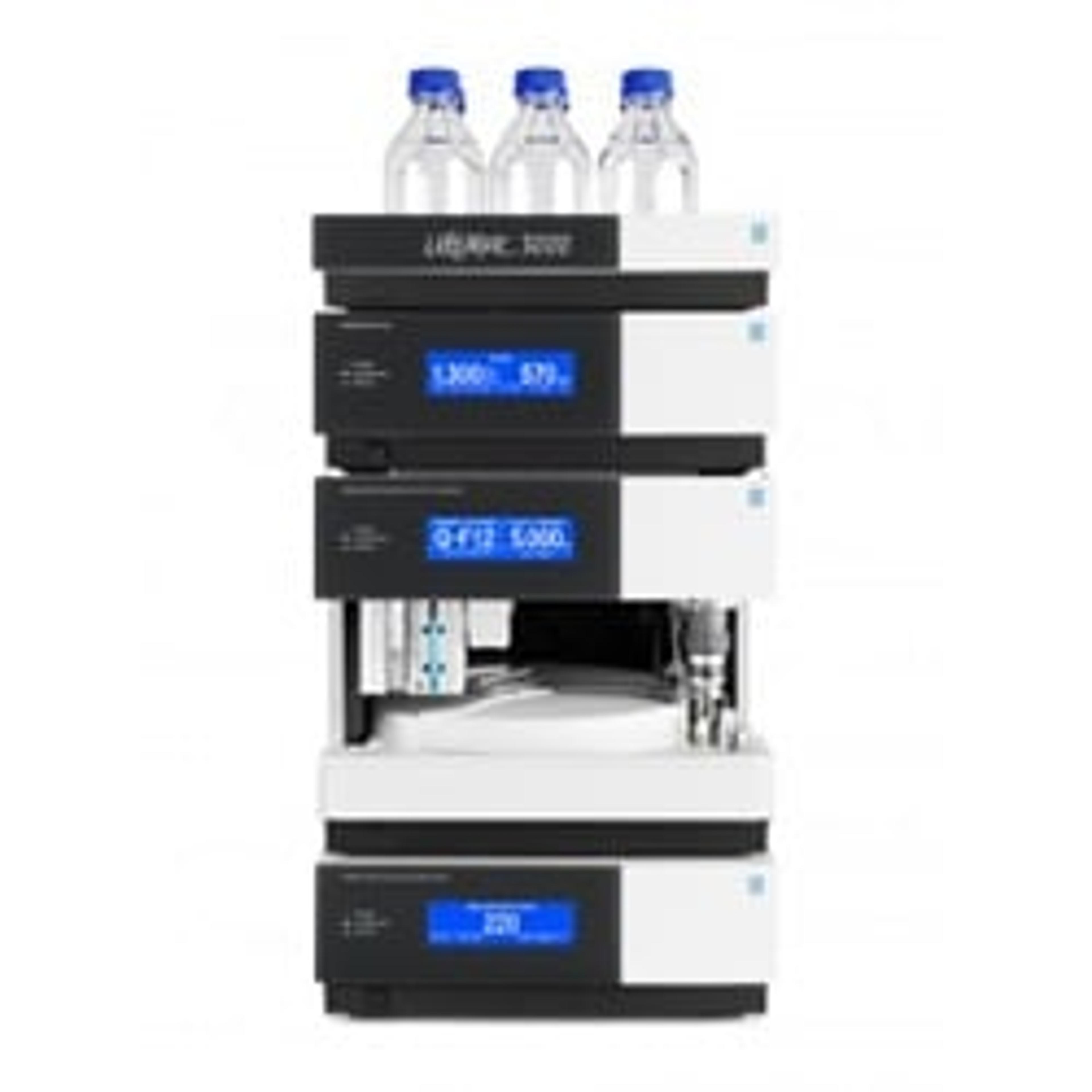
Thermo Scientific™ UltiMate™ 3000 UHPLC system

Thermo Fisher Scientific

  The Thermo Scientific™ UltiMate™ 3000 HPLC system offers UHPLC compatibility across all modules, ensuring maximum performance. Covering flows from 20 nL/min to 10 mL/min and offering a wide range of pumping, sampling, and detection modules, the UltiMate 3000 series provides solutions for all your chromatography needs. UltiMate 3000 HPLC system Features & Benefits:   UHPLC design for all nano, standard analytical, and RSLC systems. 620 bar maximum pressure for basic and standard analytical systems—setting a new benchmark in HPLC. x2 Dual Systems form a unique platform for routine analysis, increased productivity solutions, and advanced chromatographic techniques. Systems are controlled using Thermo Scientific™ Chromeleon™ Chromatography Data System software—providing Intelligent Functionality and Operational Simplicity™. Systems are offered with Thermo Scientific™ Viper™ and Thermo Scientific™ nanoViper™ fitting systems—fingertight, zero-dead-volume connections even at UHPLC pressures.

(40)

Links

Tags

LC-MSLC-MS (liquid chromatography-mass spectrometry) systems and equipment are used for separation and quantitative analysis of complex mixtures, combining liquid chromatography and mass spectrometry. Quantify proteins, contaminants, pesticides or screen for drug metabolites with a high level of sensitivity. LC-MS systems and equipment include reverse phase, normal phase and specialized columns integrated with various MS detectors such as time-of-flight (TOF), quadrupole, orbitrap or ion trap mass analyzers. LC-MS/MS instruments equipped with a qTOF or triple quadrupole analyzer give greater sensitivity and resolving power to your analysis. Find the best LC-MS equipment in our peer-reviewed product directory: compare products, check customer reviews and receive pricing direct from manufacturers.Mass SpectrometryMass spectrometry (MS) is a powerful analytical technique used to identify and quantify molecules based on the mass-to-charge ratio of gas-phase ions. It provides detailed information about the structure, composition, and properties of compounds and is widely used across fields such as environmental monitoring, materials science, drug discovery and development, food and beverage testing, and wider chemical research. Key MS techniques include tandem mass spectrometry (MS/MS), liquid chromatography–mass spectrometry (LS-MS) and inductively coupled plasma (ICP-MS). Choosing from these wide range of techniques and technologies can be a daunting task, so keep up to date with scientific applications, performance expectations, and customer reviews here all in one place. Visit our product directory to receive quotes direct from the manufacturer. ChromatographyChromatography is a powerful technique used to separate and analyze components of mixtures based on their chemical properties. It is widely used in fields like biochemistry, pharmaceuticals, and environmental analysis. By exploiting differences in the interaction of substances with a stationary phase and a mobile phase, chromatography enables precise purification and quantification of compounds. Whether you're working with complex biological samples or industrial chemicals, chromatography is essential for obtaining high-quality results. Browse our peer-reviewed product directory to find the best chromatography systems, compare products, read customer reviews, and get pricing directly from manufacturers.
A comparison of HRAM Orbitrap and MS/MS for anaylsis of polyfluoroalkyl substances by EPA Method 537