
3D Spheroid Culture to Revolutionize the Next Generation Drug Development Offensives
31 Jan 2013To obtain more physiologically relevant data, researchers have developed various 3D cell culture techniques to replicate the in vivo characteristics of physiological tissues. This white paper reviews the current methods and systems that are available for spheroid culture. In addition the benefits and applications of the Perfecta3D™ Hanging Drop Plates from 3D Biomatrix are discussed. 3D cell culture combined with high-throughput screening is likely to accelerate pharmaceutical development.
Related products
Request Quote for All Products
Perfecta3D Hanging Drop Plates - 384-Well
3D BiomatrixThe patent-pending Perfecta3D® Hanging Drop Plates are 96- and 384-well plates that facilitate the formation, culture, and testing of three-dimensional (3D) spheroids and stem cell aggregates without the aid of coatings or matrices. With only one spheroid forming in each well, 3D spheroids formed in Perfecta3D Hanging Drop Plates are consistent and diameter can be controlled by the number of cells seeded in each well. Media and compounds can be added or removed from the top of the plate, and cells can be added for patterned co-cultures. The well plate format means that the plates are compatible with manual or automated liquid handling equipment. Product and ordering information can be found at www.3DBiomatrix.com/products.
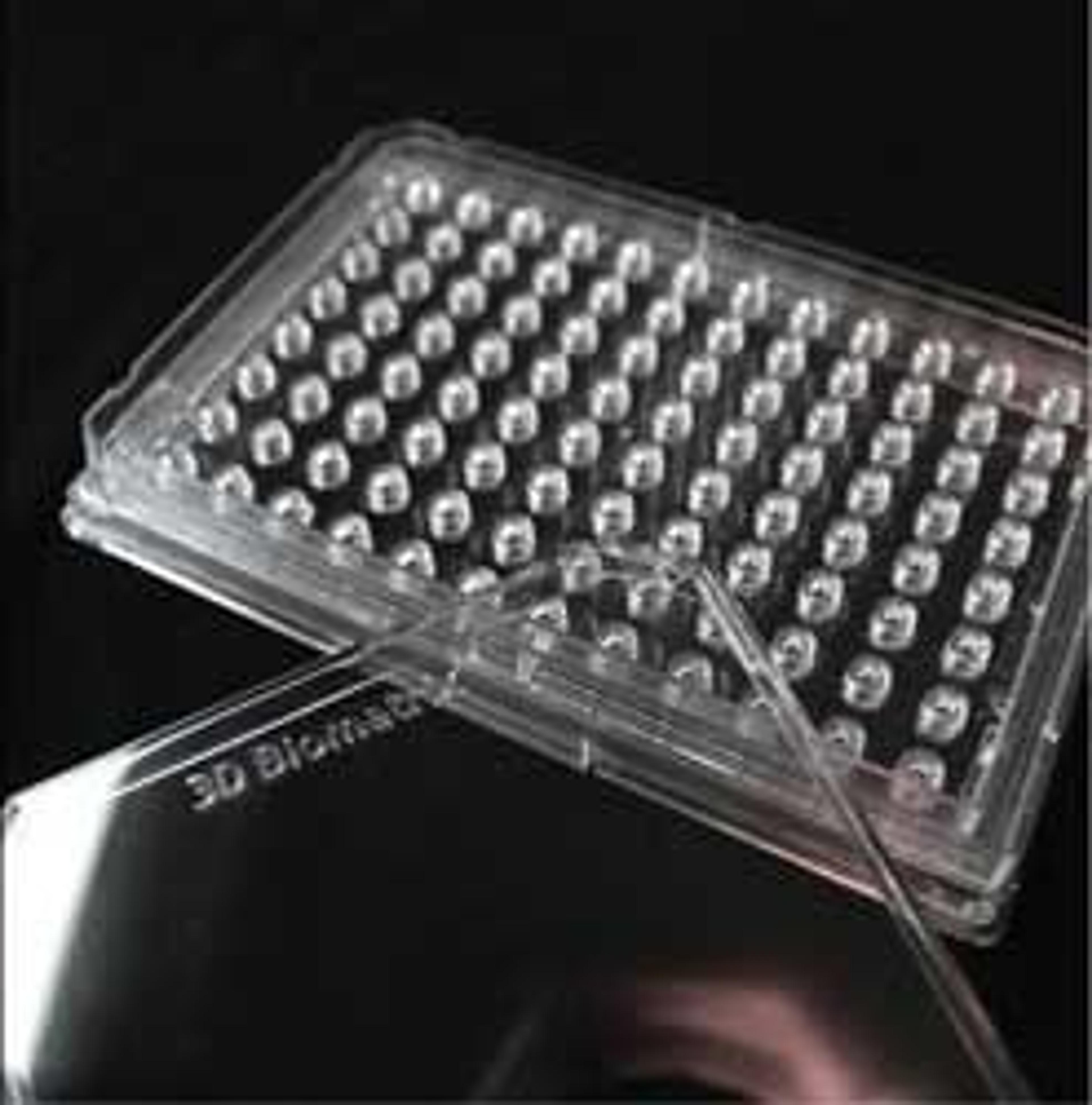
Perfecta3D Hanging Drop Plates - 96-Well
3D BiomatrixThe patent-pending Perfecta3D® Hanging Drop Plates are 96- and 384-well plates that facilitate the formation, culture, and testing of three-dimensional (3D) spheroids and stem cell aggregates without the aid of coatings or matrices. With only one spheroid forming in each well, 3D spheroids formed in Perfecta3D Hanging Drop Plates are consistent and diameter can be controlled by the number of cells seeded in each well. Media and compounds can be added or removed from the top of the plate, and cells can be added for patterned co-cultures. The well plate format means that the plates are compatible with manual or automated liquid handling equipment. Product and ordering information can be found at www.3DBiomatrix.com/products.