
3D Pluripotent Stem Cells: Simplified Culture and Realistic Differentiation
30 Jul 2013This white paper illustrates the importance of three-dimensional (3D) cell culture in the production of pluripotent stem cell (PSC)-derived models of embryo development and differentiation. It contains a general overview of embryoid bodies (EBs) and a comparison between the various methods used for their generation. There is also a discussion about using teratoma assays versus EBs to validate pluripotency with newly derived PSC lines. Finally, there is a brief description of recent publications illustrating how 3D culture can be used to maximize differentiation.
Related products
Request Quote for All Products
Perfecta3D Hanging Drop Plates - 384-Well
3D BiomatrixThe patent-pending Perfecta3D® Hanging Drop Plates are 96- and 384-well plates that facilitate the formation, culture, and testing of three-dimensional (3D) spheroids and stem cell aggregates without the aid of coatings or matrices. With only one spheroid forming in each well, 3D spheroids formed in Perfecta3D Hanging Drop Plates are consistent and diameter can be controlled by the number of cells seeded in each well. Media and compounds can be added or removed from the top of the plate, and cells can be added for patterned co-cultures. The well plate format means that the plates are compatible with manual or automated liquid handling equipment. Product and ordering information can be found at www.3DBiomatrix.com/products.
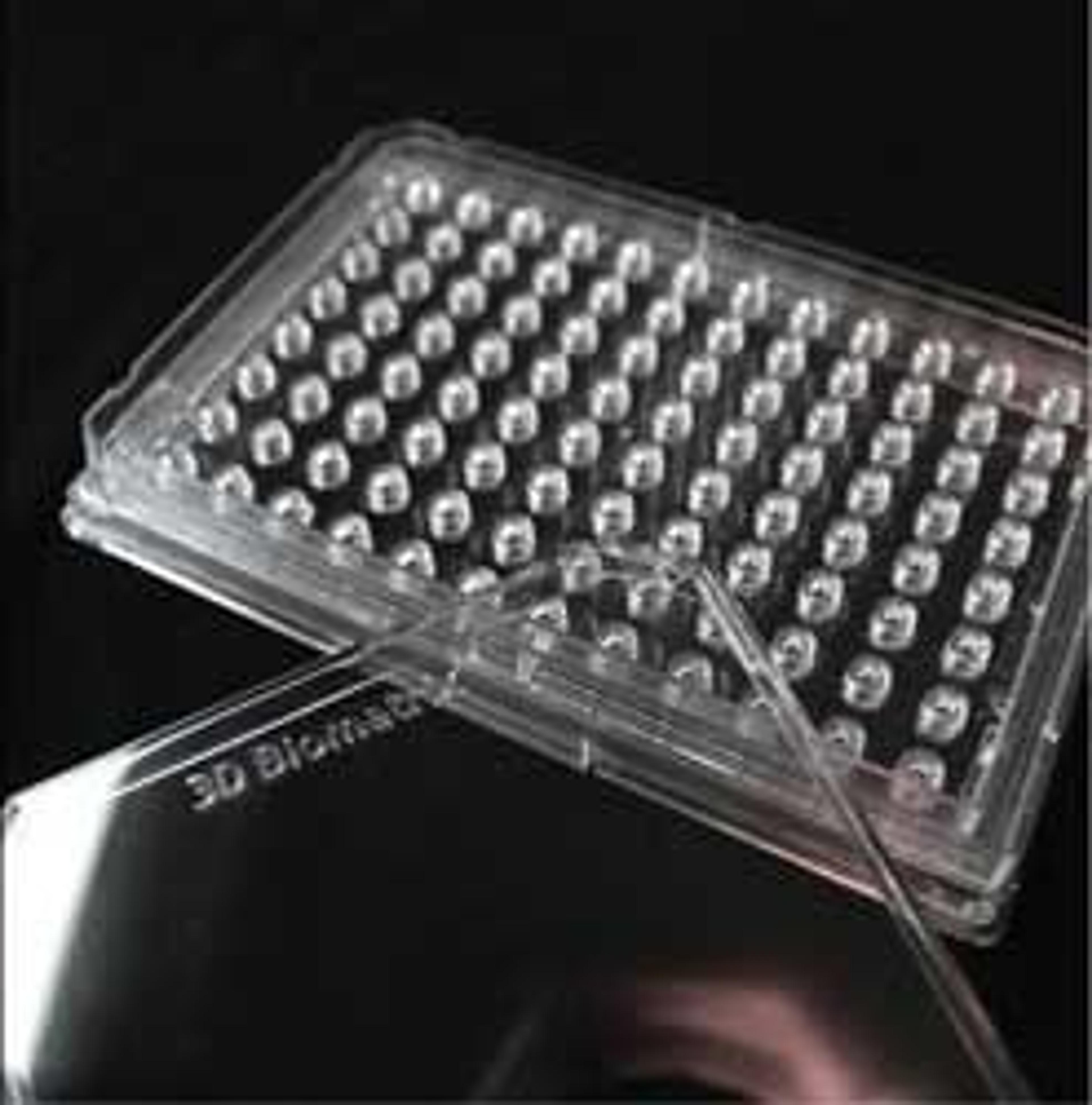
Perfecta3D Hanging Drop Plates - 96-Well
3D BiomatrixThe patent-pending Perfecta3D® Hanging Drop Plates are 96- and 384-well plates that facilitate the formation, culture, and testing of three-dimensional (3D) spheroids and stem cell aggregates without the aid of coatings or matrices. With only one spheroid forming in each well, 3D spheroids formed in Perfecta3D Hanging Drop Plates are consistent and diameter can be controlled by the number of cells seeded in each well. Media and compounds can be added or removed from the top of the plate, and cells can be added for patterned co-cultures. The well plate format means that the plates are compatible with manual or automated liquid handling equipment. Product and ordering information can be found at www.3DBiomatrix.com/products.