
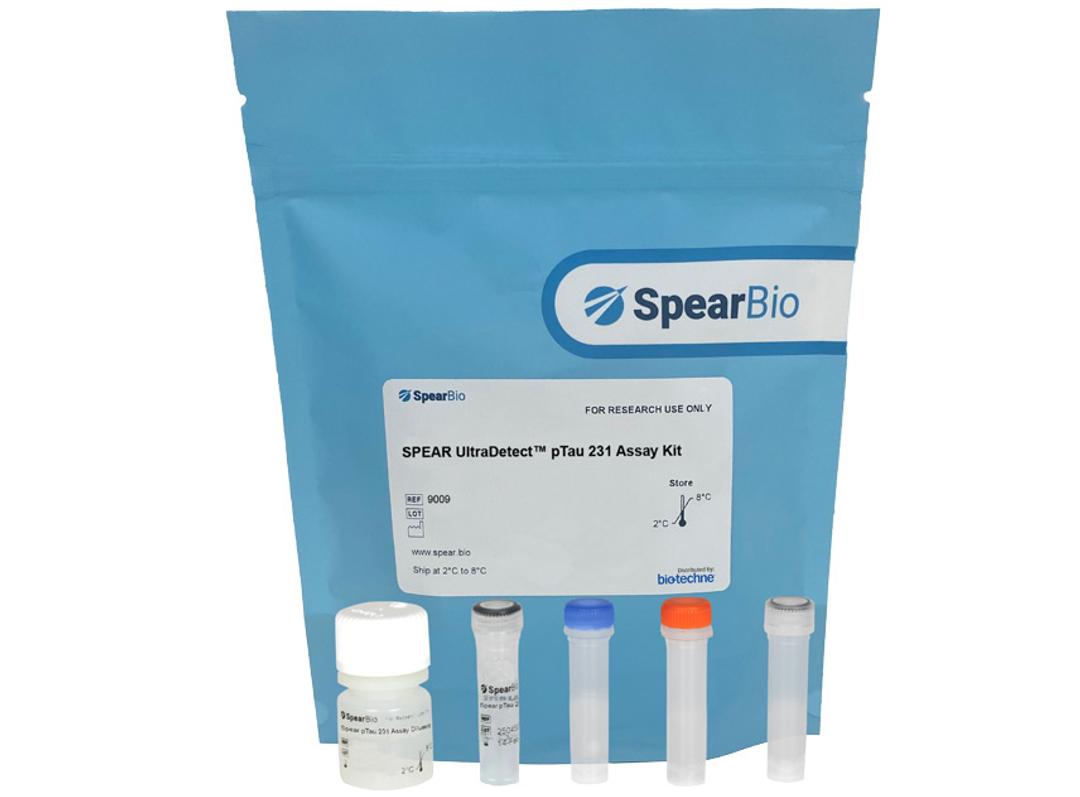
SPEAR UltraDetect™ pTau 231 Biomarker Assay Kit
The SPEAR UltraDetect™ pTau 231 biomarker assay kit is highly sensitive and ideal for Alzheimer’s research using plasma samples. Requires SPEAR UltraDetect™ Reaction Kit. For research use only.


Receive your quote directly from the manufacturer.
A blood biomarker of early-stage amyloid pathology
pTau231 (phosphorylated tau at threonine 231) is a blood-based biomarker that reflects early tau phosphorylation changes associated with amyloid-β pathology. It correlates with brain amyloid status as measured by PET and CSF. pTau 231 is one of the earliest tau epitopes to phosphorylate in Alzheimer’s disease suggesting strong potential for detecting preclinical Alzheimer’s disease. pTau 231 is used in research for early disease detection, risk stratification, and to study the temporal sequence of amyloid and tau pathology.
Unparalleled Sensitivity with SPEAR UltraDetect pTau 231
The SPEAR UltraDetect pTau 231 assay demonstrates unparalleled sensitivity, delivering high quantifiability – important for exploration of pTau 231 as an early marker in longitudinal studies and potential applications in clinical trials.
In a study comparing a cohort of PET-confirmed amyloid positive and amyloid negative patient samples, SPEAR UltraDetect quantified 100% of samples – including amyloid negative samples with average CV of 5%.
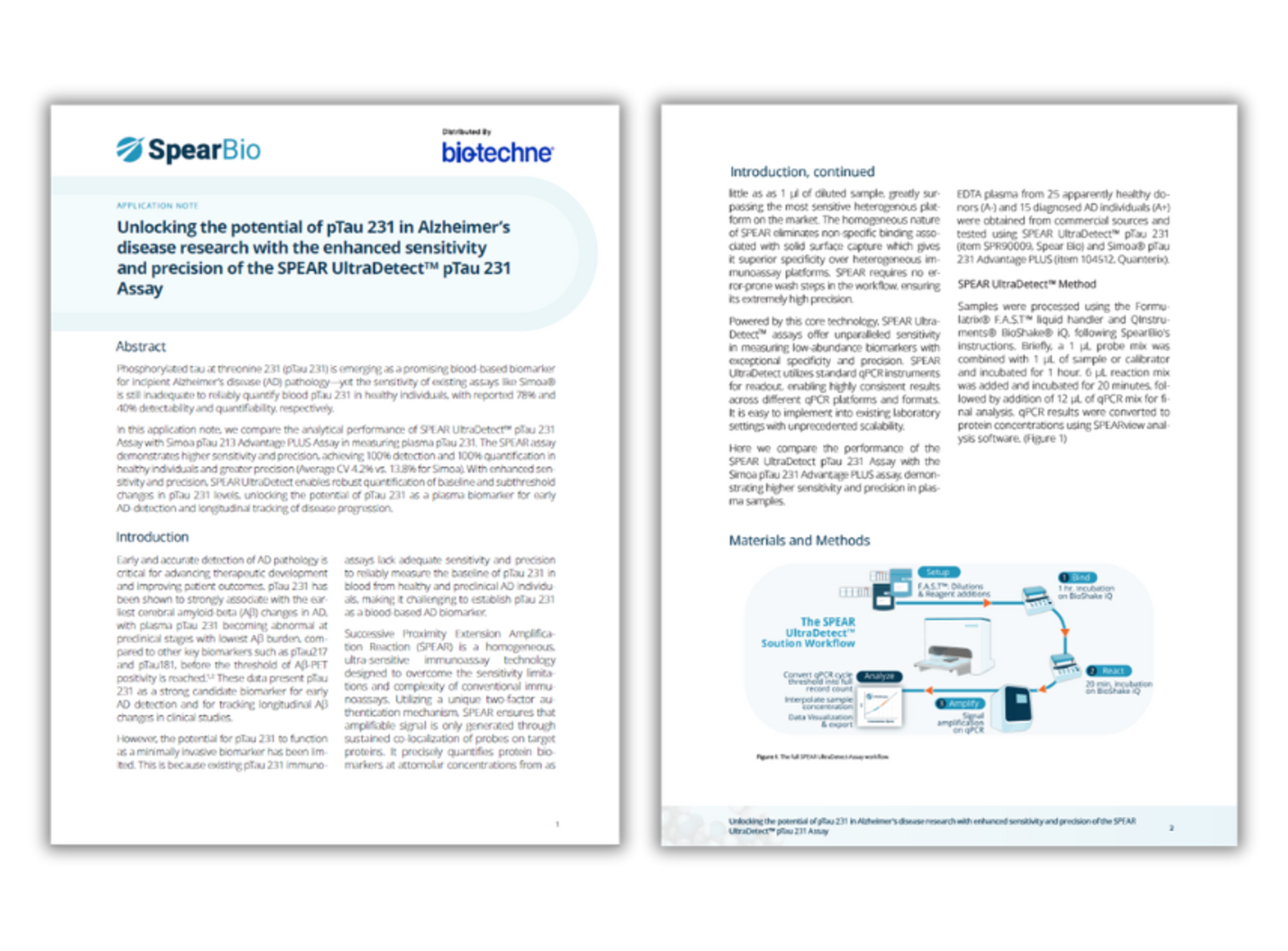
Unlocking the potential of pTau 231 in Alzheimer’s disease research with the enhanced sensitivity and precision of the SPEAR UltraDetect pTau 231 Assay
Phosphorylated tau at threonine 231 (pTau 231) is emerging as a promising blood-based biomarker for incipient Alzheimer’s disease (AD) pathology, yet the sensitivity of existing assays like Simoa® is still inadequate to reliably quantify blood pTau 231 in healthy individuals, with reported 78% and 40% detectability and quantifiability, respectively.
In this application note, we compare the analytical performance of SPEAR UltraDetect™ pTau 231 Assay with Simoa pTau 213 Advantage PLUS Assay in measuring plasma pTau 231. The SPEAR assay demonstrates higher sensitivity and precision, achieving 100% detection and 100% quantification in healthy individuals and greater precision (Average CV 4.2% vs. 13.8% for Simoa). With enhanced sensitivity and precision, SPEAR UltraDetect enables robust quantification of baseline and subthreshold changes in pTau 231 levels, unlocking the potential of pTau 231 as a plasma biomarker for early AD detection and longitudinal tracking of disease progression.
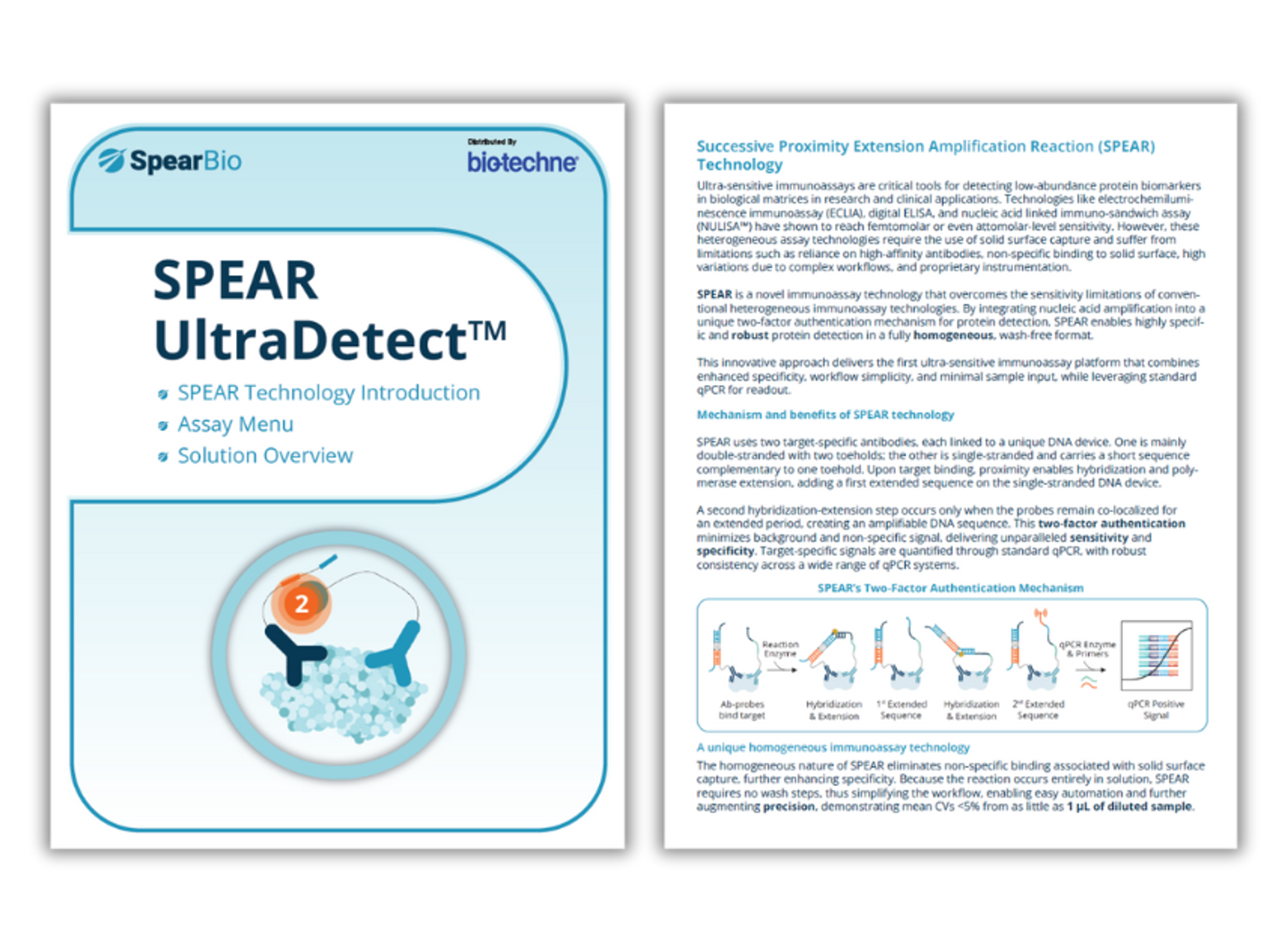
SPEAR UltraDetect brochure
SPEAR UltraDetect™ is an ultra-sensitive, homogeneous immunoassay platform designed for reliable detection of low-abundance protein biomarkers. Powered by SPEAR’s unique two-factor authentication mechanism and standard qPCR readout, UltraDetect assays deliver exceptional sensitivity, specificity, and precision in a fully wash-free workflow using as little as 1 µL of sample. The solution enables robust biomarker quantification for neurological and clinical research applications with simplified workflows and broad instrument compatibility.
Download this brochure to discover the fundamentals of SPEAR Technology, key features of SPEAR UltraDetect Assays, and a comprehensive summary of the complete SPEAR Solution.

Enhanced early Alzheimer's detection via ultra‑sensitive plasma pTau 217 measurement
Friday, January 30 at 15:00 GMT | 16:00 CET | 10:00 EST | 07:00 PST
Growing evidence shows that plasma phosphorylated tau (pTau) 217 is one of the most accurate and reliable blood-based biomarkers for identifying early Alzheimer’s disease pathology, even before the onset of clinical symptoms. As research efforts expand beyond cerebrospinal fluid (CSF) biomarkers and PET imaging, sensitive and specific plasma assays have become essential for improving early detection, supporting clinical trial design, and enabling large‑scale population screening.
In this SelectScience webinar, Dr. Nicholas Ashton of Banner Health and Dr. Laurel Provencher of Spear Bio will explore how emerging analytical innovations enhance the measurement of low-abundance plasma pTau 217, helping researchers better classify amyloid positivity, improve disease discrimination, and align blood-based results with established CSF biomarker profiles.
The webinar will compare assay performance across the BioFINDER and WRAP cohorts – two leading longitudinal studies shaping our understanding of Alzheimer’s progression. It will also highlight how the SPEAR UltraDetect™ platform from Spear Bio is designed to deliver the ultra‑sensitive, high‑specificity detection capabilities needed to support these advancements in blood-based Alzheimer’s research.
Key learning objectives:
- Identify the analytical challenges of measuring plasma pTau 217 at low concentrations and understand why enhanced sensitivity and specificity are critical for Alzheimer’s disease research.
- Understand the principles behind high‑performance pTau 217 assay workflows (such as the SPEAR UltraDetect™ assay workflow), including two-factor authentication approaches that enhance specificity and reduce off‑target signals.
- Learn how to interpret essential performance metrics commonly used to evaluate blood-based biomarkers, such as assay concordance, amyloid positivity classification, and relationships between plasma and CSF biomarkers.
- Recognize how next-generation plasma biomarker platforms can support study design, cohort stratification, and future clinical development in Alzheimer’s disease.
Who should attend?
This SelectScience webinar is ideal for scientists and decision-makers involved in neurodegenerative disease research, biomarker development, clinical study design, and analytical validation of diagnostic assays. Professionals in pharma, biotech, CROs, academic research centers, and clinical laboratories seeking to advance plasma pTau 217 detection will find this session particularly valuable.
Certificate of attendance
If you attend the live webinar, you will automatically receive a certificate of attendance, including a learning outcomes summary, for continuing education purposes. If you view the on-demand webinar, you can request a certificate of attendance by emailing editor@selectscience.net.
Webinar details
- Cost: Free to attend
- Location: Online
- Duration: 60 minutes
Registration is required to secure your place. If you register but can’t attend live, you will receive a link to the on‑demand recording once it becomes available.
Product Overview

Links
Featured products
Request Quote for All Products
SPEAR UltraDetect™ GFAP Biomarker Assay Kit
Spear BioThe SPEAR UltraDetect™ GFAP Biomarker Assay Kit is an ultra-precise, wash-free assay for glial fibrillary acidic protein, ideal for CNS and neurotrauma research. Requires SPEAR UltraDetect™ Reaction Kit. For research use only.

SPEAR UltraDetect™ NF-L Biomarker Assay Kit
Spear BioThe SPEAR UltraDetect™ NF-L Biomarker Assay Kit lets you quantify neurofilament light with ultra-high precision, low sample volume, and a simple, wash-free workflow. Requires SPEAR UltraDetect™ Reaction Kit. For research use only.

SPEAR UltraDetect™ pTau 217 Biomarker Assay Kit
Spear BioThe SPEAR UltraDetect™ pTau 217 biomarker assay kit provides a highly specific tool for Alzheimer’s disease research, optimized for plasma samples. Requires SPEAR UltraDetect™ Reaction Kit. For research use only.