Raptor Polar X LC Columns
Separate a wide variety of polar analytes with a novel hybrid stationary phase


Receive your quote directly from the manufacturer.
- Reliably analyze a wide variety of polar analytes (acidic, basic, and neutral) without time-consuming derivatization or complex ion pairing.
- Switch between HILIC and ion-exchange retention modes with simple mobile phase changes and short equilibration times.
- 2.7 μm Raptor core-shell particles provide UHPLC-like speed and efficiency on all makes and models of LC systems.
- Ideal for increasing sensitivity and selectivity in LC-MS analyses.
Storage Conditions: When not in use, Raptor Polar X columns must be kept in 100% acetonitrile. If using a buffered mobile phase, first flush thoroughly with 50:50 water:acetonitrile, then fill with acetonitrile for storage.
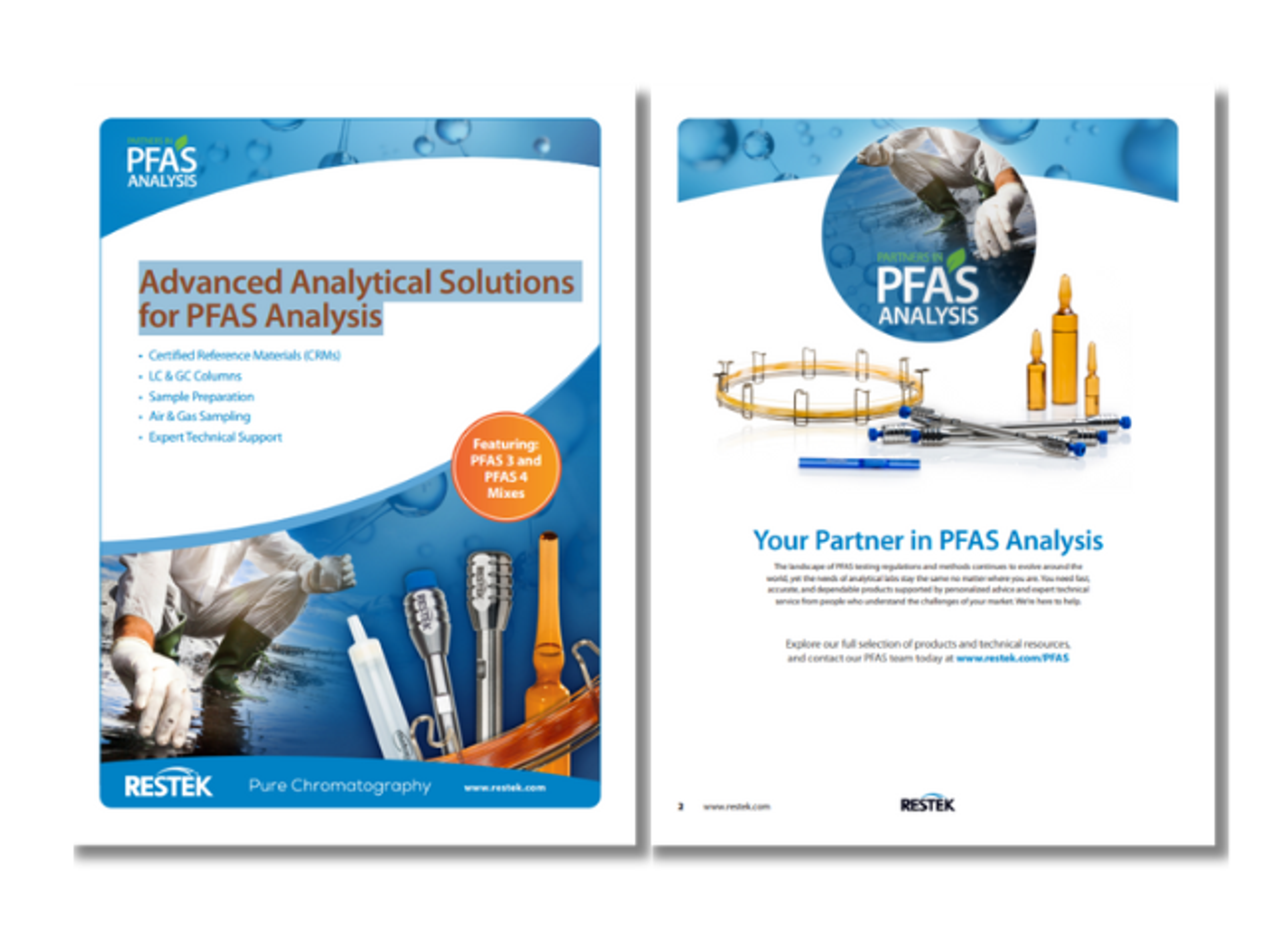
Advanced analytical solutions for PFAS Analysis
This comprehensive guide from Restek provides everything analytical labs need for accurate, efficient, and compliant PFAS testing. Covering certified reference materials (CRMs), LC and GC columns, sample preparation tools, and air/gas sampling equipment, it’s a one-stop resource for labs working with water, food, environmental, and industrial samples. Featuring PFAS 3 and PFAS 4 mixes, method details, and product specifications, this catalog supports both routine and advanced PFAS workflows.

Analysis of ultrashort/short-chain PFAS in water samples
Due to their ubiquitous occurrence in aquatic environments, measuring ultrashort-chain per- and polyfluoroalkyl substances (PFAS) in various source waters to monitor their presence and the potential for human exposure has become very important. However, with carbon chain lengths of less than C4, these small, highly polar compounds are difficult to analyze using standard PFAS tests that are based on reversed-phased liquid chromatography (RPLC). Restek Corporation presents an accurate, reliable analytical LC-MS/MS method for PFAS in water that was developed to specifically quantify C1 to C4 PFAS in both potable and non-potable sources. A direct injection workflow was implemented to simplify the testing process and to avoid potential contamination originating from poor sample preparation procedures.

Chromatography revolutionizes PFAS analysis and detection
As concerns about PFAS health risks rise, advancements in chromatography are transforming our understanding of these persistent chemicals. Explore how innovative techniques enhance detection and analysis, paving the way for safer environments and better public health.