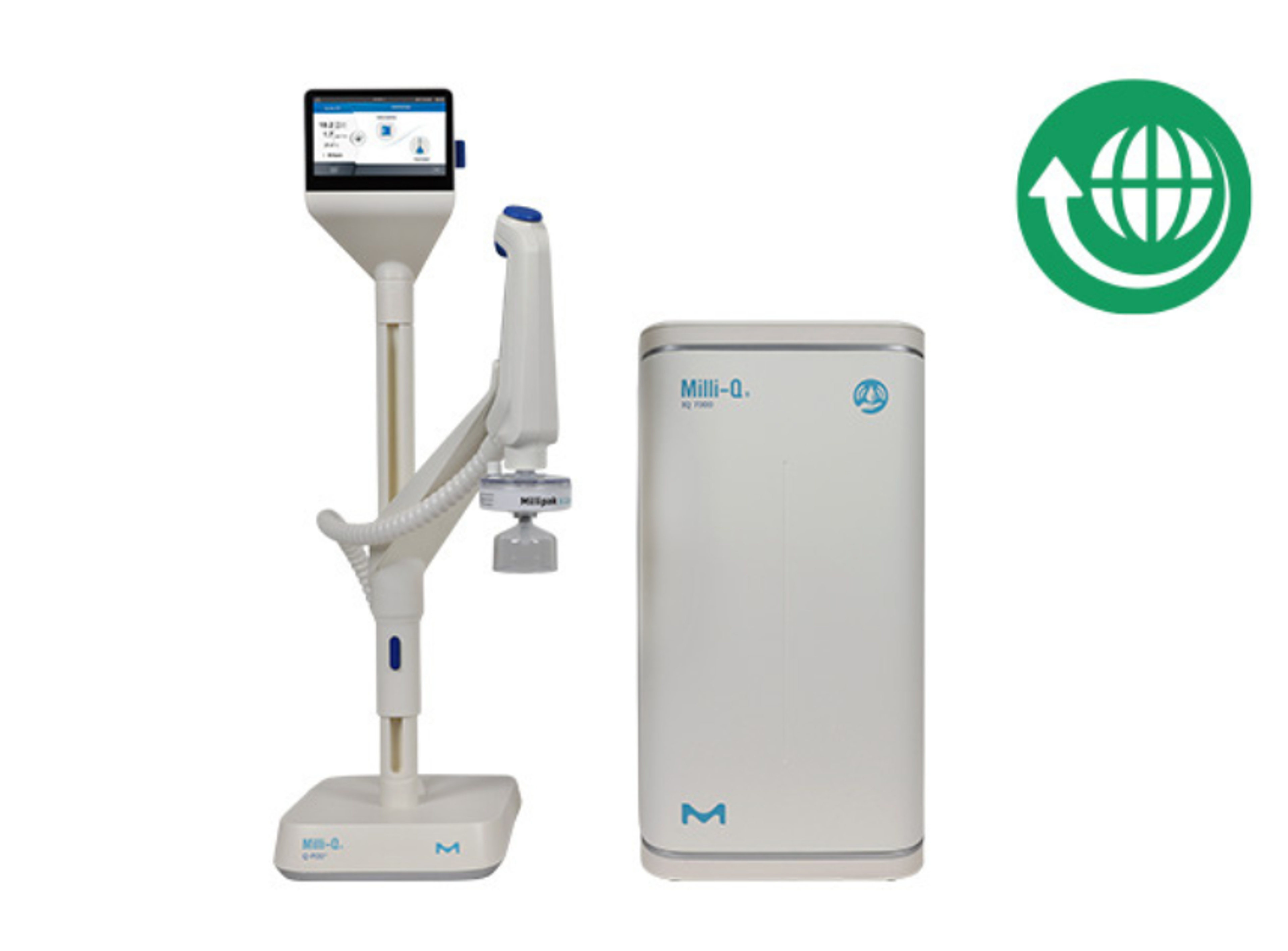
Milli-Q® IQ 7000 Ultrapure Water System
An Ultrapure Water Solution Designed with You in Mind


Receive your quote directly from the manufacturer.
It's intelligent. It's intuitive. It's designed to make your work as pleasant and comfortable as possible — and to maximize lab productivity. The breakthrough ergonomic design and powerful purification media ensure consistent production of superior-quality ultrapure water. See how the Milli-Q® IQ 7000 will change the way you work in the lab.
Key Features:
- Advanced traceability
- Simple & intuitive dispensing
- improved sustainability
- Large, interactive touchscreen
- Optimized lab space
- Superior ultrapure water to the trace level
- Quality & compliance
DIGITAL SERVICES SIMPLIFY SYSTEM CARE AND ASSURE PRODUCTIVITY
MyMilli-Q™ Remote Care is a unique online monitoring and service feature that provides:
- Remote access to your system and its data
- Automatic notifications, by email or SMS, in case of an alert or alarm
- Faster service with remote diagnostics and repair possible
- Simplified data management and advanced traceability that eases audit and accreditation processes
See how the Milli-Q® IQ 7000 can change your daily work in the lab with its ergonomic design, precise dispensing options, high-definition digital touch screen, integrated data management system, effortless maintenance, and much more…
Milli-Q® IQ 7000 systems have been evaluated on 7 dimensions that have a critical impact on Global Warming: Energy & Emissions, Water, Packaging, Materials, Suppliers & Manufacturing, Circular Economy, and Usability & Innovation. Officially awarded the Greener Alternative Product label, we certify that these systems use less plastic and less electricity, and are completely mercury free.

Ultrapure water for sensitive LC-MS analysis of pesticides
All labs aim to select water purification systems that deliver consistent high-quality water and that actively monitor and record quality parameters. Discover the efficiency of Milli-Q® water purification systems in eliminating pesticides from tap water to deliver reliable and consistent-quality ultrapure water suitable for pesticides analysis.

Obtaining ultrapure water for sensitive PFAS analysis by LC-MS
Discover how the Milli-Q® water purification system is suitable for the most sensitive PFAS analyses by LC-MS/MS. Ultrapure water produced by a Milli-Q IQ 7000 system fitted with a LC-Pak® polisher at the point-of-dispense was tested for 40 PFAS compounds according to the draft EPA 1633 method. None of the 40 compounds tested were detected in the water.
Four ways to better water quality in LC-MS
High purity water is key to the success of analyses performed using (ultra) High-Performance Liquid Chromatography-Mass Spectrometry, (U)HPLC-MS — or as it is more commonly known, LC-MS. Even so, chromatographers may consciously select top-quality salts and organic solvents for mobile phase preparation, but not apply the same level of care when choosing their source of high purity water. Here, Merck discusses several aspects of working with high purity water in LC-MS analyses including quality and handling.
Drinking water testing by ion chromatography
The quality of drinking water is strictly regulated. Merck evaluates the suitability of ultrapure water produced by a Milli-Q® IQ 7000 water purification system for ion chromatography (IC) analysis of inorganic ions and disinfection by-products (DBPs) in drinking water. Explore a study which demonstrates that freshly delivered ultrapure water from the system meets the stringent purity requirements for IC analysis, with inorganic ion concentrations significantly below regulatory limits. Additionally, DBPs were not detected in the ultrapure water, indicating the effectiveness of the purification system in removing contaminants.
Ultrapure water for BPA-free culture media in embryology research
In this application note, Merck presents a study to establish a technique to detect low levels of endocrine disruptor bisphenol A (BPA) in water and to document how a Milli-Q® IQ 7000 water purification system equipped with a Biopak® ultrafilter (configuration recommended for molecular biology applications) produces reference ultrapure water that is suitable for BPA-sensitive embryology research.
Endocrine disruptors are chemicals that interfere with the endocrine system of humans and animals. They affect growth as well as reproduction, immune, and nervous systems, causing adverse health consequences. Found in plastics (including laboratory consumables and equipment), lacquers, resins, and surfactants, endocrine disruptors are regarded as omnipresent.
Among the various industrially produced endocrine disruptors, BPA is one of the most widespread. BPA is known as a ‘xenoestrogen’ as it mimics the estrogen hormone, and therefore raises major health concerns. Several studies have confirmed that BPA interferes with the production of hormones and the expression of their genes.

Is your lab water pure enough for sensitive PFAS analyses?
Per- and polyfluoroalkyl substances (PFAS), also referred to as ‘forever chemicals’, are an increasing concern since they accumulate in the environment and may have some deleterious effects on human health.
In this webinar, Dr. Estelle Riche, Global Application Specialist from Merck KGaA, Darmstadt, Germany, will discuss the importance of reagent water quality in trace analyses of PFAS by LC-MS/MS. Dr. Riche will show data on the efficiency of a lab water purification system at removing traces of PFAS from tap water and delivering ultrapure water suitable for sensitive PFAS testing. This webinar will also offer guidance on how to select an optimal water purification solution for these analyses, including tips on how to prevent water contamination for optimal experimental results.
Key learning objectives
- Understand the role of reagent water in PFAS analyses by LC-MS/MS
- Discover how water purification technologies play a role in PFAS removal
- Learn how to select the best water purification solution to suit your lab’s needs
Who should attend?
- Any scientist analyzing or planning to analyze PFAS
- Lab managers and anyone using or maintaining lab water purification systems
Certificate of attendance
All webinar participants can request a certificate of attendance, including a learning outcomes summary, for continuing education purposes.
Greener water systems for a sustainable lab
Improve the environmental sustainability of your laboratory systems using greener alternatives. Explore how Milli-Q® water systems can reduce water consumption by 50%, reduce chemical waste, improve energy consumption, and eliminate mercury handling and associated disposal management. Not only will this eco-friendly series reduce your laboratory's carbon footprint, it also can free-up precious lab bench space providing both in and out of lab benefits.

Merck expands ultrapure water benchtop portfolio
From essential needs to advanced research and testing, scientists can find the solution to meet their specific requirements