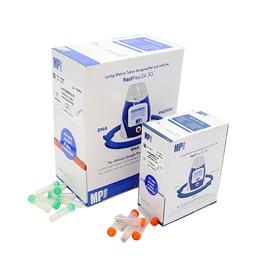
Lysing Matrices
Lysing Matrices tubes are plastic tubes containing specific beads designed for homogenization of any sample. The sample material is disrupted through multidirectional simultaneous impacts with the specialized Lysing matrix beads in a bead beater instrument, usually in presence of a lysis buffer. Although Lysing Matrix have been designed to be used with the FastPrep ® system, the standard size of the tubes allows t…


The supplier does not provide quotations for this product through SelectScience. You can search for similar products in our Product Directory.
Good solution for different kinds of sample homogenization
Homogenization of bacteria and other samples for DNA, RNA and proteins analysis
The wide range of matrces allows selection of appropriate for desired purposes
Review Date: 29 Jun 2023 | MP Biomedicals
Positive - our No 1 beads in DNA extraction
microbial DNA extraction
In our lab we use Lysing Matrix E beads to homogenise different types of samples (blood, soil, waste water, plants). We have concluded, that homogenisation by these beads is essential to extract both Gram+ and Gram- bacteria. In addition, along with the DNA extraction kits, this is cost-effective and easy to employ beads!
Review Date: 29 Jun 2023 | MP Biomedicals
Good preparation
Extracion of t bioactive molecules from plant tissues
The quality and reproductively of results
Review Date: 29 Jun 2023 | MP Biomedicals
Lysing Matrices tubes are plastic tubes containing specific beads designed for homogenization of any sample.
The sample material is disrupted through multidirectional simultaneous impacts with the specialized Lysing matrix beads in a bead beater instrument, usually in presence of a lysis buffer. Although Lysing Matrix have been designed to be used with the FastPrep ® system, the standard size of the tubes allows their use with many other bead beaters.
The lysing matrix tubes are available in many sizes, ranging from 2ml to 50ml and 96-well plates. The wide range of Lysing Matrix types ensure optimal homogenization of any sample.

Exploring the world of microbiomes – Insights of state-of-the-art solutions for metagenomic approaches
To explore the natural microbial community of any ecosystem by high-resolution molecular approaches, it is extremely important to develop sensitive and reproducible nucleic acid extraction methods that facilitate isolation of microbial DNA and RNA of sufficient purity and quantity.
Proper lysis of microbial cells without damaging their genomes is the first major challenge. Then, as a second step, isolation and extraction must yield high quality nucleic acid for subsequent metagenomic studies.
MP Biomedicals supplies a complete solution from sample grinding, cell lysis to nucleic acid extraction and purification.
In order to offer a ready-to-use, flexible and reliable solution for nucleic acid isolation, MP Biomedicals has developed a portfolio of FastPrep bead beating instruments together with a broad panel of Lysing Matrix tubes to grind and lyse thoroughly any sample type and built up a comprehensive range of organic-based, spin column-based as well as magnetic beads-based extraction kits for the isolation of high-quality DNA and RNA.
Key learning objectives
- Learn how to obtain thorough homogenization and lysis of any microorganism from samples used in microbiome research
- Discover how the FastDNA™ SPIN Kit for Soil from MP Biomedicals has been found to be one of the most suitable kits available for DNA extraction and microbiome sequencing
- Be informed of the new DNA isolation kits developed by MP Biomedicals to generate high yields and achieve rapid isolation of genomic DNA from environmental samples and water samples
- Discover the MPure-32™ Automatic Nucleic Acid Purification instrument designed for high-throughput applications and combined kits specially developed for DNA purification from various samples including feces and environmental samples
Who should attend?
- Scientists involved in metagenomic analysis of human and animal microbiome samples (biomedical research & veterinary research)
- Researchers working in the environmental and agricultural research field (with soil, sediment, water, sludge, compost, rhizosphere, wood, any other plant specimens as well as food samples)
- Scientists investigating bioenergy production processes
Certificate of attendance
All webinar participants can request a certificate of attendance, including a learning outcomes summary, for continuing education purposes.