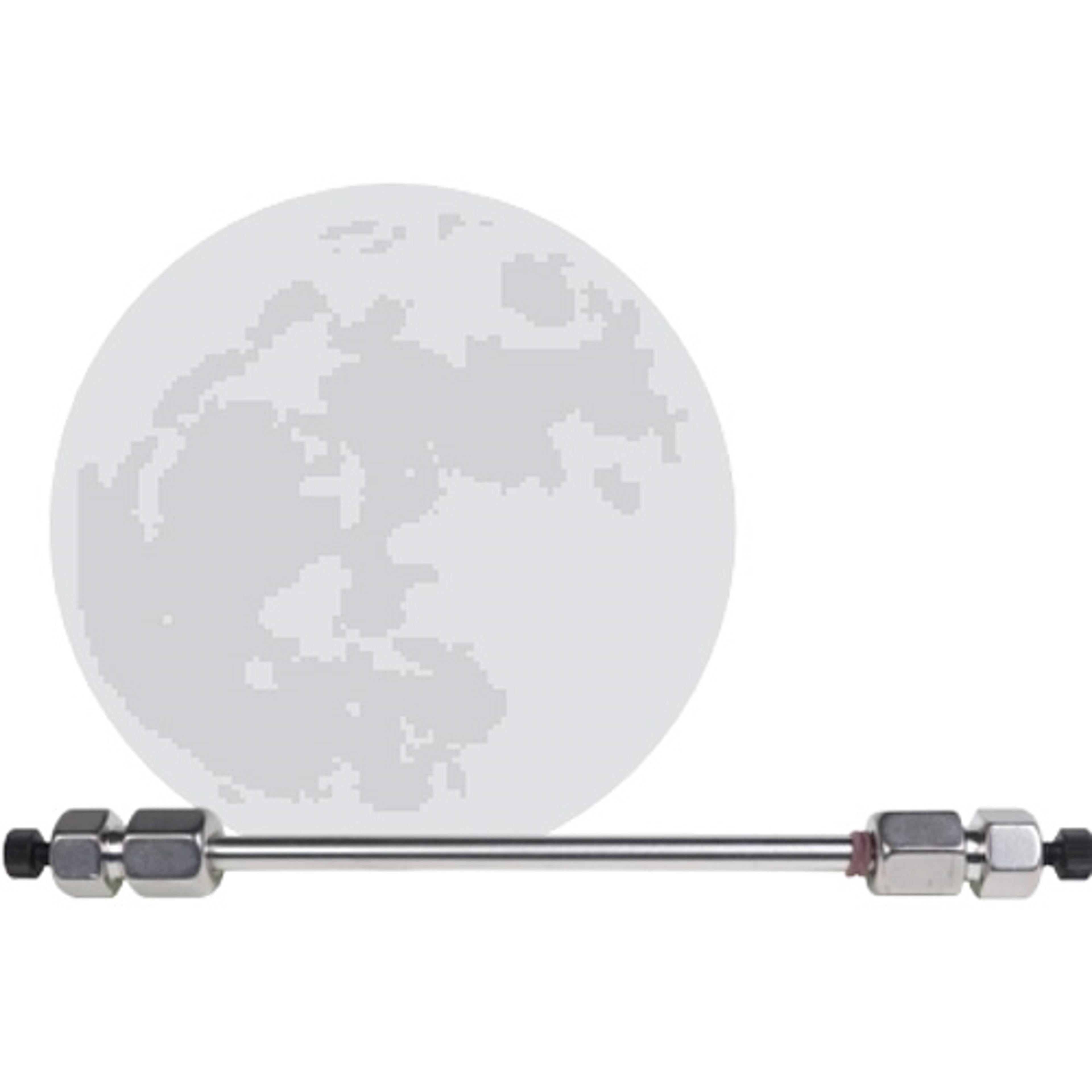
Luna One of the World's Leading LC Columns
One of the World’s Leading LC Columns


The supplier does not provide quotations for this product through SelectScience. You can search for similar products in our Product Directory.
Explore resolution with the 10 unique Luna selectivities and find your next selectivity tool.
Combined with high surface area (400 m2/g) particles, the Luna family of columns offers an excellent HPLC performance for a wide range of chromatographic applications.

Modernization of USP and Ph. Eur. method - pantoprazole sodium sesquihydrate organic impurities
In this application note, the fully porous Luna™ 5 µm C18, 125 x 4.0 mm column was used for the analysis of pantoprazole. Further, modernization of this method was carried out on a fully porous, thermally modified, Luna Omega 3 µm C18, 100 x 3.0 mm column and a fully porous organo-silica Gemini™ 3 µm NX-C18, 100 x 3 mm column. Pantoprazole is a proton pump inhibitor used for the treatment of stomach ulcers and short-term treatment of erosive esophagitis due to gastroesophageal reflux disease (GERD). This study shows the effective separation of pantoprazole from its organic impurities and related substances according to Ph. Eur. Monograph 2296 and USP Monograph for Pantoprazole Sodium Sesquihydrate Organic Impurities Test 2.
Modernization of USP and Ph. Eur. method – Irbesartan organic impurities/related substances
In this application note, Phenomenex demonstrates the potential method improvements that can be achieved within the defined allowable adjustments of chromatographic conditions per the USP and Ph. Eur. monographs using Luna™ C18(2) and Kinetex™ C18 columns. Irbesartan is a potent selective angiotensin II type 1 (AT1) receptor antagonist and is used in the treatment of hypertensive patients and diabetic nephropathy. This study for irbesartan and its related substances is based on USP and Ph. Eur monographs where an L1 (USP) or end-capped octadecylsilyl silica gel (Ph. Eur.) stationary phase is used under isocratic conditions.

How to advance clinical research with polymeric mixed-mode solid phase extraction
In this webinar, Dr. Stephanie Marin, Global Clinical Market Development Manager at Phenomenex, will provide a comprehensive overview of polymeric mixed-mode solid phase extraction (SPE) fundamentals and the properties of polymeric hydrophobic interaction (reversed-phase) SPE sorbents. Attendees will learn how to choose the appropriate SPE phase for their specific compounds of interest, along with an explanation of the ionic functional groups that provide the mixed-mode functionalities, including both weak and strong cation and anion exchange.
Dr. Marin will also delve into the initial extraction conditions required to initiate method development for each type of SPE sorbent, as well as specialized SPE products tailored for drug testing, phospholipid removal, and microelution SPE. This webinar will include numerous clinical research applications to exemplify these concepts.
Key learning objectives
- Discover how to differentiate different polymeric mixed-mode SPE sorbents
- Explore starting conditions for each sorbent type
- Learn how to choose the best SPE sorbent for different analytes
- Understand how to use an SPE method development plate
Who should attend?
- Scientists doing SPE method development
- Labratorians who want to increase their knowledge of polymeric mixed-mode SPE
- Lab managers who want to implement SPE methods in their laboratories
Certificate of attendance
All webinar participants can request a certificate of attendance, including a learning outcomes summary, for continuing education purposes.